 Save to Pinterest
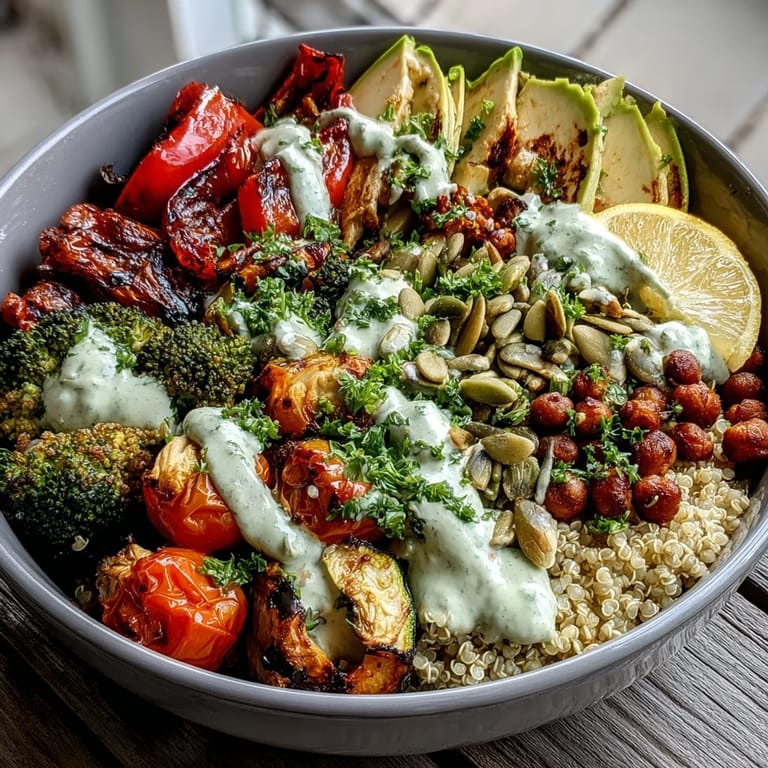
 My neighbor knocked on my door last Tuesday with a container of roasted vegetables she'd made too much of, and instead of letting them go to waste, I threw together this bowl on the spot. It was one of those happy accidents where everything in my pantry seemed to align—the quinoa, some canned chickpeas, a ripe avocado. What started as improvisation became something I now make almost every week.
I made this for my partner during a particularly stressful work week, and watching them relax over the bowl with a genuine smile reminded me why I love cooking. Sometimes the simplest dishes do the most good.
What's for Dinner Tonight? 🤔
Stop stressing. Get 10 fast recipes that actually work on busy nights.
Free. No spam. Just easy meals.
Ingredients
- Quinoa, brown rice, or farro (1 cup): Pick whichever grain you have on hand—they all work beautifully, though quinoa cooks fastest and has the most protein.
- Water or vegetable broth (2 cups): Broth adds more flavor, but water works fine if that's what you have.
- Salt (1/2 tsp for grains, plus more to taste): Don't skip salting your cooking water—it seasons the grain from the inside out.
- Cooked chickpeas (1 cup): Canned chickpeas are a lifesaver and taste just as good as dried ones when roasted or warmed through.
- Cooked lentils, green or brown (1 cup): These add earthiness and fiber; brown lentils hold their shape better than red ones.
- Red bell pepper, diced (1): The sweetness of red peppers balances the earthiness of the legumes perfectly.
- Zucchini, sliced (1): Zucchini gets wonderfully tender when roasted and soaks up the spice flavors beautifully.
- Small red onion, cut into wedges (1): Red onion gets surprisingly sweet and mild when roasted, losing its sharp bite.
- Cherry tomatoes, halved (1 cup): These burst slightly in the oven and concentrate their flavor into little pockets of sweetness.
- Broccoli florets (2 cups): Roasted broccoli gets crispy on the edges and becomes almost caramelized if you let it char a bit.
- Olive oil (2 tbsp): Good quality olive oil makes a real difference in how the vegetables taste.
- Smoked paprika (1 tsp): This gives the whole bowl a subtle depth without making it taste spicy.
- Ground cumin (1/2 tsp): Just enough to add warmth and earthiness without overpowering anything.
- Salt and black pepper: Taste as you go—you might need more than you think.
- Fresh parsley, chopped (1/4 cup): The brightness of fresh parsley against the roasted vegetables is essential.
- Avocado (1), sliced: Add this right before eating so it doesn't brown, or toss it with a tiny bit of lemon juice if making ahead.
- Toasted pumpkin seeds (2 tbsp): These add a satisfying crunch and nutty flavor that ties everything together.
- Lemon wedges: A squeeze of fresh lemon juice before eating brightens the whole bowl.
- Tahini (2 tbsp for dressing): Make sure it's well-stirred before measuring, as the oil separates.
- Lemon juice (1 tbsp for dressing): Fresh lemon cuts through the richness of the tahini beautifully.
- Water (1 tbsp, plus more as needed): This thins the dressing to a pourable consistency—add more if it's too thick.
- Garlic clove, minced (1 small): Raw garlic in the dressing adds a sharp note that wakes up your palate.
Instructions
- Heat your oven and prepare the grains:
- Preheat to 425°F while you bring water or broth and salt to a boil in a medium saucepan. Add your chosen grain, lower the heat, cover, and let it simmer gently—this usually takes 15 to 40 minutes depending on the grain, so check your package.
- Get the vegetables ready to roast:
- While the grains cook, toss your diced bell pepper, zucchini, red onion wedges, cherry tomatoes, and broccoli florets with olive oil, smoked paprika, cumin, salt, and pepper until everything is evenly coated. Spread them in a single layer on a baking sheet—don't crowd the pan, as they need room to caramelize.
- Roast until golden and slightly charred:
- Pop the vegetables in the oven for 20 to 25 minutes, stirring them halfway through so they cook evenly. You want some edges to turn golden and char slightly—that's where the flavor magic happens.
- Warm the legumes if you like:
- Heat your chickpeas and lentils in a small pan with a splash of olive oil, salt, and pepper for just 2 to 3 minutes. This is optional but makes them taste fresher and more cohesive with the warm roasted vegetables.
- Whisk together the tahini dressing:
- In a small bowl, combine tahini, lemon juice, water, minced garlic, salt, and pepper, whisking until smooth and creamy. If it's too thick to drizzle, add more water a teaspoon at a time.
- Fluff the grains and assemble your bowls:
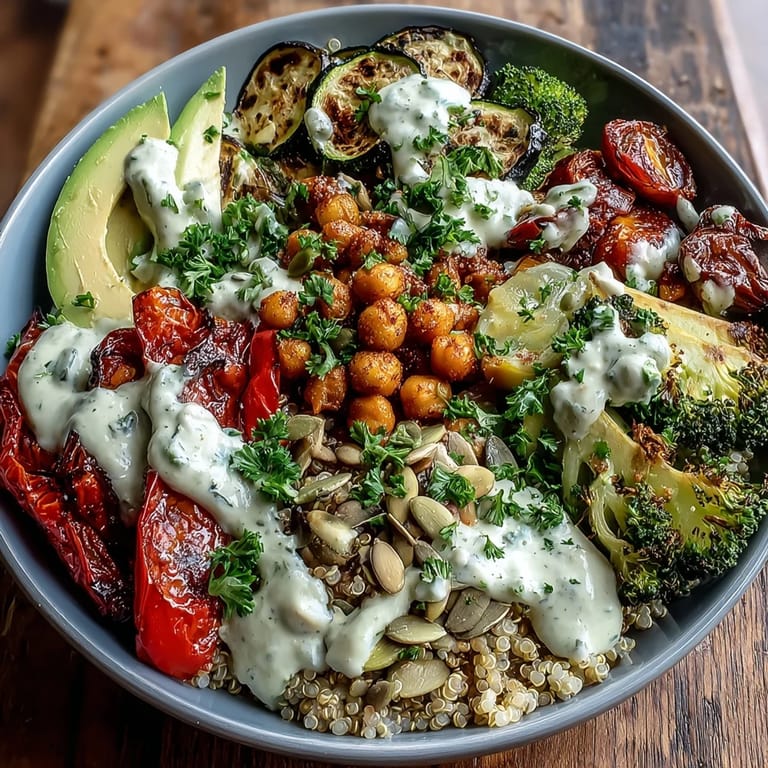
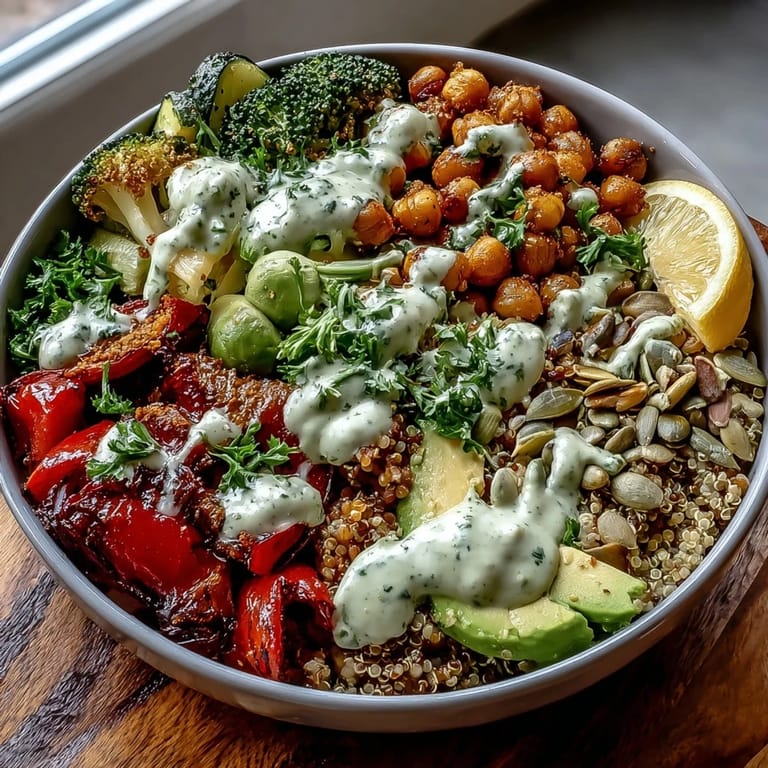
- Once the grains are tender, fluff them gently with a fork and divide them among four bowls. Top each bowl with roasted vegetables and the warmed legumes, then drizzle generously with tahini dressing.
- Finish with fresh toppings and serve:
- Scatter fresh parsley and toasted pumpkin seeds over each bowl, arrange avocado slices on top, and serve with lemon wedges so everyone can squeeze fresh brightness over their meal.
 Save to Pinterest
 There's something deeply satisfying about building your own bowl and watching all these separate components come together into something greater than the sum of its parts. It's cooking that feels both nourishing and fun.
Choosing Your Grains Wisely
The grain you choose sets the tone for the entire bowl. Quinoa is my go-to because it cooks quickly and has a pleasant texture, but brown rice gives you a heartier, earthier feel, and farro brings a chewy sophistication. I've learned that cooking the grain in broth instead of water makes a subtle but real difference in how it tastes—the extra flavor seeps into every grain.
Roasting Vegetables Is Where the Magic Happens
The oven does most of the heavy lifting here, transforming raw vegetables into something deeply flavorful through dry heat. I used to think roasting was just a cooking method, but I've come to see it as flavor development. The paprika and cumin aren't just seasonings; they toast slightly in the oven and become more aromatic and complex than they ever would be raw.
Why This Bowl Works as Meal Prep
I started making these in batches because they hold up surprisingly well in the refrigerator for three to four days. The key is storing the dressing separately and adding the avocado and fresh parsley only when you're about to eat. The vegetables soften slightly when cold, but they still taste good, and there's something nice about having a satisfying lunch ready to grab on a busy morning.
- Pack the dressing in its own small container so the grains stay light and fluffy instead of getting soggy.
- Add avocado and fresh herbs right before eating to keep them looking fresh and tasting bright.
- The bowl tastes equally good cold straight from the fridge or gently reheated in a pan for 2 to 3 minutes.
 Save to Pinterest
 This bowl became my favorite because it asks so little of you while giving back so much in terms of nutrition, flavor, and satisfaction. Make it once, and you'll find yourself making it again and again.
Recipe Q&A
- → Can I make this bowl ahead of time?
Absolutely. The roasted vegetables, cooked grains, and legumes store well in separate airtight containers for up to 5 days. Keep the dressing separate and add fresh garnishes when serving.
- → What other vegetables work well in this bowl?
Sweet potatoes, cauliflower, carrots, Brussels sprouts, butternut squash, and eggplant all roast beautifully. Use whatever seasonal vegetables you prefer or have on hand.
- → How can I add more protein?
Consider adding baked tofu, grilled tempeh, or a soft-boiled egg. For non-vegan options, feta, goat cheese, or grilled chicken pair wonderfully with these flavors.
- → Is this bowl freezer-friendly?
The cooked grains and roasted vegetables freeze well for up to 3 months. Thaw overnight in the refrigerator and reheat gently. Add fresh garnishes and dressing after reheating.
- → Can I use different grains?
Yes. Couscous, barley, bulgur, millet, or even cauliflower rice for a low-carb option all work. Adjust cooking times according to package directions.