 Save to Pinterest
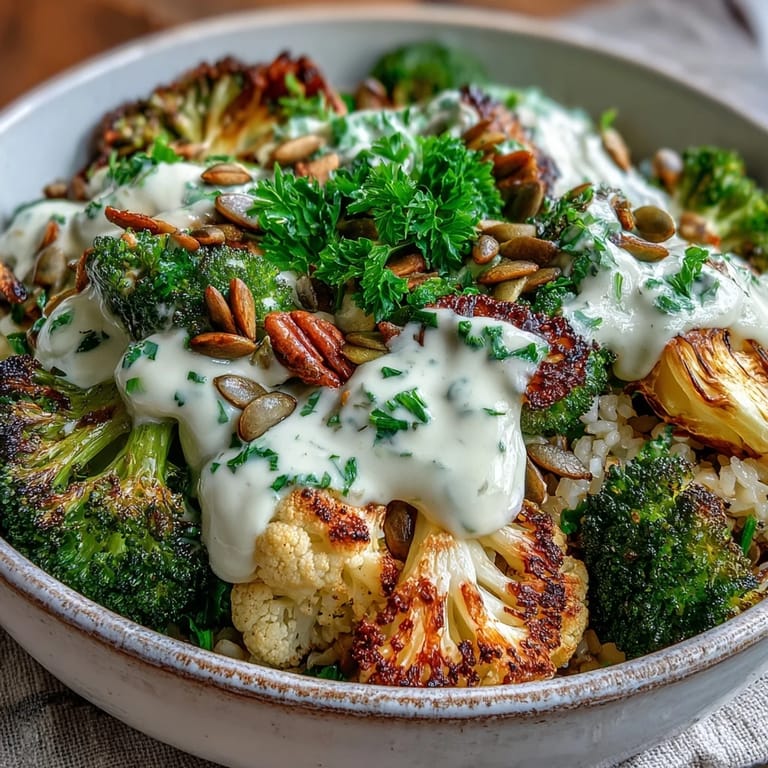
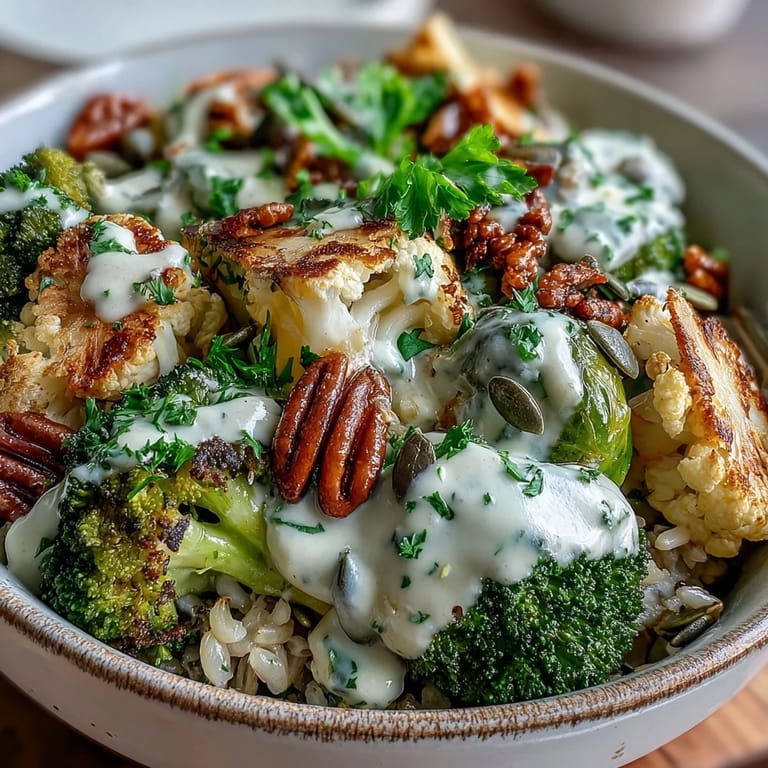
 This Roasted Brassica Bowl is a vibrant and nourishing dish that brings together the best of earthy vegetables and hearty grains. Roasted to perfection, the broccoli, cauliflower, and Brussels sprouts offer a satisfying texture that pairs beautifully with a zesty, homemade tahini-lemon dressing.
Save to Pinterest What's for Dinner Tonight? 🤔
Stop stressing. Get 10 fast recipes that actually work on busy nights.
Free. No spam. Just easy meals.
Whether you are looking for a wholesome lunch or a satisfying dinner, this bowl delivers on both flavor and nutrition. The combination of warm roasted vegetables over a bed of fluffy quinoa, rice, or farro creates a comforting meal that is perfect for any day of the week.
Ingredients
- Vegetables: 1 head broccoli (cut into florets), 1 small head cauliflower (cut into florets), 250 g Brussels sprouts (trimmed and halved), 2 tbsp olive oil, 1/2 tsp sea salt, 1/4 tsp freshly ground black pepper
- Grains: 200 g cooked quinoa, brown rice, or farro (about 1 cup uncooked)
- Dressing: 3 tbsp tahini, 1 1/2 tbsp fresh lemon juice, 1 tbsp maple syrup or honey, 1 small garlic clove (finely grated), 2–3 tbsp water (as needed), pinch of salt
- Toppings (optional): 2 tbsp toasted pumpkin seeds, 2 tbsp chopped fresh parsley, 1 tsp chili flakes
Instructions
- Step 1
- Preheat oven to 220°C (425°F). Line a large baking sheet with parchment paper.
- Step 2
- In a large bowl, toss broccoli, cauliflower, and Brussels sprouts with olive oil, salt, and pepper until evenly coated.
- Step 3
- Spread the vegetables in a single layer on the prepared baking sheet. Roast for 25–30 minutes, stirring halfway, until golden and crisp-tender.
- Step 4
- While vegetables roast, prepare the grains according to package instructions. Fluff with a fork and keep warm.
- Step 5
- For the dressing, whisk together tahini, lemon juice, maple syrup or honey, garlic, and salt in a small bowl. Gradually add water until the dressing is smooth and pourable.
- Step 6
- To assemble, divide cooked grains among four bowls. Top with roasted vegetables. Drizzle generously with tahini-lemon dressing.
- Step 7
- Garnish with pumpkin seeds, parsley, and chili flakes if desired. Serve warm.
Zusatztipps für die Zubereitung
To ensure even roasting, make sure the vegetables are spread in a single layer. For an extra flavor boost, you can sprinkle sumac or smoked paprika over the veggies before they go into the oven.
Varianten und Anpassungen
This recipe is highly versatile; feel free to substitute the grains with couscous, millet, or bulgur. For extra protein, you can add roasted chickpeas or a sprinkle of feta cheese.
Serviervorschläge
Divide the grains and roasted vegetables into four bowls and serve while warm. Garnish with toasted pumpkin seeds and fresh parsley to add a satisfying crunch and freshness.
 Save to Pinterest
 Each serving of this Roasted Brassica Bowl provides approximately 340 calories, 14g of fat, 45g of carbohydrates, and 10g of protein. It is a satisfying, plant-forward meal that celebrates the simple beauty of roasted vegetables.
Recipe Q&A
- → What vegetables work best in this bowl?
Broccoli, cauliflower, and Brussels sprouts form the classic brassica trio, but you can also add roasted kale, cabbage, or romanesco depending on seasonal availability.
- → Can I make this ahead of time?
Yes. Roast the vegetables and cook the grains up to 3 days in advance. Store separately in airtight containers and assemble just before serving with fresh dressing.
- → What grains pair well with roasted brassicas?
Quinoa, brown rice, and farro all provide hearty texture. For quicker options, try couscous or millet. Use gluten-free varieties if needed.
- → How do I get the tahini dressing right?
Whisk tahini with lemon juice and sweetener first until thick, then gradually add room-temperature water one tablespoon at a time until smooth and pourable.
- → What adds extra protein to this dish?
Roasted chickpeas, crumbled feta, hemp seeds, or a serving of shelled edamame all boost protein while complementing the roasted flavors.
- → Can I roast the vegetables differently?
Try tossing with sumac, smoked paprika, or garlic powder before roasting. Different spices create flavor variations while keeping the same method.