 Save to Pinterest
 There's something about the sizzle of meatballs hitting a hot pan that still makes me pause and listen. Years ago, a Japanese coworker brought teriyaki meatballs to a potluck, and I watched people go back for thirds. What struck me wasn't just how good they tasted—it was how simple the magic was: quality meat, a few pantry staples, and a glossy sauce that made everything shine. I've been making my own version ever since, and honestly, they've become the dish I reach for when I want to impress without stress.
I made these for my sister's dinner party last spring, and something unexpected happened: her picky eater asked for seconds. That kid had never voluntarily eaten anything with ginger before, but the sweetness and umami of the glaze made him curious enough to try. Watching someone discover a flavor they thought they'd hate is one of those small kitchen victories that reminds me why I cook.
What's for Dinner Tonight? 🤔
Stop stressing. Get 10 fast recipes that actually work on busy nights.
Free. No spam. Just easy meals.
Ingredients
- Ground beef or chicken (500 g): The foundation—use freshly ground meat if you can, because it binds better and cooks more evenly than what's been sitting in the case.
- Egg (1 large): Your binder and the reason these stay tender instead of dense; don't skip it.
- Panko breadcrumbs (40 g): They keep things light and crispy on the outside without the heaviness of regular crumbs.
- Garlic and ginger (2 cloves and 1 Tbsp): This is where the soul lives—fresh ginger especially makes a noticeable difference over ground.
- Spring onions (2, finely chopped): They add a gentle sharpness that brightens the whole mixture.
- Soy sauce (2 Tbsp in mixture, 120 ml for sauce): Use a good quality one; it's the backbone of your umami.
- Sesame oil (1 Tbsp): A little goes a long way—this is about aroma and depth, not oil content.
- Mirin (60 ml): The secret to authentic glossiness; don't substitute honey alone or you'll lose that silky texture.
- Rice vinegar and honey (1 Tbsp each): These balance sweetness with brightness so the sauce doesn't taste one-dimensional.
- Cornstarch slurry (2 tsp each): Your thickener—this is how you get that restaurant-quality glaze that clings.
- Rice (240 g uncooked): Jasmine or sushi rice soaks up the sauce beautifully; short-grain matters here.
- Cucumber and sesame seeds: The crisp and nutty finish that makes these bowls sing.
Instructions
- Start your rice first:
- Get it going before anything else because timing is everything. You want it warm and ready when the meatballs are glazed.
- Prepare your workspace:
- Line a baking sheet with parchment paper and preheat your oven to 200°C. This takes two minutes but saves cleanup and prevents sticking.
- Mix the meatball base gently:
- Combine all the meatball ingredients in a large bowl, stirring just until everything is incorporated—overmixing makes them tough and dense. You want them tender, so resist the urge to knead.
- Shape and arrange:
- Roll into 20–24 small meatballs (about the size of a walnut) and space them on your baking sheet. They'll cook more evenly if they're not crowded.
- Bake until golden:
- Pop them in for 15–18 minutes until they're cooked through and the outside has some color. You'll know they're done when a meat thermometer reads 160°C, but honestly, they look perfect when they're golden brown and firm to touch.
- Make the teriyaki sauce while they bake:
- In a saucepan, combine soy sauce, mirin, water, brown sugar, honey, and rice vinegar. Stir it over medium heat until the sugar dissolves and the mixture is fragrant—this takes about 3–4 minutes.
- Thicken and finish the sauce:
- Stir your cornstarch slurry in slowly while simmering, and watch as the sauce transforms from glossy to silky. Once it coats the back of a spoon, you're done—usually just 1–2 minutes.
- Coat the meatballs:
- Transfer your baked meatballs to the warm sauce and toss gently so every one gets that beautiful glaze. The sauce will cling and set as it cools slightly.
- Assemble your bowls:
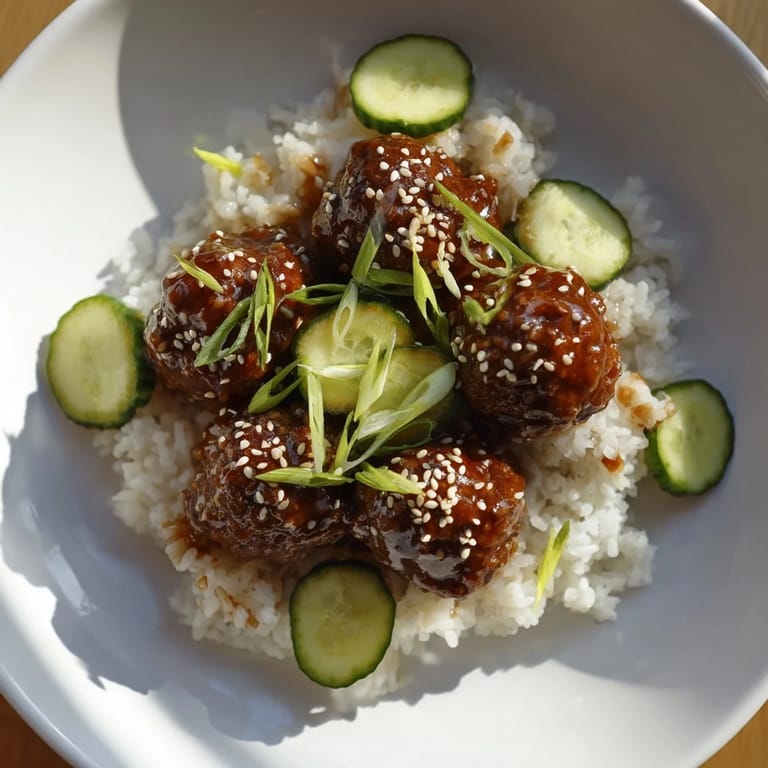
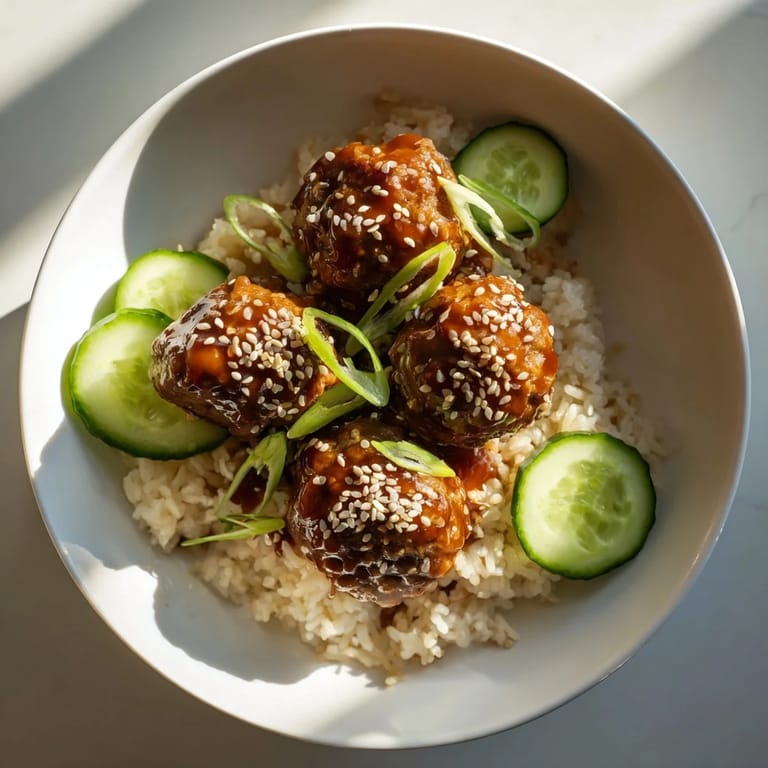
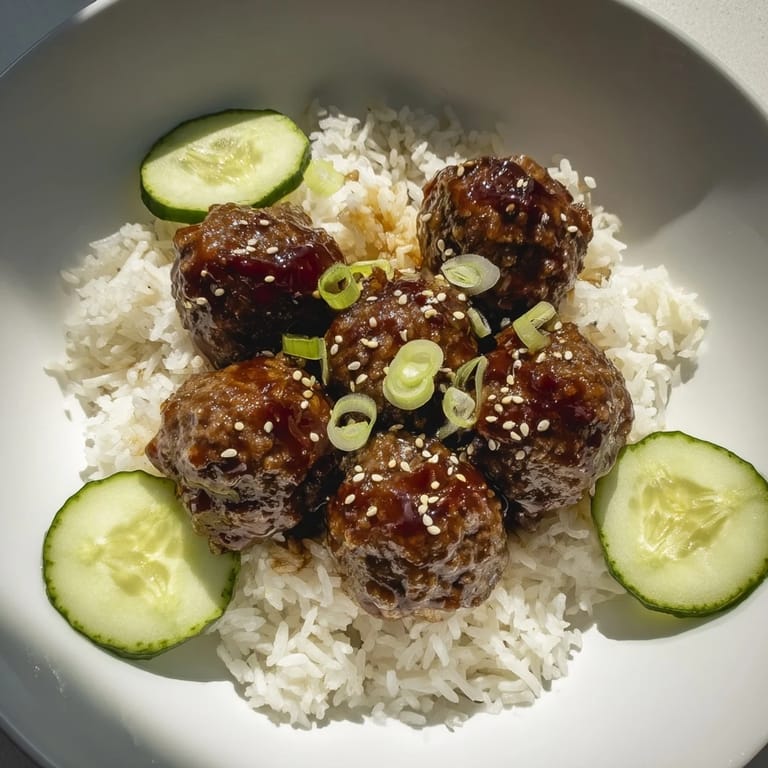
- Divide hot rice among four bowls, top with meatballs and sauce, then add cucumber slices, sesame seeds, and fresh spring onions. The cucumber stays crisp and the meatballs stay warm—perfect balance.
- Serve immediately:
- These are best enjoyed right away while the contrast between warm and cool is at its best.
 Save to Pinterest
 I remember one night when my partner tasted these straight from the pan without the rice, just the warm meatball with cucumber on top, and said, "This tastes like you figured something out." That moment, when food becomes proof that you've learned something, is when cooking stops being a chore and becomes its own language.
Why Baking Beats Pan-Frying
The first time I baked meatballs instead of standing over a hot pan, I felt like I'd discovered a secret. They brown more evenly, stay moister inside, and you're not tethered to the stove. Oven heat is forgiving in a way that searing isn't—you have a few minutes of wiggle room, and there's no risk of burning the outside while the center stays raw.
The Sauce is Everything
The teriyaki glaze is where this dish lives or dies, and I've learned it's not about dumping everything in and hoping. Mirin brings a subtle sweetness and that silky texture you can't replicate with regular sugar. Rice vinegar cuts through without being sharp. Honey rounds it all out. The cornstarch slurry is what transforms it from liquid to clingy glaze—it's the difference between a sauce that runs off and one that hugs every meatball.
Endless Variations to Keep Things Fresh
These bowls are a canvas, and once you've made them a few times, you'll start experimenting. Steamed broccoli or edamame adds nutrition and chew. Pickled ginger brings sharpness. A soft-boiled egg on top turns it into something more substantial. I've even scattered roasted almonds on top for crunch. The meatballs and sauce are sturdy enough to handle whatever you throw at them.
- Try ground turkey or pork if you want to change up the protein without changing the method.
- Make a double batch of the teriyaki sauce and keep it in the fridge—it's delicious on roasted vegetables or grilled chicken too.
- If you need gluten-free, swap tamari for soy sauce and use certified gluten-free breadcrumbs without fussing over it.
 Save to Pinterest
 These teriyaki meatball bowls have somehow become the meal I make when I want to feel like I'm taking care of someone, including myself. There's something satisfying about a warm bowl of rice topped with something you made from scratch, glazed and glistening.
Recipe Q&A
- → What type of meat works best for these meatballs?
Ground beef or chicken are ideal for tender texture, but ground turkey or pork can also be used as alternatives.
- → Can I use a different type of rice?
Jasmine or sushi rice is recommended for its fluffy texture, but any short-grain rice will complement the flavors well.
- → How do I achieve a glossy teriyaki sauce?
Simmer the sauce ingredients then add a cornstarch slurry to thicken and create that signature shiny glaze.
- → What can I substitute for soy sauce to make it gluten-free?
Gluten-free tamari is a perfect alternative that maintains the savory umami taste.
- → How can I add extra vegetables to this bowl?
Steamed broccoli, edamame beans, or pickled ginger add flavor and nutrition without overpowering the dish.