
 Save to Pinterest
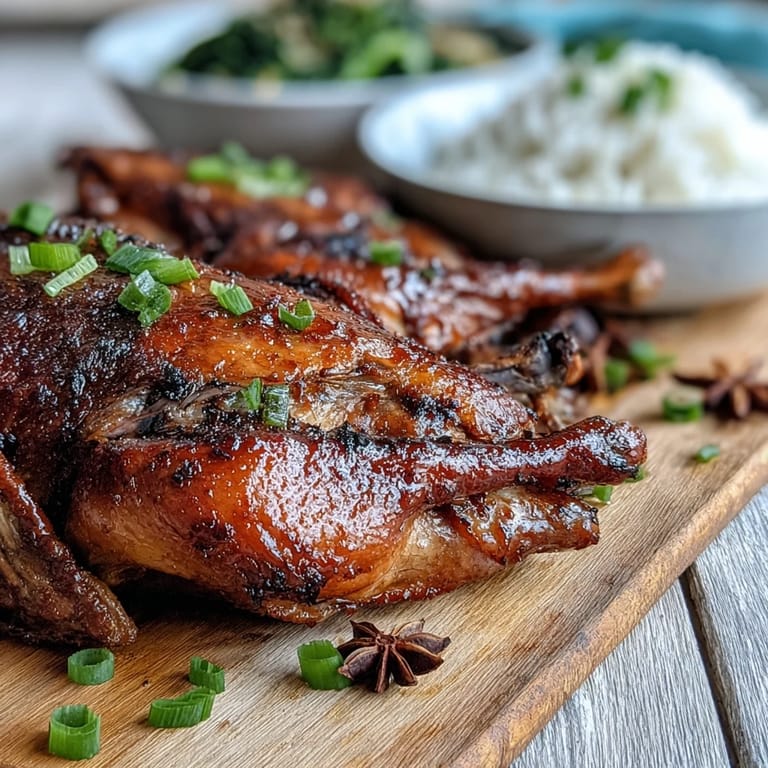
 The kitchen was thick with the scent of ginger and star anise when I pulled that first duck from the oven, its skin crackling like autumn leaves underfoot. My hands were slick with honey and soy, and I remember thinking I had no idea what I was doing. But the moment I carved into that glossy, mahogany bird, releasing a cloud of fragrant steam, I knew I'd stumbled onto something worth repeating. It's become my go-to when I want to cook something that feels like an occasion without the fuss of a dozen side dishes.
I made this for Valentine's Day once, mostly because I wanted to try something different from the usual steak or pasta routine. My partner walked in just as I was basting the duck for the third time, and the look on their face, half skeptical and half intrigued, made me laugh. By the time we sat down to eat, the skepticism had vanished. We ate in near silence, too busy savoring every bite to bother with conversation, and that felt more romantic than any candlelit small talk ever could.
What's for Dinner Tonight? 🤔
Stop stressing. Get 10 fast recipes that actually work on busy nights.
Free. No spam. Just easy meals.
Ingredients
- Whole duck (about 1.5 to 2 kg): Look for one that's been cleaned and dried well, the drier the skin, the crispier it will roast, and trust me, you want that crackle.
- Chinese five-spice powder (2 tbsp): This is the soul of the dish, a warm blend of star anise, cloves, cinnamon, Sichuan pepper, and fennel that makes the whole kitchen smell like a spice market.
- Sea salt (1 tsp): Don't skip this, it draws out moisture from the skin and helps achieve that shatteringly crisp finish.
- Light soy sauce (1 tbsp): Adds savory depth without overwhelming the other flavors, and if you need gluten-free, just check the label.
- Dark soy sauce (1 tbsp): This is what gives the duck that rich, glossy mahogany color that makes it look like it came from a restaurant kitchen.
- Honey (2 tbsp): Balances the salty and spicy elements with a subtle sweetness that caramelizes beautifully in the oven.
- Shaoxing wine or dry sherry (2 tbsp): A splash of this cuts through the richness of the duck and adds a gentle, almost floral note.
- Garlic (4 cloves, minced): Fresh garlic is non-negotiable here, it mellows as it roasts and infuses the meat with warmth.
- Fresh ginger (2-inch piece, grated): The zing of ginger brightens everything and keeps the duck from feeling too heavy.
- Orange (1, zested and juiced): Citrus is a secret weapon with fatty meats, it lifts and balances in a way nothing else can.
- Spring onions (2, chopped): Tucked inside the cavity, they perfume the meat from within and soften into sweet, aromatic bits.
- Orange for roasting (1, quartered): This goes inside the duck to add moisture and a gentle citrus fragrance as it cooks.
- Star anise pods (4): These go into the cavity too, releasing their licorice-like aroma slowly and steadily throughout the roast.
Instructions
- Make the marinade:
- In a small bowl, whisk together the five-spice powder, salt, both soy sauces, honey, Shaoxing wine, minced garlic, grated ginger, orange zest, and juice until it forms a thick, fragrant paste. The smell alone will make you hungry.
- Prepare the duck:
- Set the duck on a rack in a roasting pan and use a fork to prick the skin all over, being careful not to pierce the meat underneath. This lets the fat render out and the skin crisp up beautifully.
- Season and stuff:
- Rub the marinade all over the outside and inside of the duck, massaging it into every crevice. Stuff the cavity with the orange quarters, chopped spring onions, and star anise pods, then let it marinate uncovered in the fridge for at least an hour, or overnight if you have the patience.
- Start roasting:
- Preheat your oven to 180°C (350°F), then slide the duck in breast-side up. Roast for 1 hour, basting every 30 minutes with the pan juices to build up that glossy, flavorful crust.
- Crisp the skin:
- Crank the heat up to 220°C (425°F) and roast for another 20 to 30 minutes until the skin turns deep golden and crackles when you tap it. Keep an eye on it so it doesn't burn.
- Rest and serve:
- Pull the duck out and let it rest for 10 minutes before carving. Serve it with steamed jasmine rice and stir-fried greens, or whatever feels right in the moment.
 Save to Pinterest
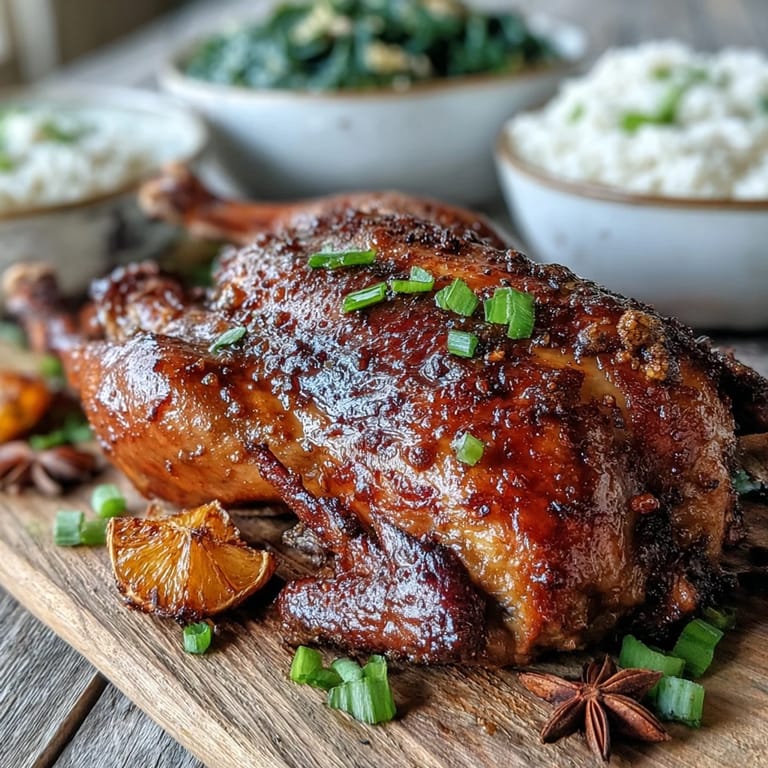
 The first time I pulled this off successfully, I stood there with the carving knife in my hand, feeling a little bit like a magician. My friend, who swore she didn't like duck, went back for seconds and then thirds, scraping up every last bit of crispy skin from the platter. Watching someone fall in love with a dish you made is one of those quiet joys that never gets old, no matter how many times it happens.
Getting the Skin Just Right
The secret to that restaurant-quality crispy skin is all about moisture control and heat. After pricking the skin, letting the duck air-dry in the fridge does most of the heavy lifting, drawing out surface moisture so the skin can crisp instead of steam. When you baste, you're adding flavor and encouraging even browning, but don't overdo it or you'll soften the skin you've worked so hard to dry. The final blast of high heat is what seals the deal, turning the skin from golden to gloriously crackling.
Flavor Variations Worth Trying
If you want to switch things up, try swapping the honey for maple syrup, it adds a deeper, almost smoky sweetness that plays beautifully with the five-spice. You can also add a splash of rice vinegar to the marinade for extra tang, or tuck a few slices of fresh chili into the cavity if you like a bit of heat. I've even used blood oranges instead of regular ones when they're in season, and the slight bitterness adds another layer of complexity that's hard to beat.
Serving and Storing Leftovers
This duck is stunning served whole on a platter, but it's just as good sliced thin and piled over rice or noodles. Leftover meat can be shredded and tossed into fried rice, tucked into wraps with cucumber and hoisin, or eaten cold straight from the fridge at midnight when no one's watching. The rendered fat in the bottom of the pan is liquid gold, save it and use it to roast potatoes or fry eggs for a breakfast that tastes like a small miracle.
- Let the duck rest before carving so the juices redistribute and every slice stays moist.
- Store leftovers in an airtight container in the fridge for up to three days.
- Reheat slices gently in a low oven to keep the skin crispy, microwaving will make it soggy.
 Save to Pinterest
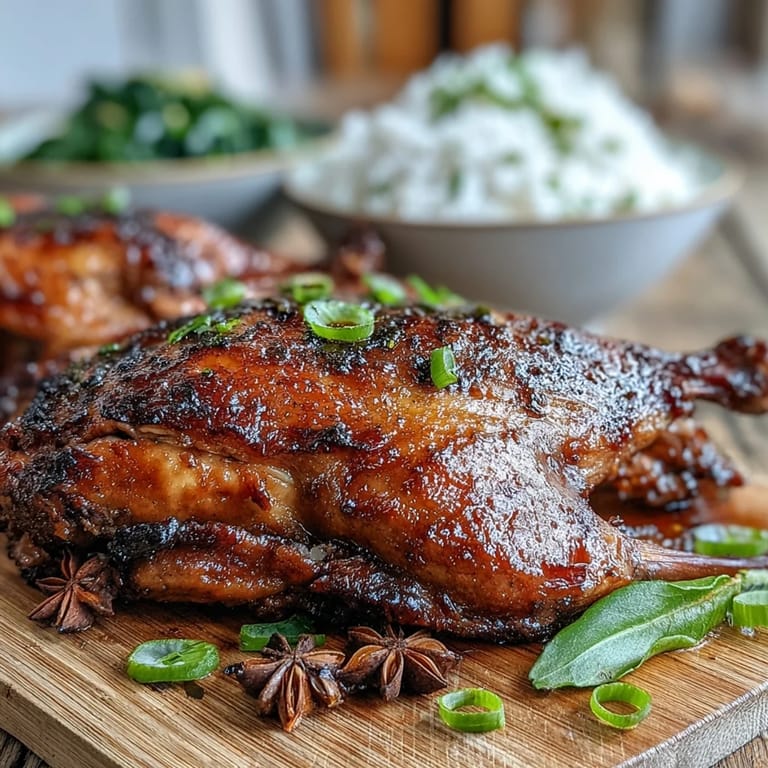
 There's something deeply satisfying about pulling off a dish that looks and tastes this impressive with so little actual fuss. This duck has turned ordinary evenings into celebrations and made me feel capable in the kitchen when I needed that reminder most.
Recipe Q&A
- → Can I prepare the duck ahead of time?
Yes, marinating the duck overnight in the refrigerator enhances the flavors and helps achieve crispier skin when roasted.
- → What can I use instead of Shaoxing wine?
Dry sherry is an excellent substitute for Shaoxing wine, or you can use rice wine or even white wine in a pinch.
- → How do I ensure the skin gets crispy?
Prick the skin all over without piercing the meat, roast uncovered, baste regularly, and finish at high heat for 20-30 minutes to achieve golden, crispy skin.
- → Is this dish suitable for gluten-free diets?
Yes, when using certified gluten-free soy sauce. Regular soy sauce contains wheat, so always check labels if gluten sensitivity is a concern.
- → What should I serve with this duck?
Steamed jasmine rice, stir-fried greens, or Asian-style vegetables pair beautifully. A light Pinot Noir or jasmine tea complements the rich flavors.
- → Can I use duck portions instead of a whole duck?
Absolutely. Duck breasts or legs work well with this marinade; adjust cooking times accordingly, typically 45-60 minutes depending on the cut.