 Save to Pinterest
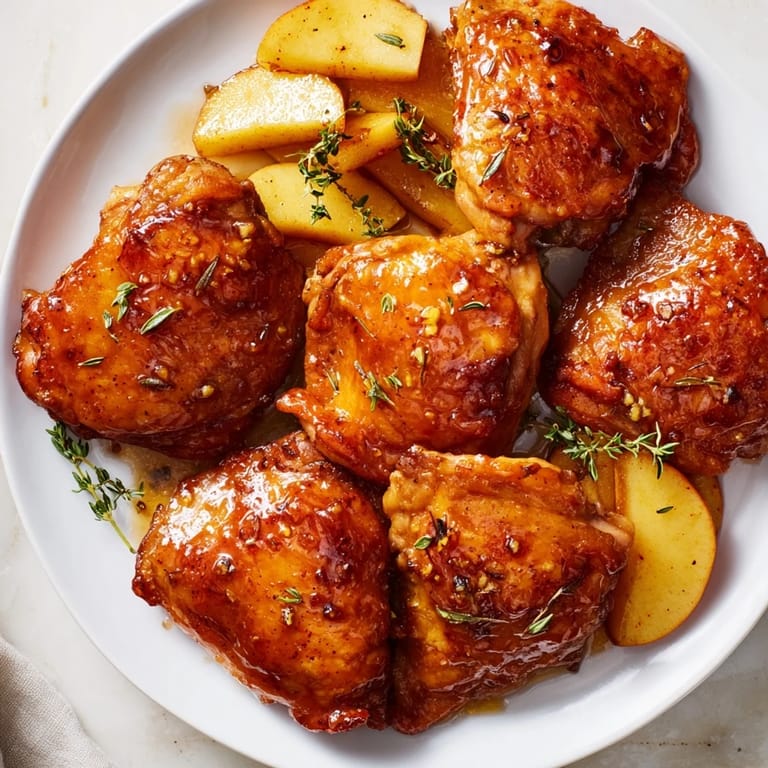
 One autumn evening, I was standing in my kitchen staring at a bottle of maple syrup that had been sitting in my pantry for months, when my neighbor knocked on the door with a bag of apples from her orchard. That collision of ingredients sparked something—what if I combined them with chicken thighs, the kind that actually stay juicy no matter what you do to them? The result was sticky, caramelized, and so good that I've made it countless times since, each batch reminding me that sometimes the best meals come from happy accidents.
I served this to my in-laws without warning, just pulled it from the oven and set it down. My mother-in-law—who is notoriously quiet about food—asked for the recipe before she'd finished her plate. That moment taught me that sometimes the simplest meals, the ones that don't require fancy techniques or obscure ingredients, are the ones people actually remember.
What's for Dinner Tonight? 🤔
Stop stressing. Get 10 fast recipes that actually work on busy nights.
Free. No spam. Just easy meals.
Ingredients
- Bone-in, skin-on chicken thighs (8 pieces, about 1.2 kg / 2.5 lbs): Use thighs, never breasts—they forgive overcooking and stay tender, and that rendered skin becomes crackly and golden in the oven.
- Pure maple syrup (1/3 cup): Real maple syrup matters here; the cheap stuff tastes thin and one-dimensional when it caramelizes.
- Apple cider or unsweetened apple juice (1/3 cup): This adds body and slight acidity that keeps the glaze from becoming cloyingly sweet.
- Apple cider vinegar (2 tbsp): The secret weapon that makes the sweet notes sharper and more interesting.
- Dijon mustard (2 tbsp): It acts as an emulsifier and adds subtle heat and sophistication.
- Olive oil (2 tbsp): Helps the glaze coat the chicken and adds richness.
- Garlic, minced (2 cloves): Garlic and apples have an unexpected affinity; keep it fresh.
- Fresh thyme leaves (1 tsp, or 1/2 tsp dried): Dried thyme works fine if you're out of fresh, but fresh has a cleaner, brighter flavor.
- Smoked paprika (1/2 tsp): This adds depth and a whisper of smokiness that makes people wonder what your secret is.
- Salt (1/2 tsp) and black pepper (1/4 tsp): Taste as you go; you'll season the chicken itself too.
- Medium apples like Honeycrisp or Gala (2 apples, cored and sliced): Choose apples that are tart-sweet, not mealy; they should hold their shape during baking.
- Fresh thyme sprigs (optional garnish): A small handful scattered on top at the end looks beautiful and smells incredible.
Instructions
- Prepare your stage:
- Heat the oven to 400°F (200°C) and line a large baking dish with parchment paper or a light grease. This takes the stress out of cleanup later, and the parchment helps everything cook evenly.
- Dry and season the chicken:
- Pat each chicken thigh bone-dry with paper towels—dry skin is the only way to get it crispy. Give each thigh a small pinch of salt and pepper, both sides.
- Build the glaze:
- In a bowl, whisk together the maple syrup, apple cider, vinegar, mustard, olive oil, garlic, thyme, paprika, and the remaining salt and pepper. Taste it straight from the spoon; it should taste balanced—sweet, but with a sharp, savory undertone.
- Arrange everything:
- Place chicken thighs skin-side up in the baking dish, leaving some space between them. Tuck the apple wedges into the gaps around the chicken like you're cradling them.
- Glaze and bake:
- Pour the glaze over everything, then gently turn each thigh once to coat the bottom side. The apples don't need coating; they'll cook in the pan juices. Bake for 30–35 minutes, basting once or twice halfway through with the juices pooling at the bottom—this is what creates that sticky, lacquered finish.
- Check for doneness:
- The skin should be deep golden and the internal temperature should hit 165°F (74°C) at the thickest part of the thigh, away from bone. The glaze will look thick and clingy.
- Optional caramelization:
- If you want extra deepness, flip on the broiler for 2–3 minutes. Watch it closely—the line between caramelized and charred is quick.
- Rest and serve:
- Pull the pan from the oven and let everything sit for 5 minutes. This lets the chicken relax and the juices redistribute. Scatter fresh thyme over top if you have it.
 Save to Pinterest
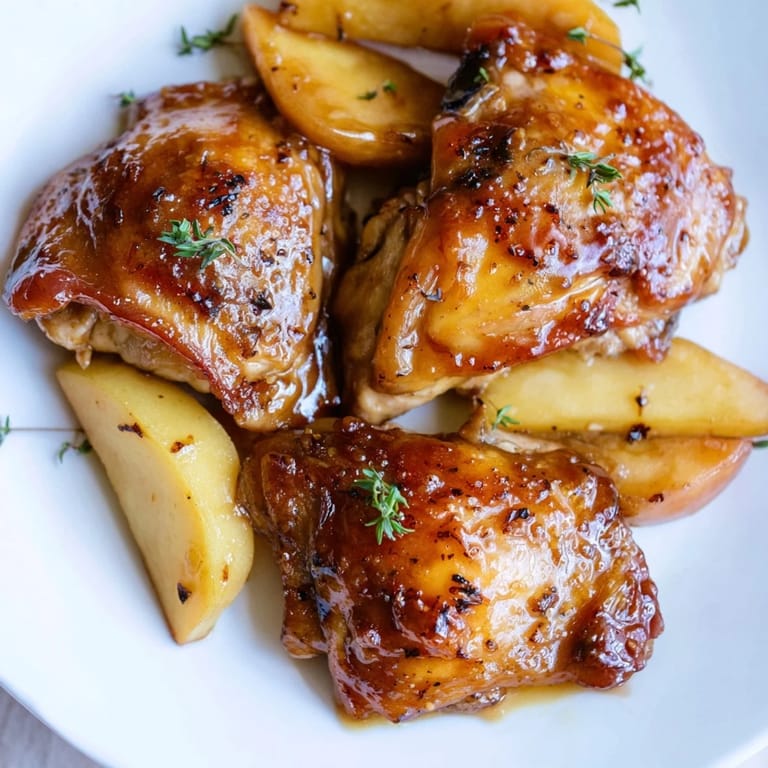
 There's a moment near the end of baking when you open the oven and the smell hits you—maple and caramelized apple and thyme mixing with that savory chicken fat. My daughter once asked if I'd made dessert, and that's when I knew this dish had crossed into something special, something that blurs the line between comfort and indulgence.
Why Chicken Thighs Win Here
Chicken breasts would dry out under the glaze, turning into rubber by the time the sauce caramelizes. Thighs have enough fat and connective tissue to stay forgiving—they actually taste better the longer they cook. The skin renders down and becomes crispy, the meat stays juicy, and the bone adds flavor to every bite. Once you cook with thighs, you realize why they've been the home cook's secret weapon for generations.
The Glaze Is Everything
This isn't a sauce you pour on at the end; it's engineered to caramelize and stick to the chicken as it bakes. The maple syrup provides sweetness and color, the apple cider adds moisture and subtle tartness, the vinegar cuts through richness, and the mustard emulsifies everything into a glaze that clings instead of running off. The smoked paprika is quiet but essential—it gives the whole dish a depth that makes people ask what spice you used. I once forgot the paprika and the dish was still good, but it felt flat, one-dimensional. That's when I realized seasoning isn't optional; it's how you build complexity.
Serving and Pairing
I've served this with roasted root vegetables, creamy mashed potatoes, and plain white rice—it works with all of them. The sticky glaze and tender apples are rich enough to stand on their own, but a starch or vegetable on the side feels right. If you're pouring drinks, a crisp apple cider or a dry Riesling with slight sweetness echoes the apples without fighting the savory notes. One guest brought over a hard cider and it was perfect—that bridge between the drink and the dish made everything taste even better.
- Leftovers shred easily and make an incredible sandwich the next day, especially on toasted bread with a smear of mayo.
- You can make this glaze the night before and refrigerate it; just whisk it again before using.
- If you have boneless, skinless thighs instead, they'll cook about 5–8 minutes faster, so adjust your timing accordingly.
 Save to Pinterest
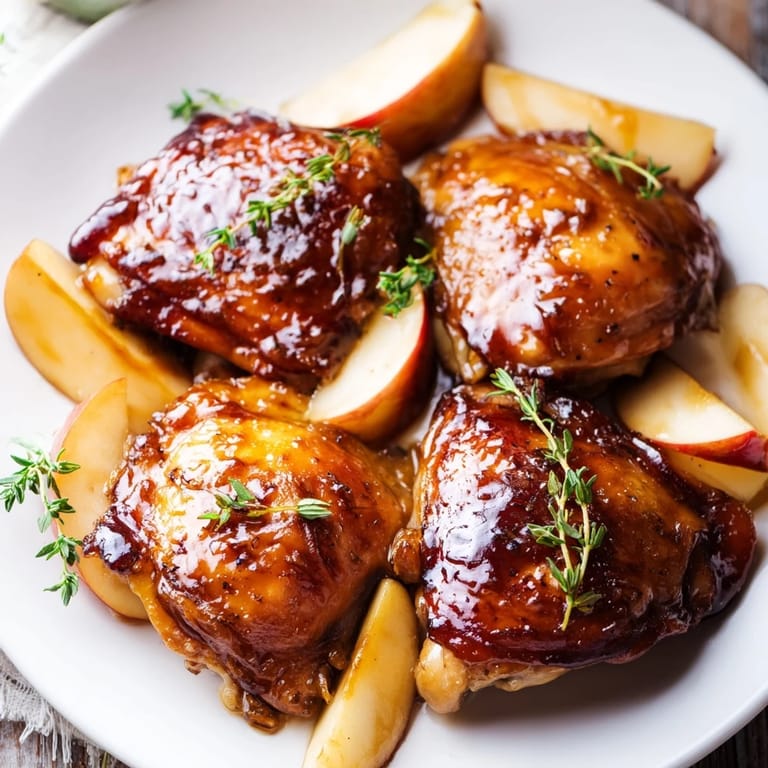
 This dish has become my answer to the question "what should I make for dinner?" when I'm tired but want to feel like I've done something right. It's one of those recipes that tastes like you worked harder than you actually did.
Recipe Q&A
- → What type of chicken is best for this dish?
Bone-in, skin-on chicken thighs provide rich flavor and a juicy texture, but boneless skinless thighs can be used with adjusted baking time.
- → Can I substitute apple cider in the glaze?
Yes, unsweetened apple juice works well as a substitute, maintaining the sweet and tangy character.
- → How do I achieve the sticky glaze consistency?
Frequent basting during baking and finishing with a short broil caramelizes the glaze, creating its signature sticky texture.
- → Are there optional spices to enhance the flavor?
A pinch of chipotle powder can be added to the glaze for a smokier, spicier note without overpowering the sweetness.
- → What sides pair well with this dish?
Roasted vegetables, mashed potatoes, or rice complement the rich glaze and tender chicken perfectly.
- → Is this dish suitable for special diets?
Yes, it is gluten-free and dairy-free, but check mustard and apple cider ingredients if you have specific allergies.