 Save to Pinterest
 My first encounter with mici was at a street festival in Bucharest on a sweltering summer evening, the smell of charred meat and paprika hitting me before I even saw the grill. I watched an older man shape the meat with practiced hands, each cylinder nearly identical, before laying them over flames that crackled and hissed. Years later, I finally asked for the recipe, and what struck me most wasn't the technique—it was how simple the ingredients were, yet how alive they tasted when grilled properly.
I made these for a small backyard gathering last spring, and honestly, I was nervous about whether I'd captured the right texture. The moment the first batch came off the grill, still steaming, and someone bit into one without even reaching for the mustard, I knew I'd gotten it right. There's something deeply satisfying about food that brings people back to the grill for seconds before the first batch has even cooled.
What's for Dinner Tonight? 🤔
Stop stressing. Get 10 fast recipes that actually work on busy nights.
Free. No spam. Just easy meals.
Ingredients
- Ground beef (500g, 80/20 ratio): The backbone of mici—the fat ratio matters because it keeps them tender as they cook, not dry and crumbly.
- Ground pork (300g): This adds sweetness and helps bind everything together with its natural collagen.
- Ground lamb (200g, optional): If you can find it, lamb gives mici that authentic, slightly gamey note that makes people pause and ask what's in them.
- Garlic (5 cloves, finely minced): Raw garlic will overpower if you use less; this amount dissolves into warmth rather than a sharp bite.
- Smoked paprika (1½ tsp): The soul of the dish—don't skimp on quality or substitute sweet paprika unless you want a completely different flavor.
- Black pepper, coriander, and cumin (1½ tsp each): Together they create a warm, almost woody backbone that the baking soda will lift and brighten.
- Dried thyme (1 tsp): A whisper of herbs that prevents the spices from feeling heavy.
- Baking soda (1 tsp): This is the secret—it aerates the meat mixture slightly, making them lighter and more tender than you'd expect.
- Salt (2 tsp): Add it during mixing so it dissolves and helps bind the meat; don't salt at the end.
- Cold beef stock or sparkling water (200 ml): The cold liquid is crucial—it keeps the fat from separating while you knead, and creates that signature tender crumb.
- Vegetable oil (1 tbsp): Just enough for your hands and the grill to prevent sticking without making them greasy.
Instructions
- Combine the meats:
- In a large bowl, mix all three ground meats together thoroughly until you can't see distinct patches of any one type. This even distribution is what makes them cook uniformly.
- Add the spice blend:
- Scatter the garlic, paprika, pepper, coriander, cumin, thyme, baking soda, and salt over the meat. Mix with your hands or a sturdy spoon until the color is even and the spices are fully incorporated—no streaks of paprika, no pockets of garlic.
- Knead in the cold liquid:
- Slowly pour the cold stock or sparkling water into the mixture while kneading it with your hands for about 5 minutes. The mixture will go from crumbly to sticky and cohesive; you'll feel the texture change as the meat begins to bind. This is where the magic happens—don't rush it.
- Rest in the refrigerator:
- Cover the bowl and refrigerate for at least 2 hours, ideally overnight. This resting period allows the spices to deepen and the mixture to firm up slightly, making it easier to shape and resulting in better flavor.
- Shape the mici:
- Lightly oil your hands to prevent sticking. Take about 2 tablespoons of the mixture and roll it between your palms into a cylinder roughly 8–10 cm long and 2 cm thick—think about the size of a thick marker. Keep your hands cool and work fairly quickly so the meat doesn't warm up.
- Prepare the grill:
- Heat your grill or grill pan to medium-high heat until you can hold your hand about 10 cm above it and feel real warmth after 3 seconds. Lightly oil the grates or surface to prevent sticking.
- Grill until crisp:
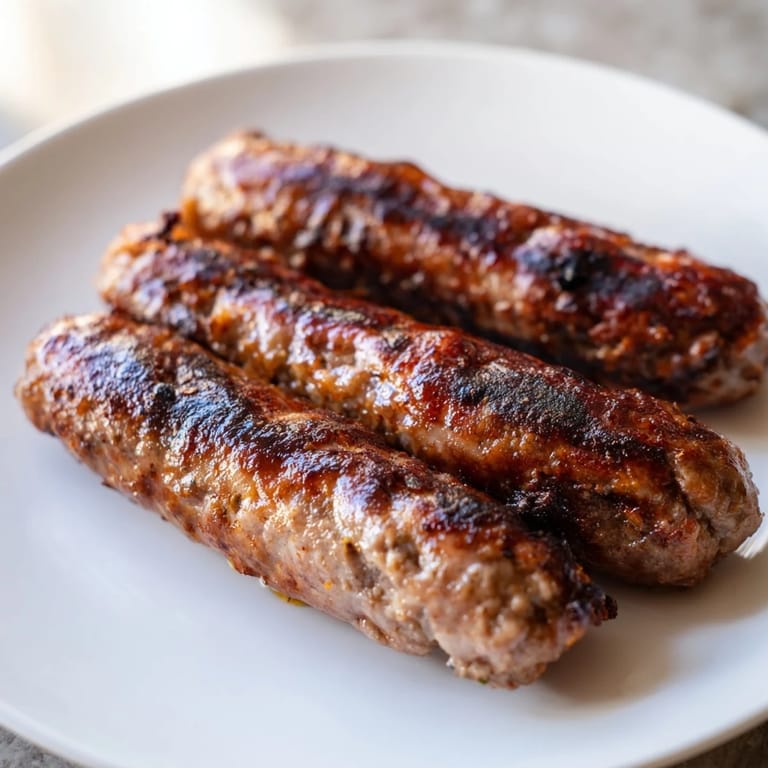
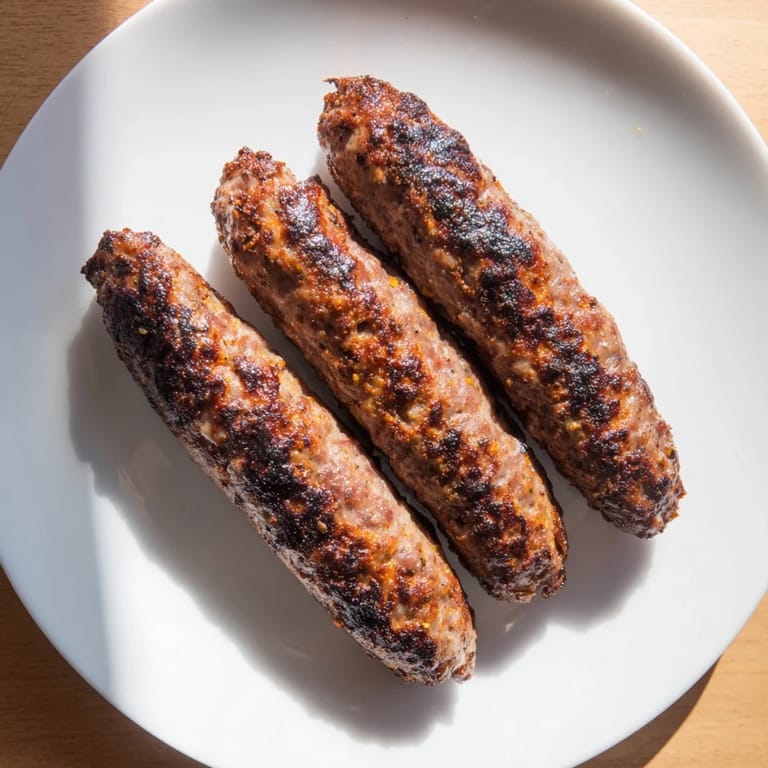
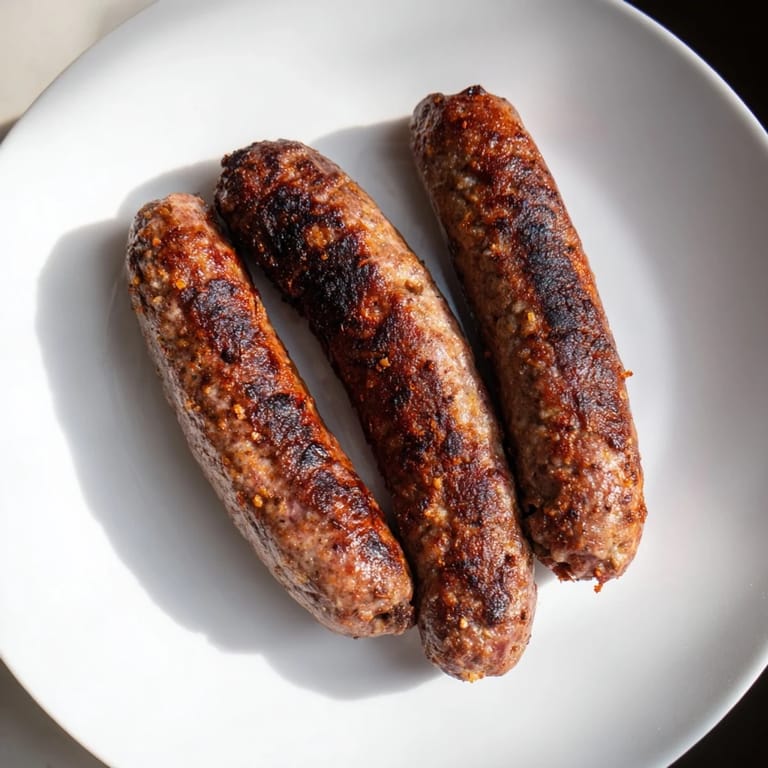
- Lay the mici on the hot grill and let them sit without moving for 3–4 minutes, until the bottom is browned and has light char marks. Rotate each one carefully with tongs and grill the other sides for 3–4 minutes each, turning them a few times to brown all surfaces. They're done when the outside is crisp and they feel firm when pressed gently.
- Serve immediately:
- Transfer them to a warm plate and serve right away with sharp mustard, fresh bread, and fresh onions or pickles on the side if you like.
 Save to Pinterest
 There's a moment I remember while grilling these at a friend's house when everyone stopped talking just to watch them cook, drawn by the smell and the sound of the meat crackling on the grill. That's when I realized mici are about more than just eating—they're about gathering around something alive and noisy and delicious, the kind of food that makes a backyard feel like home.
The Science of Juiciness
The magic of mici lives in balancing fat, binding, and moisture. The 80/20 beef ratio keeps them tender; the pork adds gelatin; the lamb (if used) brings richness. The baking soda slightly raises the pH of the meat, allowing it to retain water better as it cooks, which is why they stay juicy even after charring. The kneading develops myosin—a protein that acts like a sponge, holding onto moisture throughout cooking.
Shaping and Handling Tips
The most common mistake is shaping them too loosely or with warm hands; the mixture gets sticky and falls apart on the grill. Keep your hands lightly oiled but not dripping, and if the mixture warms up during shaping, refrigerate it again for 20 minutes. Even if your cylinders aren't perfectly symmetrical, they'll cook evenly as long as they're roughly the same thickness throughout.
Serving and Pairing
In Romania, mici are rarely served alone—they're a vehicle for other flavors and textures. Sharp mustard cuts through the richness, while fresh crusty bread absorbs the juices and any char. Pickled vegetables or fresh onions add brightness, and a cold lager or dry Romanian white wine is the only beverage that feels right.
- Slice them diagonally and serve on a platter with small glasses of mustard for dipping.
- Leftover mici can be refrigerated and eaten cold the next day, which somehow tastes even better.
- If you have a freezer, shape the entire batch and freeze on a tray before transferring to a bag—they cook straight from frozen with no adjustment to timing.
 Save to Pinterest
 Mici are humble—just seasoned meat on a grill—but they've taught me that sometimes the best meals are the simplest ones, made with attention and shared with people who matter. Once you've mastered these, you'll find yourself making them constantly.
Recipe Q&A
- → What meats are traditionally used in Romanian mici?
Romanian mici typically combine ground beef, pork, and sometimes lamb for a richly flavored blend.
- → Which spices give the distinctive flavor in mici?
Aromatic spices such as garlic, smoked paprika, black pepper, coriander, cumin, and thyme create their unique taste.
- → How is the mixture prepared for shaping?
Ground meats are mixed thoroughly with spices and cold beef stock or sparkling water, then kneaded until sticky before chilling.
- → What is the best way to cook mici for ideal texture?
Grilling over medium-high heat crisps the outside while keeping the inside tender and juicy.
- → Can mici be cooked without a grill?
Yes, they can also be broiled or cooked on a stovetop grill pan with light oiling.
- → What traditional accompaniments pair well with mici?
Serving mici with mustard and fresh bread enhances their classic flavor profile.