 Save to Pinterest
 The first time I truly understood what made schnitzel special wasn't from a recipe book—it was watching my neighbor Greta pan-fry hers in her Vienna kitchen, the meat turning a burnished gold while the butter hissed and crackled. She kept saying, "Not too much pressing, or you lose the air," and suddenly I realized this wasn't about technique; it was about listening to the meat as it cooked. That afternoon, I learned that schnitzel is as much about the sound and smell as it is the crispy, yielding bite.
I made this for my family on a rainy Sunday, and my dad—who's not easy to impress—closed his eyes after the first bite and said nothing for a full minute. When he finally spoke, he just asked for seconds and a squeeze of lemon. That's when I knew I'd nailed it; schnitzel has a way of quieting people down and bringing them back to the table.
What's for Dinner Tonight? 🤔
Stop stressing. Get 10 fast recipes that actually work on busy nights.
Free. No spam. Just easy meals.
Ingredients
- Boneless pork chops or chicken breasts (4 pieces, about 150 g each): Pound them thin yourself—this gives you control over thickness and ensures even cooking; thinner meat means crispier edges and faster cooking.
- All-purpose flour (100 g): The first layer of the breading trinity, providing grip for the egg wash and creating the foundation of crispness.
- Large eggs (2) and milk (2 tbsp): The binding agent that helps breadcrumbs cling to the meat; some cooks swear by just egg, but the milk adds tenderness to the coating.
- Fine dry breadcrumbs (150 g): Use panko if you want extra crunch, or make your own from day-old bread; store-bought works beautifully, but homemade gives a delicate, golden finish.
- Vegetable oil or clarified butter (120 ml): Clarified butter (Butterschmalz) is traditional and gives a deeper, nuttier flavor; oil keeps things neutral and crisps the edges more aggressively.
- Salt, freshly ground black pepper, lemon wedges, and fresh parsley: These finishing touches are non-negotiable; lemon brightens everything, and fresh parsley adds a whisper of green.
Instructions
- Pound the meat into submission:
- Place each cutlet between two sheets of plastic wrap and pound firmly with a meat mallet or rolling pin until it's about 1/4 inch thick. Work from the center outward, and don't be shy—thin, even meat is the secret to cooking through without burning the outside.
- Season generously:
- Sprinkle both sides with salt and freshly ground pepper; taste by frying a tiny breadcrumb piece and adjusting if needed.
- Set up your breading station:
- Arrange three shallow plates or bowls in a row: flour in the first, beaten eggs whisked with milk in the second, breadcrumbs in the third. This assembly-line approach prevents double-dipping and keeps things tidy.
- Bread each cutlet:
- Coat each piece lightly in flour, shake off excess, dip into egg, then press gently into breadcrumbs—one light press, not a bear hug. You want the coating to grip without compressing, leaving air pockets that will crisp up beautifully.
- Heat the fat until it's ready:
- Pour oil or clarified butter into a large skillet and heat over medium-high until it shimmers and a breadcrumb sizzles instantly. Use a thermometer if you want precision—around 350°F is ideal—but your nose and ears will tell you when it's right.
- Fry until golden and cooked through:
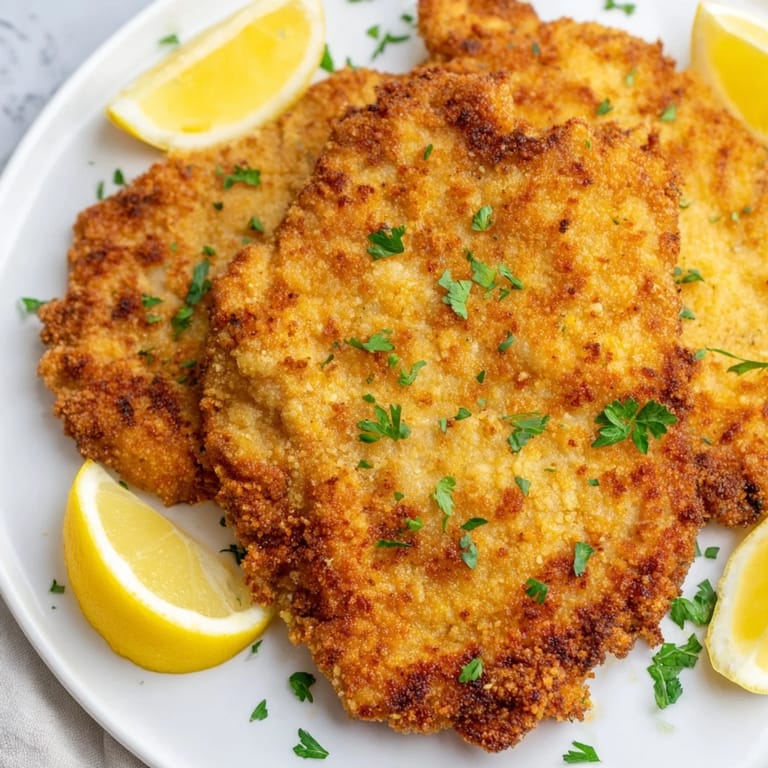
- Working in batches if needed, lay cutlets into the hot fat without crowding; they'll fry 2 to 3 minutes per side until deep golden and the meat feels firm to a gentle touch. Listen for the sizzle to stay steady; if it stops, the heat's too low; if it screams, turn it down slightly.
- Drain on paper towels:
- As each schnitzel comes out, place it on a paper towel-lined plate to shed excess oil; this takes only a minute and keeps them from becoming greasy.
- Serve with intention:
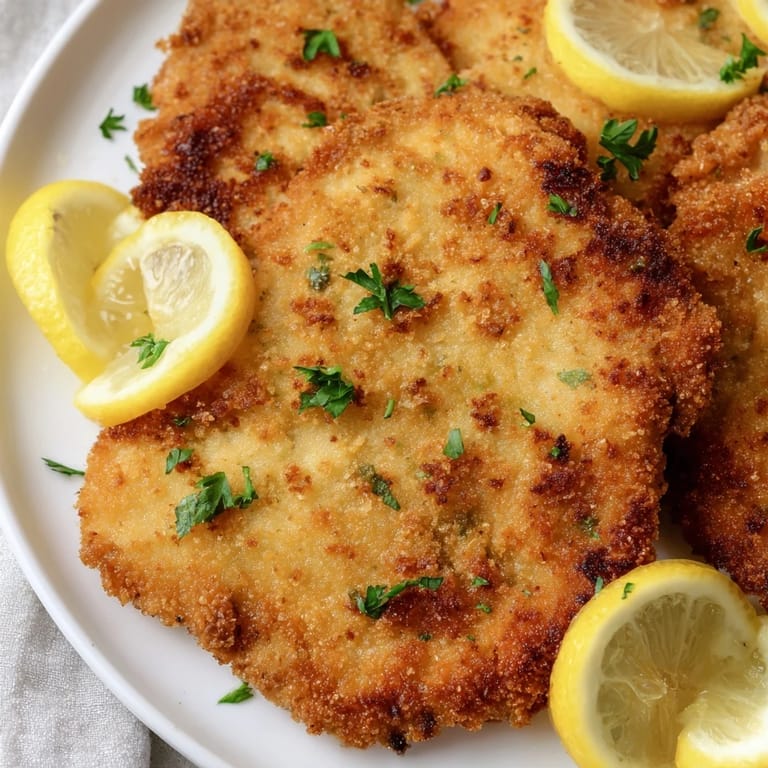
- Plate immediately, add a squeeze of fresh lemon juice, a scatter of chopped parsley, and whatever sides call to you—potato salad, cucumber salad, or fries all sing alongside schnitzel.
 Save to Pinterest
 Years ago, I made schnitzel for a friend who'd just moved to town, and she cried—not from sadness, but because it reminded her of her grandmother's kitchen in Munich. That moment taught me that food carries memory; when you cook something with care and intention, you're not just feeding people, you're touching something tender inside them.
The Art of Perfect Breading
The breading process is where magic happens, and it's worth taking your time. I used to rush through it, pressing the breadcrumbs down hard to make sure they stuck, but that was exactly wrong. Once I learned to let the egg do the work and just press once, gently, my schnitzels transformed into something with real textural contrast—crispy outside, delicate inside. The key is understanding that breadcrumbs don't need to be forced; they want to cling to wet egg, and they'll hold beautifully if you give them the chance.
Choosing Your Oil and Fat
The fat you fry in changes everything about how your schnitzel tastes and feels. Vegetable oil gives you a clean, sharp crispiness and lets the meat shine, but clarified butter—Butterschmalz, as it's called in German kitchens—adds a subtle richness and nuttiness that feels more authentic and luxurious. I tend to reach for clarified butter when I'm cooking for people I want to impress, and oil when I want to taste the meat itself. Either way, make sure your fat is hot enough to sizzle immediately; cold fat makes greasy schnitzel, and greasy schnitzel is a tragedy worth avoiding.
Serving and Pairing Ideas
Schnitzel isn't just a dish; it's a platform for what you serve alongside it. A sharp, cool potato salad dressed with vinegar cuts through the richness beautifully, while crispy fries keep things indulgent and fun. Fresh cucumber salad—thinly sliced cucumbers in a sweet vinegar dressing—provides brightness and contrast that makes you want another bite. Beyond sides, a cold German Riesling or a crisp pilsner beer is the traditional pairing, and honestly, it's perfect; the acidity and carbonation refresh your palate between bites and make the whole meal feel celebratory.
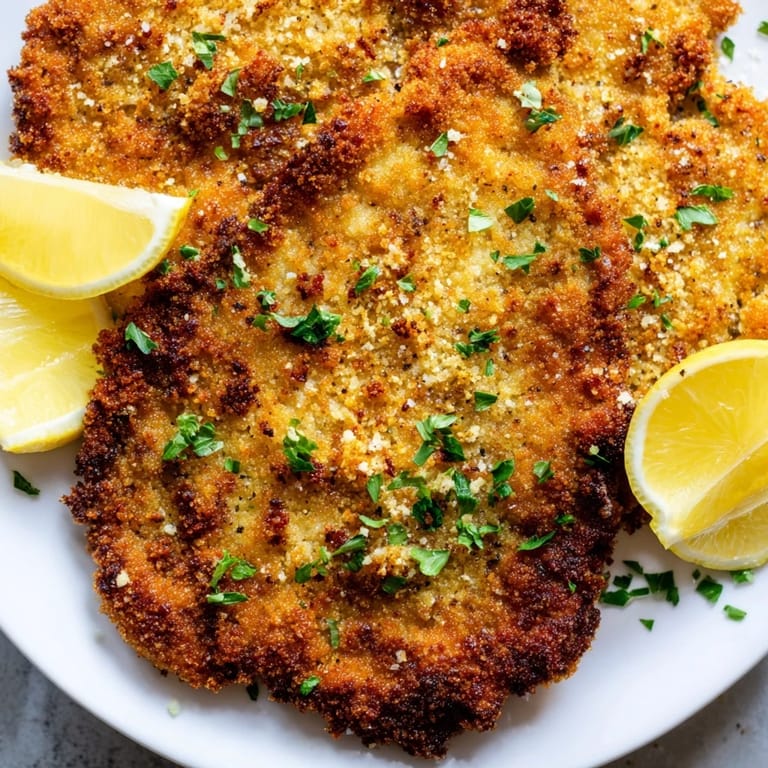
- A squeeze of fresh lemon juice right before eating brightens and lifts the richness of the fried coating.
- Don't skip the parsley garnish—it's not decoration; it adds a fresh, grassy note that balances the richness.
- Serve immediately while the coating is still crackling; schnitzel doesn't wait, and neither should you.
 Save to Pinterest
 Schnitzel teaches you something simple but important: that the best meals come from respecting your ingredients and paying attention to small details. Every time I make it, I'm reminded that cooking is partly about technique, but mostly about showing up and caring.
Recipe Q&A
- → What meat is best for schnitzel cutlets?
Thinly pounded boneless pork chops or chicken breasts work best, ensuring tenderness and even cooking.
- → How do you achieve a crispy coating?
Coat cutlets in flour, then egg wash, followed by fine dry breadcrumbs without pressing too firmly and fry in hot oil or clarified butter.
- → What sides complement this dish?
Traditional accompaniments include potato salad, cucumber salad, or crispy fries for a well-rounded meal.
- → Can I substitute veal in this preparation?
Yes, veal can be used for a more authentic Wiener style schnitzel with the same breading and frying method.
- → What is the ideal frying fat?
Vegetable oil or clarified butter (butterschmalz) provides the best flavor and crispiness during pan-frying.