
 Save to Pinterest
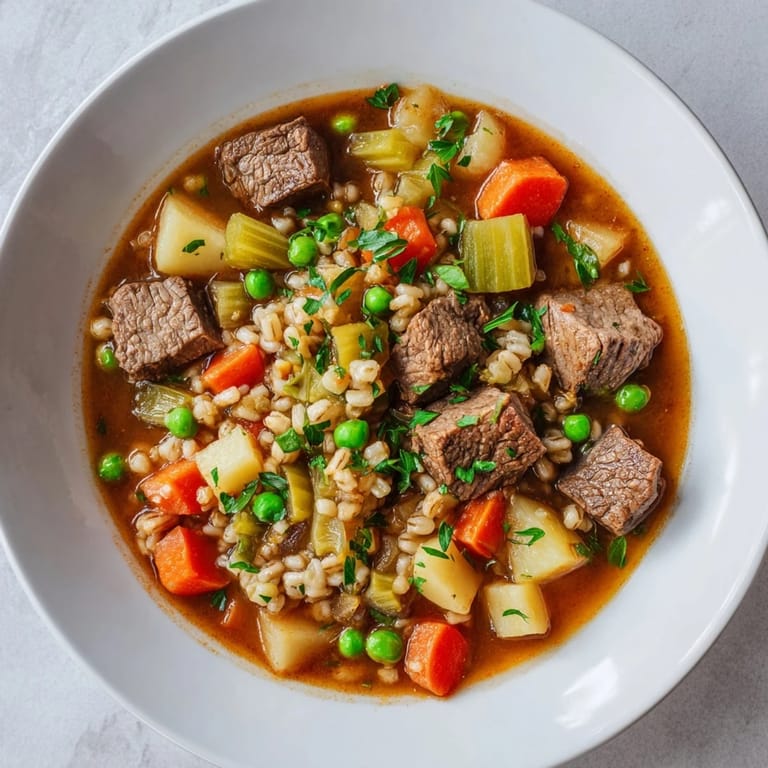
 I threw this together on a rainy Tuesday when the heat went out and I needed something that would warm the house from the inside. The smell of browning beef hitting hot oil still makes me feel like everything's going to be okay. I didn't follow anyone's recipe that day—just opened the fridge, found some barley I'd bought months ago, and let the pot do the work. Two hours later, my kitchen smelled like a grandmother's hug, and I've been making it ever since.
The first time I served this to friends, I apologized because I thought it looked too plain. They went quiet after the first spoonful, then one of them asked if I'd been holding out on them. Now it's the thing people ask me to bring when someone's sick or sad or just needs feeding. It's become my unofficial love language.
What's for Dinner Tonight? 🤔
Stop stressing. Get 10 fast recipes that actually work on busy nights.
Free. No spam. Just easy meals.
Ingredients
- Beef stew meat: Look for chunks with a little marbling—they break down into something tender and rich after a long simmer, and don't worry if they seem tough at first.
- Olive oil: Just enough to get a good sear on the beef, which builds the flavor foundation for everything else.
- Onion: I use yellow or white, diced small so it melts into the broth and sweetens as it cooks.
- Carrots: Slice them thick enough that they hold their shape but still soften, adding a hint of natural sweetness.
- Celery: This adds a subtle earthy note that balances the richness of the beef.
- Garlic: Fresh is best—it blooms in the heat and fills the kitchen with that unmistakable warmth.
- Russet potato: It breaks down just a little, thickening the broth naturally while staying hearty in the bowl.
- Frozen peas: Tossed in at the end so they stay bright and sweet, not mushy.
- Diced tomatoes: The juices add acidity and depth, cutting through the richness without overpowering.
- Pearl barley: Rinse it first to remove excess starch, then let it soak up all that beefy goodness.
- Beef broth: Use the best you can find or make your own if you have time—it makes all the difference.
- Water: Just enough to loosen everything up and let the barley expand.
- Bay leaves: They add a quiet, herbal backbone that you'd miss if they weren't there.
- Dried thyme and oregano: A little goes a long way, and they bring warmth without tasting like a spice cabinet exploded.
- Salt and pepper: Season in layers, tasting as you go, because every broth is different.
- Fresh parsley: A handful at the end makes it look and taste like you tried, even when you didn't.
Instructions
- Brown the beef:
- Heat the oil until it shimmers, then add the beef in batches if needed so it sears instead of steams. You want those dark, caramelized edges—that's where the flavor lives.
- Soften the vegetables:
- Toss in the onion, carrots, and celery, letting them sweat and soften in the beef drippings. Stir them around so nothing sticks, and let the smell tell you when they're ready.
- Wake up the garlic:
- Add the garlic and stir for just a minute until it smells like home. Don't let it brown or it'll turn bitter.
- Build the base:
- Return the beef to the pot along with the potatoes, tomatoes, barley, bay leaves, thyme, oregano, salt, and pepper. Stir it all together so everything gets acquainted.
- Simmer low and slow:
- Pour in the broth and water, bring it to a boil, then drop the heat and cover. Let it bubble gently for an hour and a half, stirring now and then to keep the barley from sticking.
- Finish with peas:
- Stir in the frozen peas during the last ten minutes. Taste the broth and adjust the salt if needed—it should make you want another spoonful immediately.
- Serve it up:
- Fish out the bay leaves, ladle the soup into bowls, and scatter parsley on top if you're feeling fancy. Serve it hot and watch people relax.
 Save to Pinterest
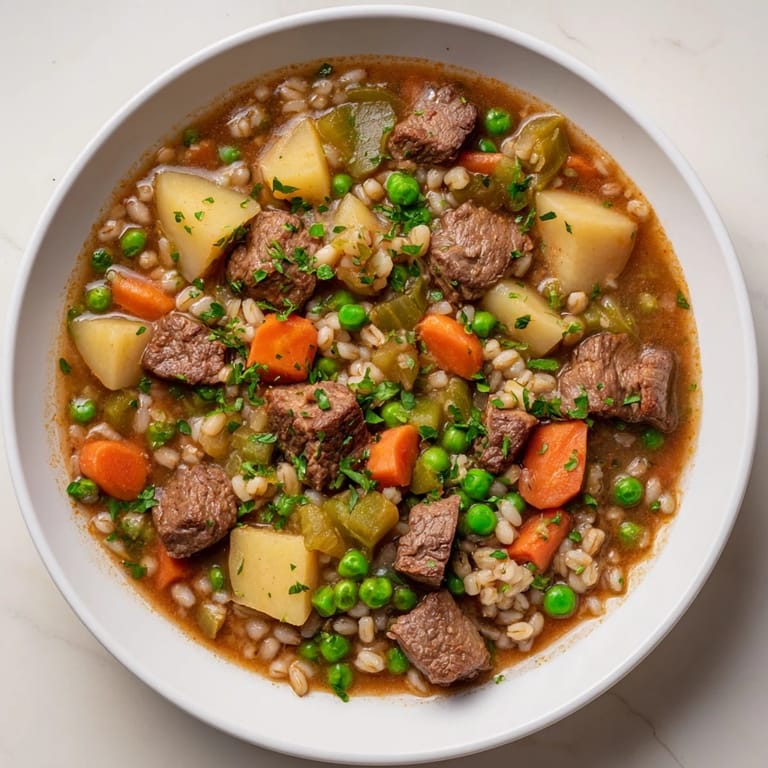
 There was a night I made this for myself after a long week, and halfway through eating it, I realized I wasn't thinking about anything else. Just the warmth, the texture, the way the spoon felt heavy with vegetables and barley. It reminded me that food doesn't have to be fancy to feel like everything you need.
Making It Your Own
I've swapped the barley for farro when I wanted something chewier, and I've used lamb instead of beef when I found a good deal at the market. Once I added a parmesan rind to the pot while it simmered, and it turned the broth silky and rich. This recipe is forgiving—it wants you to use what you have and trust your instincts.
What to Serve Alongside
A thick slice of sourdough, toasted and rubbed with garlic, is perfect for soaking up the broth. I've also served it with a simple green salad dressed in lemon and olive oil to cut the richness. Sometimes I just eat it straight from the pot with a spoon, standing at the stove, and call it dinner.
Storage and Leftovers
This soup tastes even better the next day, after the flavors have had time to settle into each other. It keeps in the fridge for up to three days, and it freezes beautifully if you portion it into containers. Just remember the barley will soak up more liquid as it sits, so loosen it with a little broth when you reheat.
- Let it cool completely before transferring to airtight containers.
- Freeze individual portions so you can thaw just what you need.
- Reheat gently on the stove, adding liquid as needed to bring it back to life.
 Save to Pinterest
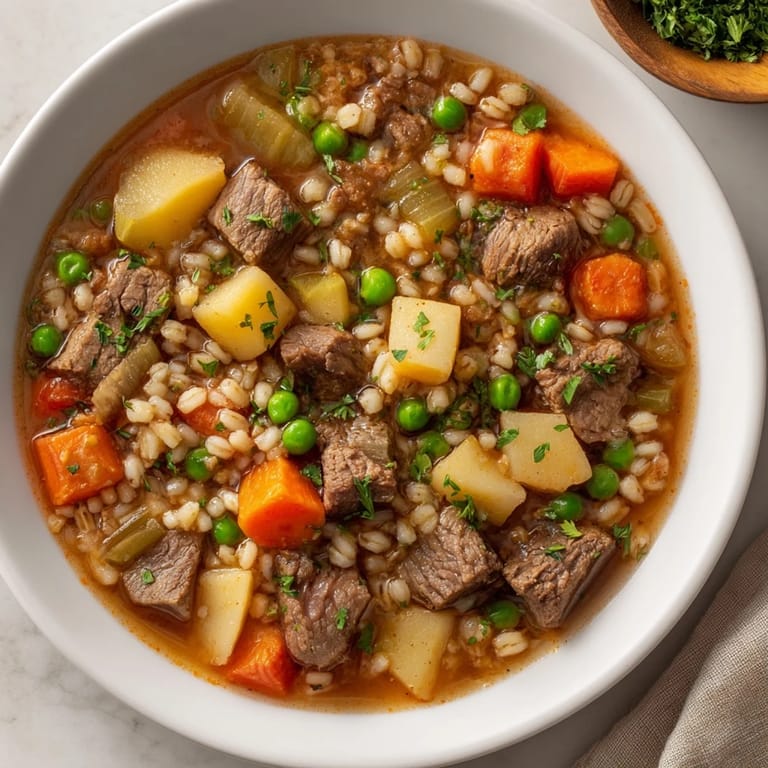
 This is the kind of soup that makes you feel capable, even on days when nothing else does. I hope it fills your kitchen with warmth and your bowl with comfort.
Recipe Q&A
- → What cut of beef works best for this soup?
Beef stew meat cut into 1-inch cubes is ideal as it becomes tender and flavorful when simmered slowly.
- → Can I substitute barley for a gluten-free grain?
Yes, brown rice or quinoa can replace barley for a gluten-free option without sacrificing texture.
- → When should the frozen peas be added?
Frozen peas are best added during the last 10 minutes of cooking to retain their color and slight sweetness.
- → How can I deepen the flavor of the broth?
Adding a splash of Worcestershire sauce or browning the beef well can enhance the broth's depth.
- → What herbs are included for seasoning?
Dried thyme, oregano, and bay leaves contribute earthiness and balance to the soup’s flavor profile.
- → What side dishes pair well with this soup?
Crusty bread or a fresh green salad complement the soup nicely, providing texture and contrast.