 Save to Pinterest
 One weeknight, I was staring at a salmon fillet and a box of pasta, trying to bridge two cuisines that had no business being in my kitchen together—until they somehow were. The miso butter sauce happened almost by accident: I'd been thinking about a creamy Japanese-inspired broth, and suddenly I was whisking white miso into melted butter like it was the most obvious pairing in the world. My partner took one bite and asked why I'd never made this before, which was a fair question I still can't answer.
I made this for friends who were skeptical about mixing Italian pasta with Japanese flavors, and watching them go quiet after the first forkful was its own kind of satisfaction. One of them actually said, "Why does this taste expensive?" which became the highest compliment I've received in my kitchen. Now it's the dish I default to when I want to seem more accomplished than I actually am.
What's for Dinner Tonight? 🤔
Stop stressing. Get 10 fast recipes that actually work on busy nights.
Free. No spam. Just easy meals.
Ingredients
- Salmon fillets (400 g): Cut into bite-sized pieces so they cook evenly and aren't intimidating on the fork—this matters more than you'd think for how the dish feels to eat.
- Linguine or spaghetti (300 g): The thinner strands let the sauce cling better than thicker pastas, and they cook faster too.
- Baby bok choy (2 heads): The slight bitterness balances the richness of the sauce; regular bok choy works but choose the tender inner leaves.
- Garlic (2 cloves): Minced fine so it dissolves into the sauce rather than sitting there in chunks.
- Scallions (2): These are your finishing touch—they add brightness when the dish would otherwise be all velvet and depth.
- Unsalted butter (60 g): Use real butter here, not a substitute; the flavor is too important to compromise.
- White miso paste (2 tbsp): The umami backbone—don't use red or dark miso, which will overpower everything.
- Soy sauce (2 tbsp): This adds salt and depth; taste as you go because miso already brings salt to the party.
- Mirin (2 tbsp): The subtle sweetness keeps the sauce from tasting one-note; skip it and you'll taste the difference immediately.
- Heavy cream (100 ml): This transforms the sauce into something luxurious without making it feel heavy—the proportion matters.
- Sesame oil (1 tsp): A little goes a long way; use it sparingly or it'll overwhelm the dish.
- Black pepper (½ tsp): Freshly ground, because pre-ground pepper has been sitting in a container and frankly tastes tired.
- Toasted sesame seeds and lemon wedges: Optional but they're not really optional—they're the difference between a good dish and one people ask you to make again.
Instructions
- Get the pasta going:
- Salt your water like the sea—it should taste almost too salty on its own. This is your only chance to season the pasta itself. While it cooks, you'll have a few minutes to compose yourself and get everything else ready, which is honestly the best kitchen hack.
- Start the flavor base:
- Heat butter and sesame oil together over medium heat, then add your minced garlic. You're looking for that moment when the kitchen suddenly smells incredible—that's your signal it's ready. Don't let it brown or it will taste burnt and bitter.
- Cook the salmon gently:
- Place the salmon pieces in the pan and give them space; crowding them will make them steam instead of sear. After 2–3 minutes, flip carefully with a spatula—the pieces should look opaque on the outside but still tender inside. Overcooked salmon is dry salmon, so err on the side of underdone because it will keep cooking.
- Build the sauce:
- Once salmon is out of the pan, add the remaining butter and let it melt completely. Whisk in your miso paste until it dissolves into the butter—don't be impatient here or you'll get lumps. This is the moment everything stops being separate ingredients and becomes one thing.
- Add the cream and greens:
- Pour in the heavy cream slowly, stirring constantly, then add black pepper and your chopped bok choy. The bok choy will wilt in about two minutes and turn a darker green, which is exactly what you want—not soggy, just tender. Taste the sauce now and adjust; if it's too salty, add a splash of pasta water; if it needs more depth, a tiny bit more miso.
- Bring it together:
- Return the salmon to the pan and add your drained pasta, tossing gently so everything gets coated in that creamy sauce. If it looks too thick, add reserved pasta water a splash at a time until it's silky and flows like it should. The sauce should cling to the pasta, not sit in a pool at the bottom.
- Plate and finish:
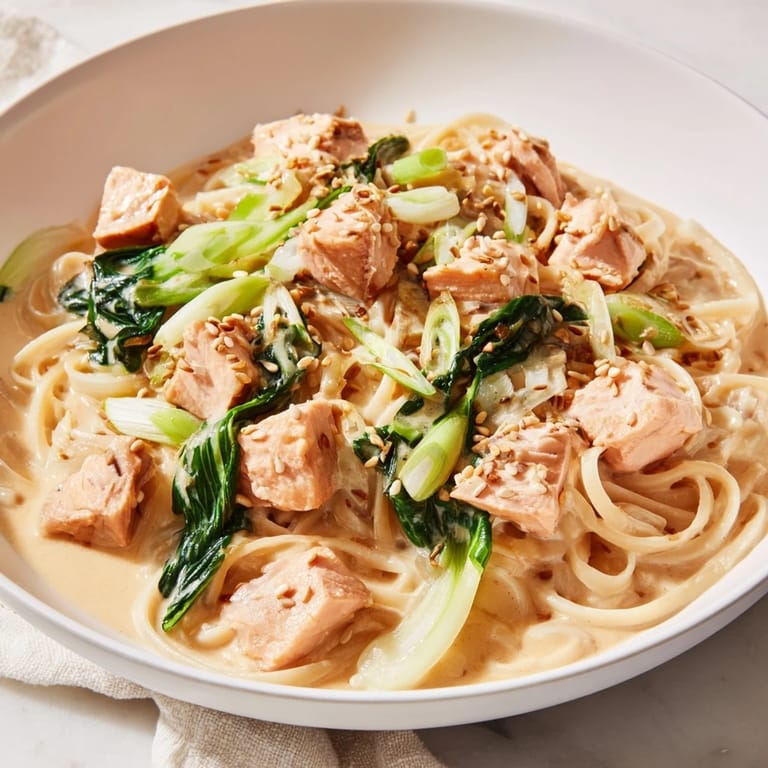
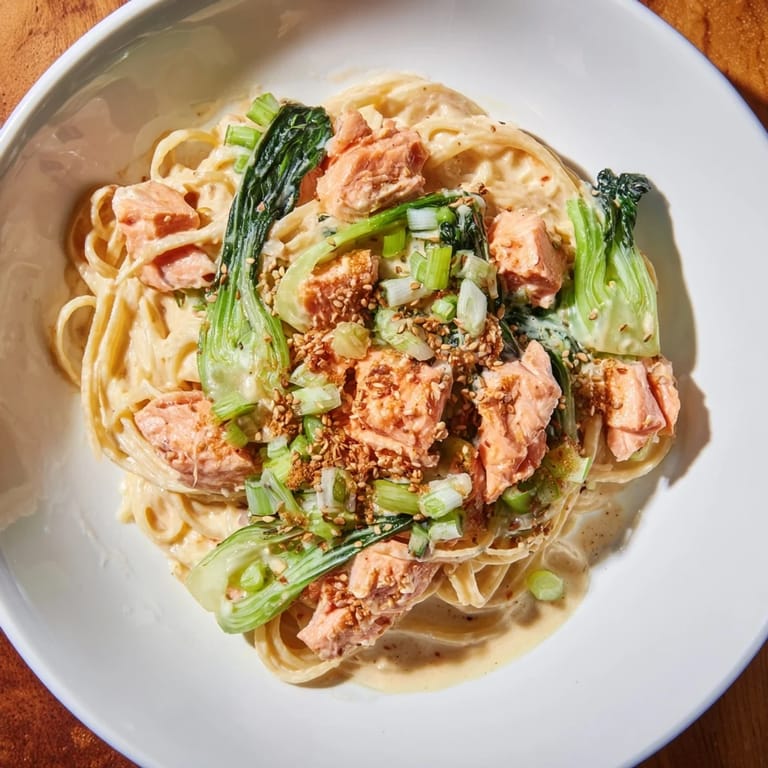
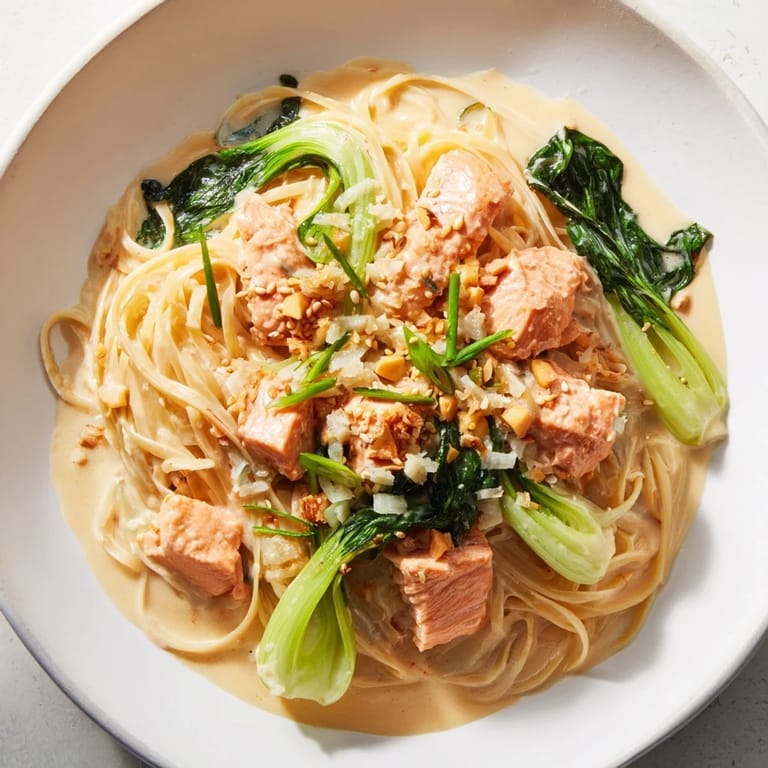
- Divide into bowls while everything is still hot, then scatter scallions and sesame seeds on top. A wedge of lemon on the side means anyone can brighten their bowl to their taste, which makes everyone happy.
 Save to Pinterest
 There's something magic about watching a simple pan transform into something that tastes like you spent hours on it when really you just worked with four good ingredients and didn't overthink it. This dish became proof to me that the best cooking isn't about complexity—it's about understanding how flavors actually talk to each other.
Why Miso Butter Works So Well
Miso paste is umami concentrate, which means a tiny amount carries the flavor weight of hours of simmering. When you dissolve it into butter, you're creating an emulsion that's both creamy and intensely savory—it doesn't taste Asian or Italian, it just tastes delicious. The butter mellows the miso's sharpness while the miso gives the butter purpose, and together they're better than either one alone.
The Salmon-Pasta Conversation
Putting fish and pasta together used to feel wrong to me until I realized they're actually meant to find each other through the right sauce. The pasta absorbs flavor from the creamy miso sauce while the salmon stays tender and flakes into the dish, so you get protein in every bite without it feeling heavy. The bok choy is there to keep things from feeling too rich, and that texture contrast is what makes you want another forkful immediately.
Making It Your Own
This recipe is flexible enough to bend to what you have and what you're craving that day. You could add a squeeze of lime instead of lemon, or swap spinach for bok choy if that's what's in your fridge. A pinch of chili flakes during the garlic step gives it a whisper of heat that makes the umami taste sharper and more interesting.
- If you're cooking for someone gluten-free, use tamari instead of soy sauce and gluten-free pasta, and double-check your miso paste label because some brands sneak in wheat.
- A crisp white wine like Sauvignon Blanc is perfect alongside this because the acidity cuts through the richness and lets you taste each component clearly.
- You can prep everything except the pasta and salmon in advance—just keep the sauce warm in the skillet and add the pasta and salmon right before serving, so nothing loses its texture.
 Save to Pinterest
 This is the kind of dish that reminds you why cooking matters—not because it's complicated, but because it turns a random weeknight into something worth remembering. Make it once and you'll understand why your friends keep asking you to cook it again.
Recipe Q&A
- → What type of salmon is best for this dish?
Skinless, boneless salmon fillets work best as they cook evenly and integrate well with the sauce.
- → Can I substitute bok choy with other greens?
Yes, spinach or Swiss chard can be used as alternatives for a similar texture and flavor balance.
- → How do I achieve a creamy sauce without it splitting?
Gently heat the cream and incorporate it slowly while stirring to maintain a smooth, silky texture.
- → Is it necessary to reserve pasta water?
Reserved pasta water helps adjust sauce consistency, making it silkier and better able to cling to pasta.
- → What garnishes enhance this dish's flavor?
Toasted sesame seeds, sliced scallions, and lemon wedges add texture, freshness, and brightness.