 Save to Pinterest
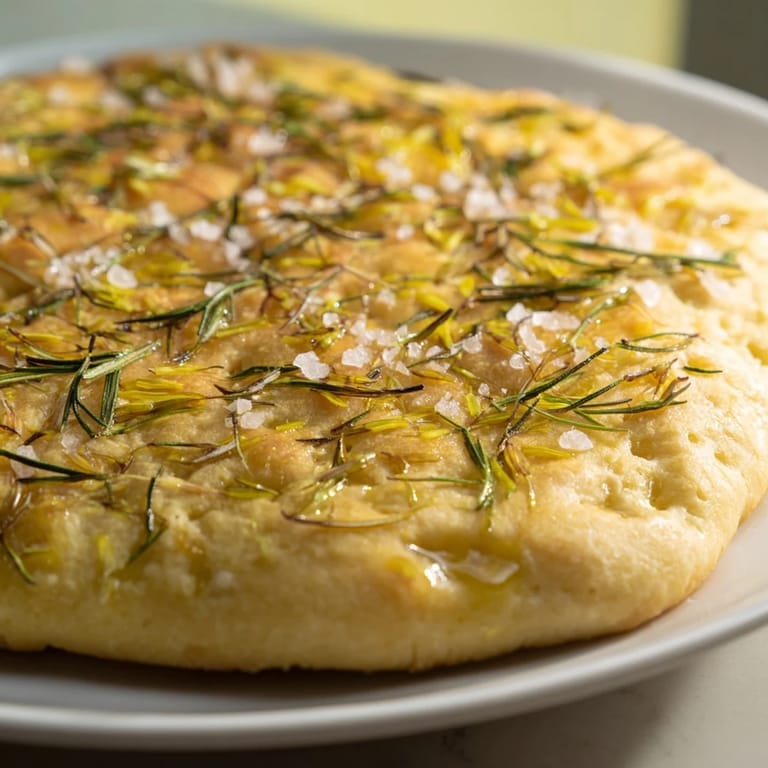
 I stumbled into focaccia on a rainy Tuesday when I had nothing but flour and a sprig of rosemary wilting in the fridge. The dough came together fast, and as it rose, my kitchen filled with that unmistakable yeast smell that makes everything feel promising. I dimpled it with my fingertips like I'd seen in videos, drizzled on too much olive oil, and baked it anyway. When I pulled it out, golden and crackling at the edges, I tore off a corner while it was still too hot to handle. That first bite—crispy outside, pillowy inside, salty and herbal—made me wonder why I'd ever bought bread from a store.
I made this for a small dinner party once, and people kept tearing off pieces before I could even set the table. Someone asked if I'd trained in Italy, and I just laughed because I'd learned it from trial and error in my tiny apartment kitchen. It became the thing I brought to gatherings, wrapped in a towel, still warm, with a little dish of balsamic on the side. Now whenever I stretch the dough across the pan, I think of those evenings when bread was enough to make people linger.
What's for Dinner Tonight? 🤔
Stop stressing. Get 10 fast recipes that actually work on busy nights.
Free. No spam. Just easy meals.
Ingredients
- Bread flour: The higher protein content gives focaccia its chewy, airy texture, and I've found all-purpose works in a pinch but won't have quite the same lift.
- Instant dry yeast: No need to bloom it first, it wakes up in the warm water and starts working right away.
- Fine sea salt: This goes into the dough for structure, while the flaky salt on top is pure crunch and flavor.
- Extra virgin olive oil: Use the good stuff, it's the soul of focaccia and you'll taste it in every bite.
- Lukewarm water: Not hot, not cold, just body temperature so the yeast feels at home.
- Fresh rosemary: I strip the leaves off the woody stems and chop them roughly so they release their piney, fragrant oils.
- Flaky sea salt: Maldon or any large flake variety adds that final pop of salt and crunch you can't get from table salt.
Instructions
- Mix the Dry Ingredients:
- Whisk together the bread flour, yeast, and fine salt in a large bowl until evenly distributed. This way the yeast doesn't clump and the salt won't kill it on contact.
- Form the Dough:
- Pour in the olive oil and lukewarm water, then stir with a wooden spoon until a shaggy, sticky mass forms. It won't look pretty yet, and that's exactly right.
- Knead Until Smooth:
- Turn the dough onto a lightly oiled counter and knead for 8 to 10 minutes, folding and pressing until it becomes soft, elastic, and stops sticking to your hands. You'll feel it transform.
- First Rise:
- Place the dough in an oiled bowl, cover it with plastic wrap or a damp towel, and let it rise in a warm spot until doubled, about an hour. I like to set mine near a sunny window.
- Prep the Pan:
- Line your baking sheet with parchment and drizzle on a tablespoon of olive oil. This prevents sticking and starts crisping the bottom.
- Stretch and Rest:
- Transfer the risen dough to the pan and gently press it out with your fingers to fill the space, then cover and let it puff up again for 30 minutes. Don't rush this second rise.
- Preheat the Oven:
- Set your oven to 220°C (430°F) so it's blazing hot and ready to crisp the crust.
- Dimple and Dress:
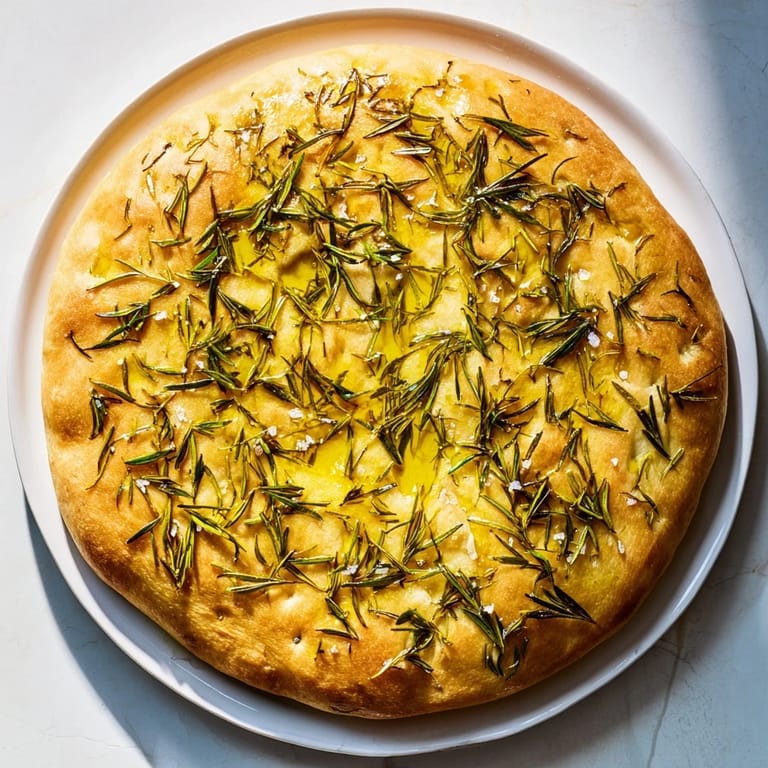
- Use your fingertips to poke deep dimples all over the dough, then drizzle with olive oil and scatter rosemary and flaky salt on top. The oil will pool in the dimples and fry as it bakes.
- Bake Until Golden:
- Slide the pan into the oven and bake for 20 to 25 minutes until the top is golden and the edges are crisp and brown. Your kitchen will smell like an Italian bakery.
- Cool and Serve:
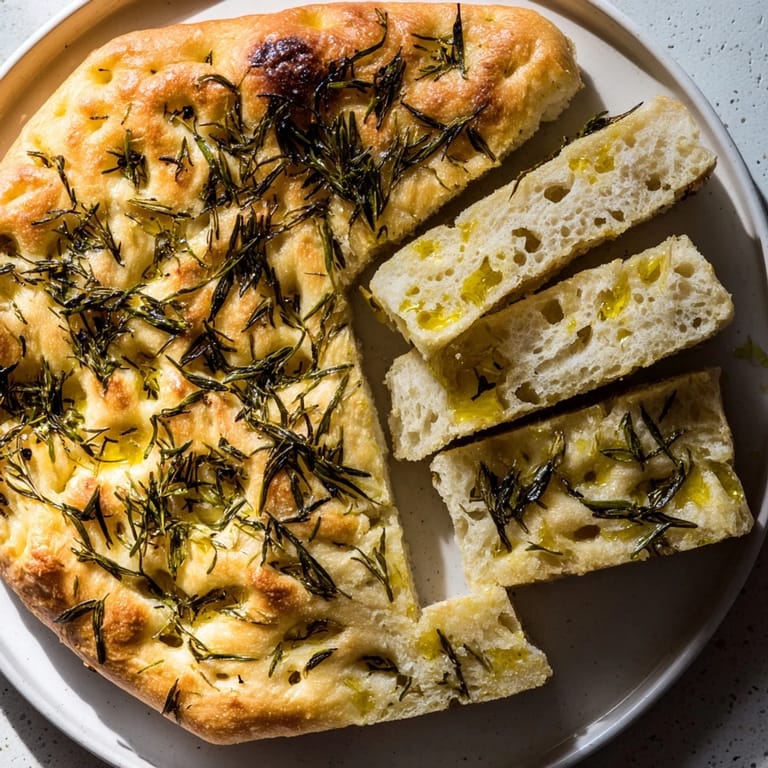
- Let it cool just enough to handle, then slice into squares or tear it apart with your hands. Serve warm or at room temperature.
 Save to Pinterest
 The first time I brought this to a potluck, someone told me it reminded them of their grandmother's kitchen in Liguria, and even though I'd never been, I felt like I'd made something real. Bread has this way of carrying memory and warmth, and focaccia does it better than most. It's the kind of thing that turns a quiet meal into a moment worth remembering.
Serving Suggestions
I've served this alongside tomato soup, next to a cheese board, and once just ripped it apart with friends over wine and conversation. It's perfect for dipping in olive oil and balsamic, or slicing in half to make the world's best sandwich. However you serve it, people will eat it faster than you expect.
Storage and Reheating
Focaccia is best the day you bake it, when the crust is still crisp and the inside is soft and airy. If you have leftovers, wrap them in foil and warm them in a low oven for 10 minutes to bring back some of that fresh-baked texture. I've also frozen slices wrapped tightly, then toasted them straight from the freezer for a quick breakfast.
Variations and Add-Ins
Once you've made the classic version, it's fun to play around with toppings and flavors. I've pressed halved cherry tomatoes into the dough before baking, scattered thinly sliced red onion and olives on top, and even brushed it with garlic-infused olive oil halfway through. Some people like to add grated Parmesan or a drizzle of honey at the end for a sweet-savory twist.
- Try adding caramelized onions and thyme for a deeper, sweeter flavor.
- Swap rosemary for oregano or sage if that's what you have on hand.
- For a richer dough, replace some of the water with milk or add a spoonful of honey to the mix.
 Save to Pinterest
 Every time I pull this out of the oven, I'm reminded that some of the best things in cooking are simple, generous, and meant to be shared. I hope this becomes one of those recipes you make without thinking, the kind that fills your home with warmth and makes people feel welcome.
Recipe Q&A
- → What type of flour is best for this bread?
Bread flour is recommended for its higher gluten content, which helps create a chewy texture and good structure.
- → How does the yeast impact the dough?
Instant dry yeast helps the dough rise, creating airy pockets and a fluffy texture after baking.
- → Can I add toppings besides rosemary and sea salt?
Yes, options like halved cherry tomatoes or sliced olives add extra flavor and visual appeal when added before baking.
- → What is the purpose of dimpling the dough before baking?
Dimpling helps keep the dough from puffing unevenly and allows oil and toppings to settle into the surface.
- → How should the flatbread be stored if not eaten immediately?
It’s best enjoyed fresh but can be refreshed gently in a warm oven to restore crispness before serving.