
 Save to Pinterest
 There's something about the smell of ginger and garlic hitting a hot pan that makes me drop everything I'm doing and head to the kitchen. One Tuesday evening, I was tired from work and staring at a pound of shrimp in the fridge, wondering if I had the energy to actually cook. But five minutes later, with the kitchen smelling like an Asian night market, I realized this bowl was exactly what my body needed. Light, quick, and somehow more satisfying than anything heavier could have been.
I made this for my friend who'd just started cutting back on carbs, and I remember her surprise when she realized how satisfying cauliflower rice could be, especially when you actually take time to sauté it until it's golden. She came back asking for the recipe the next week, and now I'm pretty sure she makes it more often than I do. That's when you know a recipe is a keeper.
What's for Dinner Tonight? 🤔
Stop stressing. Get 10 fast recipes that actually work on busy nights.
Free. No spam. Just easy meals.
Ingredients
- Large shrimp (1 pound, peeled and deveined): The key is buying them already cleaned so you don't have to deal with that extra step when you're tired, and choosing large ones means they cook evenly and stay tender.
- Fresh ginger (1 tablespoon, finely grated): Microplane it if you can, because the texture matters here. It should be almost fluffy, not chunky, so it distributes through the shrimp evenly.
- Garlic (3 cloves, minced): Fresh is non-negotiable. Jarred garlic will taste like regret by comparison.
- Olive oil (2 tablespoons for shrimp, 1 for cauliflower): This is your cooking medium, so use something you actually like tasting, not the cheapest bottle.
- Salt and black pepper: These aren't afterthoughts. Taste as you go and adjust. Shrimp needs more seasoning than you'd think.
- Cauliflower (1 large head, about 1.5 pounds): Fresh is better than frozen here because you want that slightly caramelized edge, though frozen works in a pinch if you thaw and pat it very dry first.
- Gluten-free soy sauce or tamari (3 tablespoons): Tamari tastes deeper and richer to me, especially in a sauce like this where it's the main flavor player.
- Toasted sesame oil (1 tablespoon): This stuff is potent, which is why we use a little. It's the secret whisper that makes people say 'what is that flavor?'
- Rice vinegar (1 tablespoon): It's bright and subtle, the backbone of the drizzle that keeps everything from tasting heavy.
- Honey or maple syrup (1 teaspoon): Just enough sweetness to balance the salty and tangy without making it dessert.
- Fresh ginger again (1 teaspoon for the drizzle): The second hit of ginger in the sauce is what makes this sing. Don't skip it.
- Green onions, sesame seeds, and lime wedges: These are the finishing touches that take it from 'fine' to 'wow,' so don't rush through the garnish.
Instructions
- Process your cauliflower:
- Cut your cauliflower into florets and pulse them in a food processor until they're about rice-sized. Don't overthink it. Some pieces will be bigger, some smaller, and that's what gives it texture.
- Sauté the cauliflower rice:
- Heat olive oil in a large skillet over medium heat and add your cauliflower. The magic happens when you stop stirring constantly and let it sit for a minute or two so the bottom gets golden. Sprinkle salt over it, sauté for about 5 to 6 minutes total, and set it aside somewhere it'll stay warm.
- Season your shrimp:
- In a bowl, toss your shrimp with the ginger, garlic, olive oil, salt, and pepper. Letting it sit for 5 minutes means the flavors actually settle into the shrimp instead of just sitting on top.
- Cook the shrimp hot and fast:
- Heat a skillet over medium-high heat until it's actually hot. You want to hear a sizzle when the shrimp hits the pan, not a gentle whisper. Cook them in a single layer for 2 to 3 minutes per side until they turn pink and feel just firm to the touch. Overcooked shrimp becomes rubbery, so watch them carefully.
- Mix the drizzle:
- In a small bowl, whisk together the soy sauce, sesame oil, rice vinegar, honey, and that second measure of fresh ginger. Taste it. It should make your eyes widen a little.
- Bring it together:
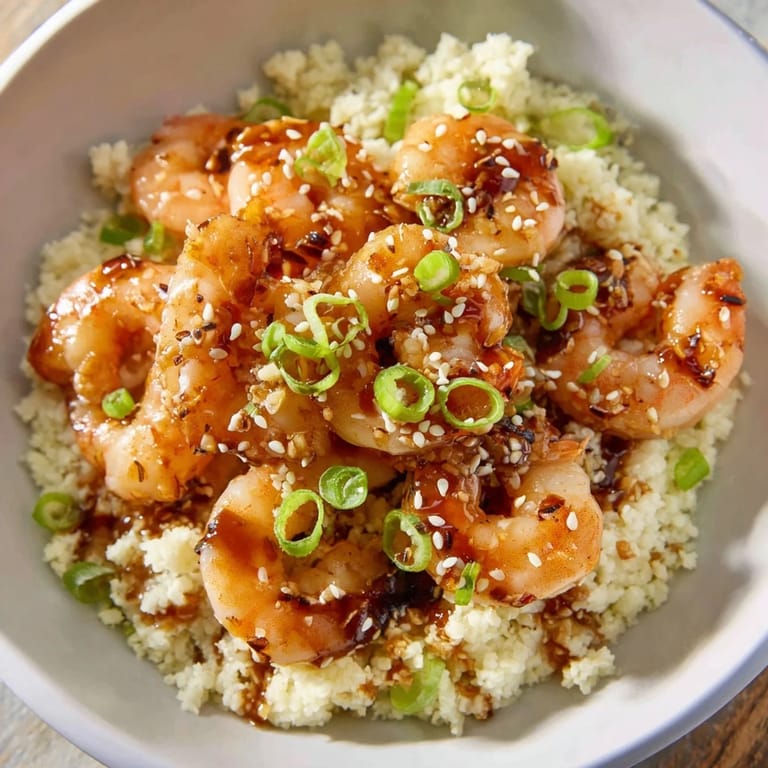
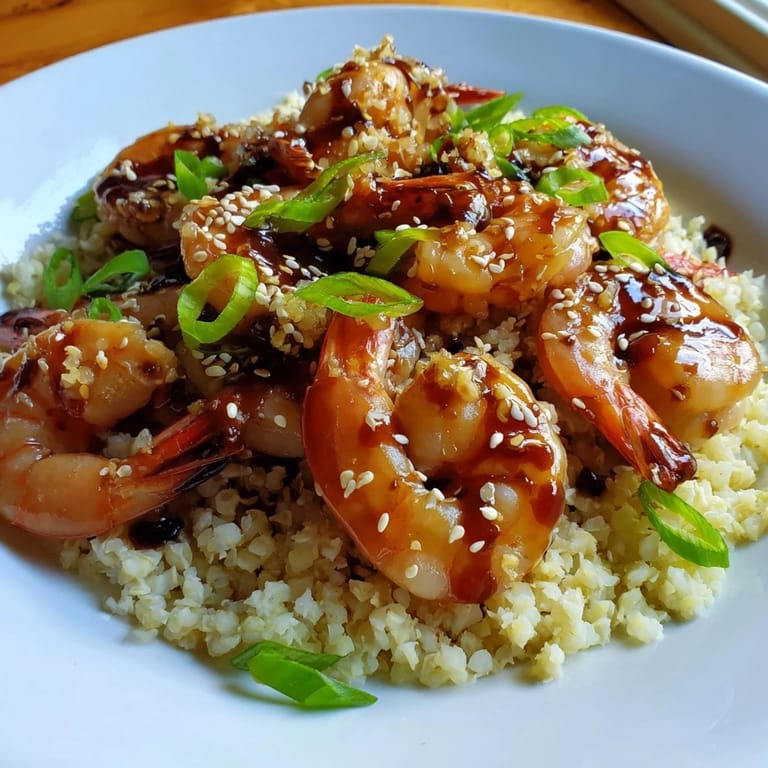
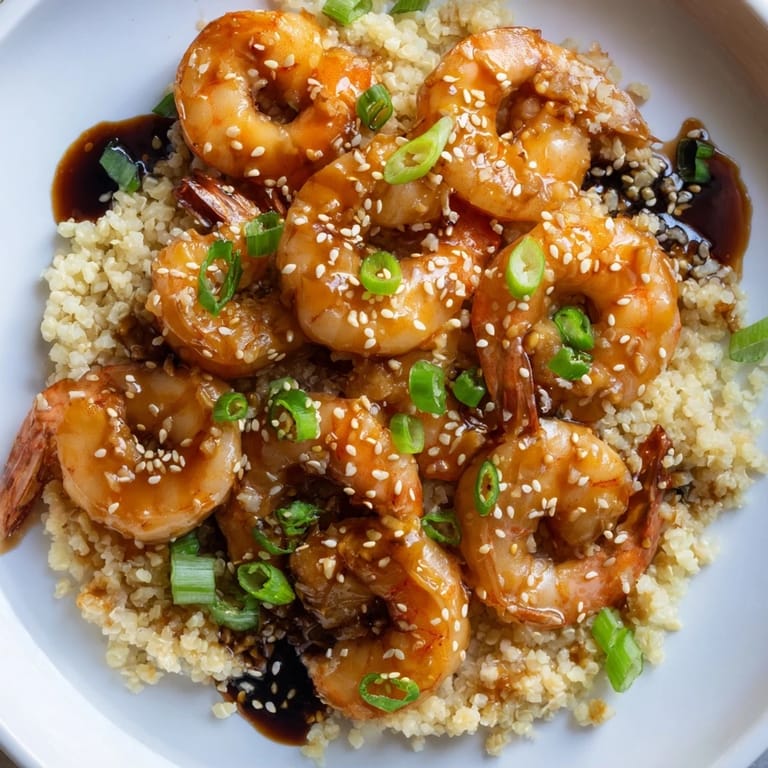
- Divide the cauliflower rice among four bowls, pile the shrimp on top, and drizzle that sauce over everything. Finish with a scatter of green onions, a sprinkle of sesame seeds, and a wedge of lime on the side for squeezing.
 Save to Pinterest
 My favorite memory of this bowl is when my partner took one bite, looked up from the table, and said, 'This tastes expensive.' It doesn't cost much and took minutes to make, but somehow it felt like the kind of thing you'd order at a restaurant with mood lighting and soft music. That's the real win here.
How to Build Your Own Bowl
The beauty of this recipe is that it's a blank canvas for whatever vegetables are in your fridge. Steam some broccoli, add snap peas, shred a carrot, toss in some sautéed mushrooms. The shrimp and that soy drizzle are flexible enough to play well with almost anything, so think of this as a base rather than a strict formula. I've had it with roasted bok choy, with steamed asparagus, even with a handful of shredded cabbage. Each version tastes like a slightly different night in a different mood.
Customizing the Heat Level
If you like things spicy, this is your moment to play. A pinch of chili flakes stirred into the soy drizzle adds heat without changing the flavor profile. Sriracha works too, though it brings its own personality to the table. Start small. You can always add more heat, but you can't take it back once it's in the bowl. I usually put the hot stuff on the side so people can add as much or as little as they want, which feels more generous somehow.
Substitutions and Swaps
Not a cauliflower person? White rice, brown rice, or even soba noodles work beautifully here. Some nights I use jasmine rice just because I'm craving that subtle floral note. The soy drizzle cares not what it lands on, so follow what your mood dictates. If you're cooking for someone with a shellfish allergy, the whole structure works with white fish, chicken, or even tofu if you'd like to keep it plant-based.
- Frozen cauliflower can work if you thaw it completely and pat it very dry so it actually caramelizes instead of steaming.
- Coconut aminos can replace tamari if you need to avoid soy entirely, though the flavor shifts slightly earthier.
- If you don't have sesame oil, you can skip it, but the drizzle loses that toasted depth that makes people pause and wonder what you did.
 Save to Pinterest
 This bowl became my go-to when I needed to feel like I was taking care of myself but didn't have the energy for complicated cooking. It's proof that simple, fresh ingredients and a little care are sometimes all you need.
Recipe Q&A
- → How do you make cauliflower rice fluffy?
Pulse cauliflower florets in a food processor until rice-sized and sauté gently with olive oil and a pinch of salt until tender but not mushy.
- → What’s the best way to cook shrimp for this dish?
Marinate shrimp briefly with ginger and garlic, then sauté in a hot skillet for 2–3 minutes per side until pink and just cooked through for tender, juicy results.
- → Can I use regular soy sauce instead of tamari?
Yes, regular soy sauce works well though tamari is preferred for gluten-free options; adjust seasoning if needed due to saltiness differences.
- → How can I add extra vegetables to this meal?
Steamed broccoli, snap peas, or shredded carrots can be added to each bowl for added crunch and nutrition.
- → What alternatives exist for the soy drizzle?
For variation, try mixing in a dash of chili flakes or a splash of sriracha to the soy mixture for a spicy kick.