 Save to Pinterest
 Years ago, I stood in a Finnish kitchen during the first snow of November, watching my host lift a piece of reindeer meat from a wooden cutting board with the kind of reverence usually reserved for heirlooms. She explained that this stew wasn't fancy—it was honest, born from northern forests and cold winters when such meat meant survival and celebration both. That afternoon, as the broth simmered for hours, the entire cottage filled with a smell so deeply savory it felt like stepping into history. I've made it countless times since, and it never fails to transport me back to that quiet moment when she taught me that the best dishes aren't complicated, just true.
I once made this for my partner on a random Tuesday when the weather turned cold and bitter, and he came home to this stew simmering on the stove. He stood there in his coat, coat still on, just breathing in. We ate it in near silence, bowls warming our hands, and afterward he told me it was the best thing I'd ever made. That's the power of this dish—it doesn't need applause, just a spoon and an open heart.
What's for Dinner Tonight? 🤔
Stop stressing. Get 10 fast recipes that actually work on busy nights.
Free. No spam. Just easy meals.
Ingredients
- Reindeer meat: 800g sliced thin—this is the soul of the dish, and its gamey richness is what makes everything taste distinctly Nordic and authentic; if you can't find it, venison captures the same depth, and beef works beautifully if that's all you have.
- Butter and vegetable oil: 2 tbsp butter plus 1 tbsp oil creates a perfect combination for browning the meat without the butter burning, which matters more than you'd think.
- Onions: 2 medium, finely sliced—they'll almost dissolve into the broth and become the foundation of sweetness and body.
- Garlic: 2 cloves minced—just enough to whisper in the background, not shout.
- Beef or game stock: 300ml—use good stock if you can; it's one of the few places you really taste the difference.
- Water: 100ml to stretch the stock and let the meat flavor shine through.
- Sour cream: 150ml, added at the very end to keep it silky without curdling.
- Bay leaves and juniper berries: 2 and 5 respectively—these are your Nordic fingerprint; the juniper especially tastes like pine forests and makes people ask what you did differently.
- Salt and pepper: 1 tsp salt and ½ tsp fresh ground pepper to start, though you'll likely add more once the sour cream goes in.
- Lingonberries: 100g preserves or fresh—the tart contrast is non-negotiable; this is where the magic lives.
- Mashed potatoes: For serving, creamy and buttery to catch every drop of sauce.
Instructions
- Get your heat right:
- Heat butter and oil in a large heavy-bottomed pot over medium-high heat until it's almost smoking; you want that sizzle when the meat hits the pan. Don't rush this step—proper browning is where flavor begins.
- Brown the meat in batches:
- Work in batches so you're not crowding the pan; you want each piece to touch the hot surface and develop a dark crust. Remove it to a plate as it's done, and don't worry if it looks a little rough—that's exactly right.
- Soften the onions:
- In the same pot, add your sliced onions to the remaining fat and let them cook undisturbed for a few minutes until they start to brown at the edges, then stir and keep going until they're soft and translucent. Add minced garlic for the last minute, and your kitchen will smell like you know exactly what you're doing.
- Bring it all together:
- Return the browned meat to the pot, add salt, pepper, bay leaves, and crushed juniper berries, then pour in your stock and water. The liquid should almost cover the meat—this is the beginning of something slow and patient.
- The long simmer:
- Bring it to a gentle simmer, cover, and cook on low heat for 1½ hours, stirring occasionally so nothing sticks and everything gets to know each other. The meat will become so tender it barely holds together, and the broth will deepen in color and flavor.
- Reduce and refine:
- Remove the lid and cook for 10 more minutes to let some liquid evaporate and the flavors concentrate; you'll notice the broth becoming silkier and more intense.
- Add the cream:
- Stir in the sour cream and cook for just 2-3 minutes until everything is heated through and the sauce coats the back of a spoon. Taste and adjust salt and pepper—the sour cream will have muted things a bit.
- Finish and serve:
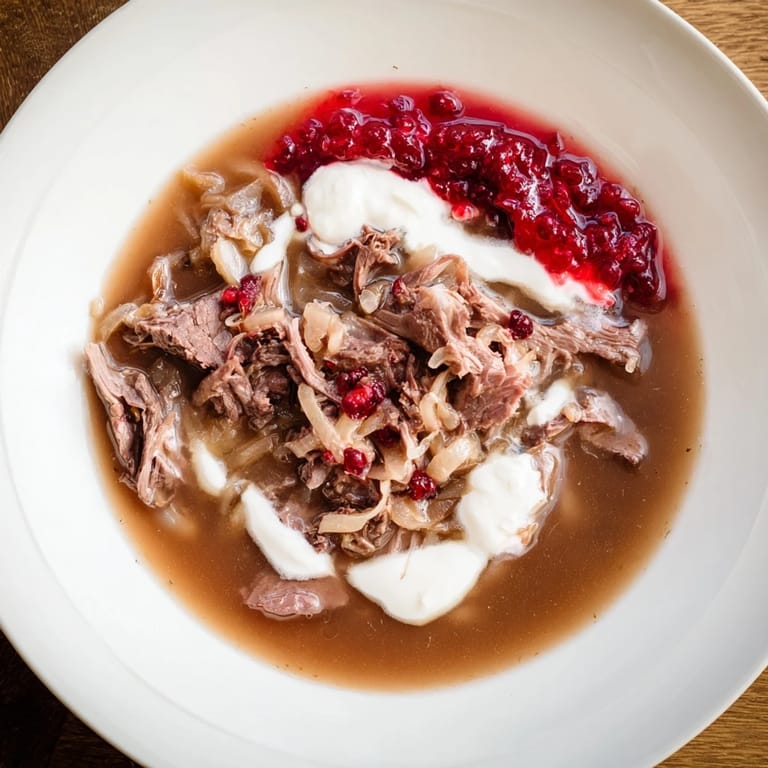
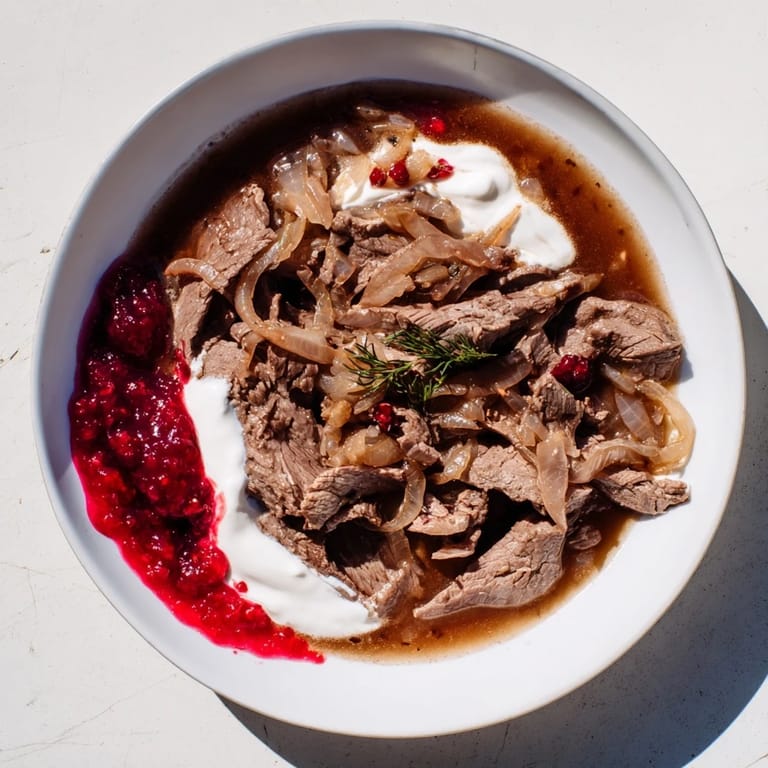
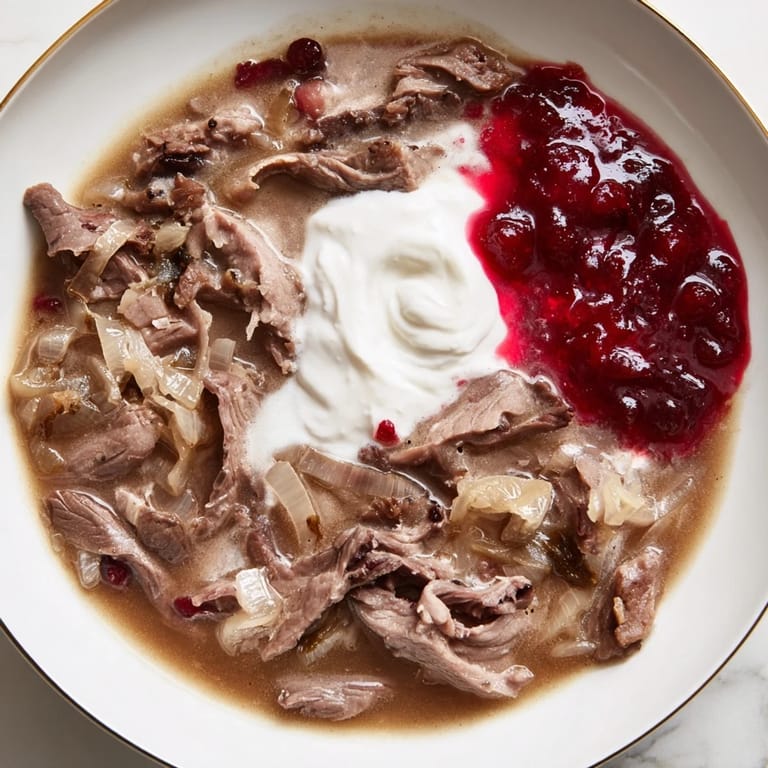
- Ladle the stew into bowls over creamy mashed potatoes and top with a generous spoonful of lingonberry preserves, which will slowly melt into the hot broth and create this perfect sweet-tart-savory moment with every bite.
 Save to Pinterest
 I learned the real lesson of this dish the first time I served it to people from Stockholm who'd grown up eating it their whole lives. I was nervous, honestly, but my neighbor took one bite and her eyes softened in a way that had nothing to do with politeness. She said it tasted like home. That's when I understood—this isn't a recipe to master or improve; it's a tradition to honor. Every time you make it, you're continuing a story that started in forests and kitchens you'll never see.
On Game Meat and Where It Comes From
Reindeer meat tastes different than beef—richer, cleaner, with a flavor that feels earned rather than generic. The first time I cooked with it, I was surprised by how much it actually improved with long, slow cooking; the time in the broth softens its wildness and gives it a kind of sophistication. If you're using venison or beef instead, know that you're trading some of that Nordic authenticity, but you're not sacrificing the soul of the dish. The method remains the same, and the results will still be magnificent.
Why Slow Cooking Changes Everything
There's something almost meditative about letting meat and broth sit together for an hour and a half, knowing that nothing you do in that time will ruin it. The long, gentle heat breaks down the muscle fibers and creates a sauce that tastes deeper and rounder than anything you could rush. It's not just about tenderness; it's about surrender, about letting ingredients become something they couldn't be alone.
The Small Details That Matter
Nordic cooking is often about restraint and respect for ingredients, which means every element in this stew earns its place. The bay leaves and juniper berries aren't optional flourishes—they're the difference between a generic stew and something that tastes like it comes from a specific place on Earth. The sour cream at the end isn't just richness; it's a softening, a way of making the dish feel complete and welcoming.
- If you can find fresh lingonberries instead of preserves, use them; the flavor is sharper and more alive, though preserves work beautifully when fresh aren't available.
- Some cooks add a splash of dark beer or red wine to the stock—this is completely valid and deepens the whole dish into something almost burgundy in color.
- Serve it while everything is hot, with mashed potatoes that can soak up every drop of sauce, because that's where half the flavor lives.
 Save to Pinterest
 This stew is one of those dishes that reminds us why people cook—not to impress, but to nourish and to say, in the simplest way possible, that someone matters. Make it when the weather turns cold, when you have time to let something become what it wants to be.