 Save to Pinterest
 My friend Lars invited me to his Copenhagen apartment one winter evening, and his mother had sent along a container of freshly made frikadeller. The aroma hit me the moment he opened the fridge—savory, slightly sweet from the allspice, with that unmistakable richness of butter-fried meat. He warmed them gently in a pan while I watched, and I realized these weren't fancy or complicated, just deeply satisfying. That night, I understood why this humble Danish comfort food had been on tables for generations.
I made these for a small dinner party and served them straight from the skillet, still sizzling slightly. My neighbor happened to drop by right as the aroma filled the hallway, and she stayed for dinner without being asked. Sometimes the best meals are the ones that draw people in before they even sit down.
What's for Dinner Tonight? 🤔
Stop stressing. Get 10 fast recipes that actually work on busy nights.
Free. No spam. Just easy meals.
Ingredients
- Ground pork (500 g): The backbone of these meatballs; using a mix of pork and veal lightens the texture and is how they do it in Denmark, though pure pork works beautifully too.
- Grated onion (1 small): Grating rather than mincing keeps it finely distributed and lets the onion juice distribute evenly through the meat, adding subtle sweetness without chunks.
- Egg (1): The binder that holds everything together and keeps the meatballs from falling apart during frying.
- Whole milk (100 ml): This is the secret to tender meatballs; the breadcrumbs soak it up and create a gentle, almost custard-like interior.
- Breadcrumbs (60 g): Don't skip the resting time with these; they absorb the milk and become the texture you're after.
- Salt (1 tsp) and black pepper (½ tsp): Standard seasoning, though many Danish cooks are generous with both since these flavors are somewhat muted after cooking.
- Ground allspice (½ tsp, optional): This is the Danish touch that makes people ask what spice that is; warm and slightly peppery, it's worth seeking out.
- Unsalted butter (2 tbsp) and neutral oil (1 tbsp): Butter alone would burn, so the oil balances it and lets you fry at the right temperature for that golden crust.
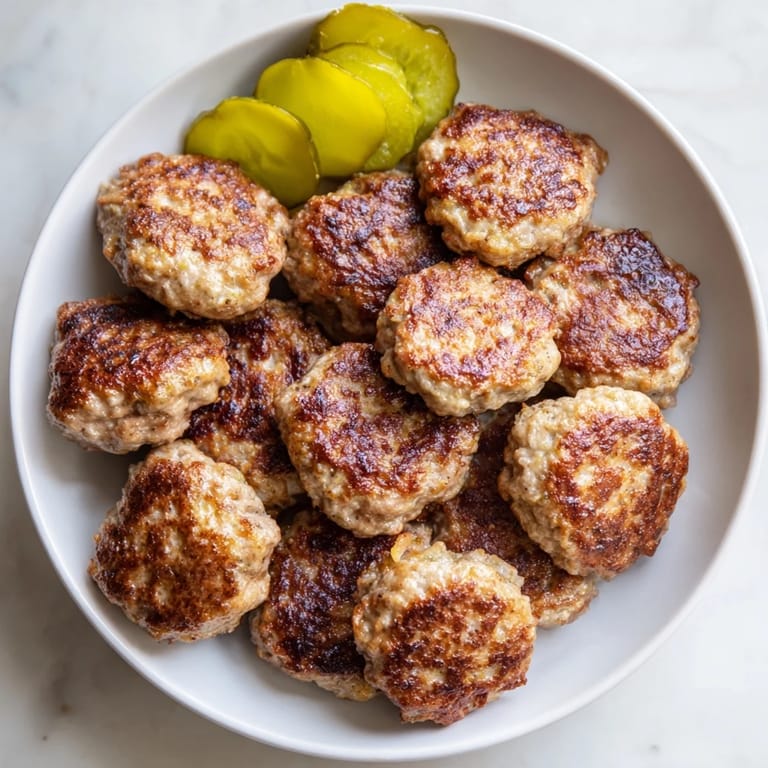
- Danish pickles to serve: The sharp, briny contrast is what makes these sing; pickled cucumbers or beetroot both work wonderfully.
Instructions
- Gather and combine:
- Combine the pork, grated onion, egg, milk, breadcrumbs, salt, pepper, and allspice in a large bowl and mix until the texture is even and slightly sticky. This is the moment where you get a sense of the mixture's personality.
- Let it rest:
- Set the mixture aside for 10 minutes so the breadcrumbs can absorb the milk and become part of the structure rather than a separate element. This step is not optional if you want tender meatballs.
- Shape with intention:
- Wet your hands under cool water and shape the mixture into oval or slightly flattened rounds about the size of a golf ball, making about 12 to 14 pieces. The moisture on your hands prevents sticking and creates a smoother surface.
- Prepare your pan:
- Heat the butter and oil together in a large skillet over medium heat, letting them warm until the butter foams slightly and the oil shimmers. You'll know it's ready when a small piece of meat sizzles immediately upon contact.
- Fry in batches:
- Working in two batches if needed so they're not crowded, place the meatballs in the pan and use a spatula to gently flatten each one slightly, about ¼ inch thick. Fry for 4 to 5 minutes on each side until the exterior is deep golden brown and the interior is cooked through.
- Rest on paper towels:
- As each batch finishes, transfer them to a paper towel-lined plate to blot any excess oil while keeping them warm. This keeps them from sitting in grease and becoming heavy.
- Serve immediately:
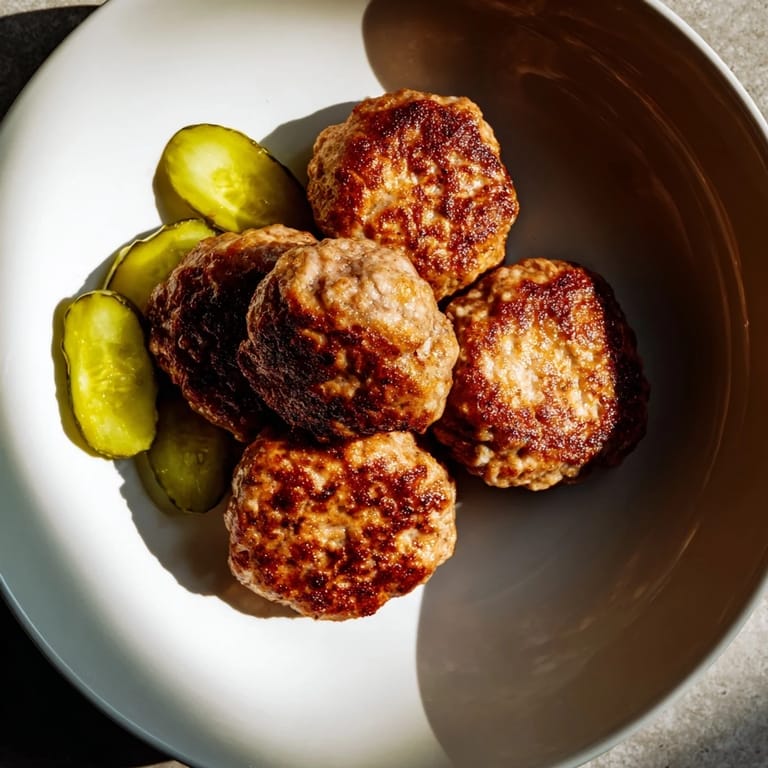
- Arrange the frikadeller on a plate with pickles alongside, and rye bread or boiled potatoes if you're making it a full meal. The warmth and the cool tang of the pickles are meant to happen together.
 Save to Pinterest
 The first time I nailed these, I realized that sometimes the most memorable food is the simplest, made with attention rather than complexity. My family ate them in near silence, which is the highest compliment I've ever received at my own table.
The Allspice Question
Allspice is not a must, but it's the flavor that separates a good meatball from an authentically Danish one. It tastes like a subtle blend of cinnamon, nutmeg, and clove all at once, which sounds complicated but reads as simply warm and familiar. If you can find it, add the full half teaspoon; if you can't, the meatballs are still wonderful without it, just slightly less distinctive.
Why These Are Different from Swedish Meatballs
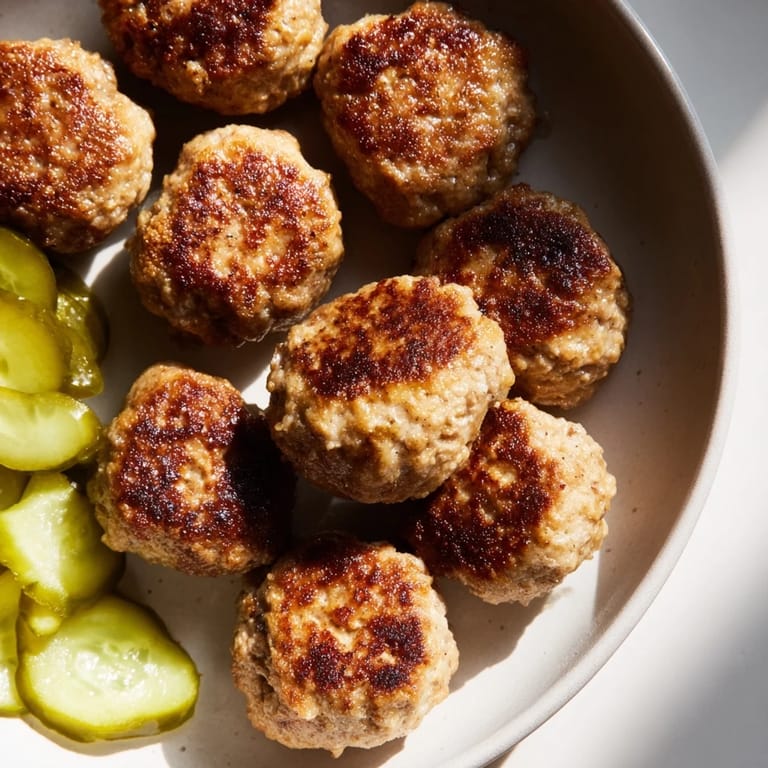
Swedish meatballs tend toward cream sauces and are often smaller and more uniform; Danish frikadeller are flatter, firmer, and meant to stand alone with pickles for brightness. The milk in the mixture is distinctly Danish too, creating a texture that's almost buttery on the inside while the exterior stays crisp and browned. This is comfort food that doesn't hide behind a sauce.
Serving and Sides That Matter
These are forgiving about what you serve alongside them, but a few combinations have become classics for good reason. Creamy potato salad, thinly shaved red cabbage with a touch of vinegar, or simply buttered boiled potatoes all work beautifully and let the meatballs remain the star. Rye bread is traditional for a reason too—its slightly sour, dense texture provides grounding when you're alternating bites between warm meatballs and cool pickles.
- Make a simple red cabbage slaw with vinegar and a pinch of sugar if you want something bright and cutting.
- Boil small potatoes in salted water and toss with butter and fresh dill for an easy side that feels intentional.
- Don't overthink it; warm bread and good pickles are honestly all you need alongside these meatballs.
 Save to Pinterest
 There's something deeply satisfying about a meal that tastes like it took hours but comes together in less than an hour. These meatballs are that kind of recipe, the one you'll find yourself making again and again.
Recipe Q&A
- → What gives Danish pork meatballs their flavor?
A mix of ground pork, grated onion, allspice, and seasoning creates the rich and distinctive flavor of Danish pork meatballs.
- → How should meatballs be shaped for best results?
Shape the mixture into oval or round balls about the size of a golf ball to ensure even cooking and ideal texture.
- → What’s the best fat to use for frying these meatballs?
A combination of unsalted butter and neutral oil helps achieve a golden crust and juicy interior without burning.
- → Can I substitute pork with other meats?
Yes, half of the pork can be replaced with ground veal for a lighter texture while maintaining flavor.
- → What traditional sides complement Danish pork meatballs?
Tangy Danish pickles, rye bread, boiled potatoes, or creamy potato salad are classic accompaniments enhancing the dish.