 Save to Pinterest
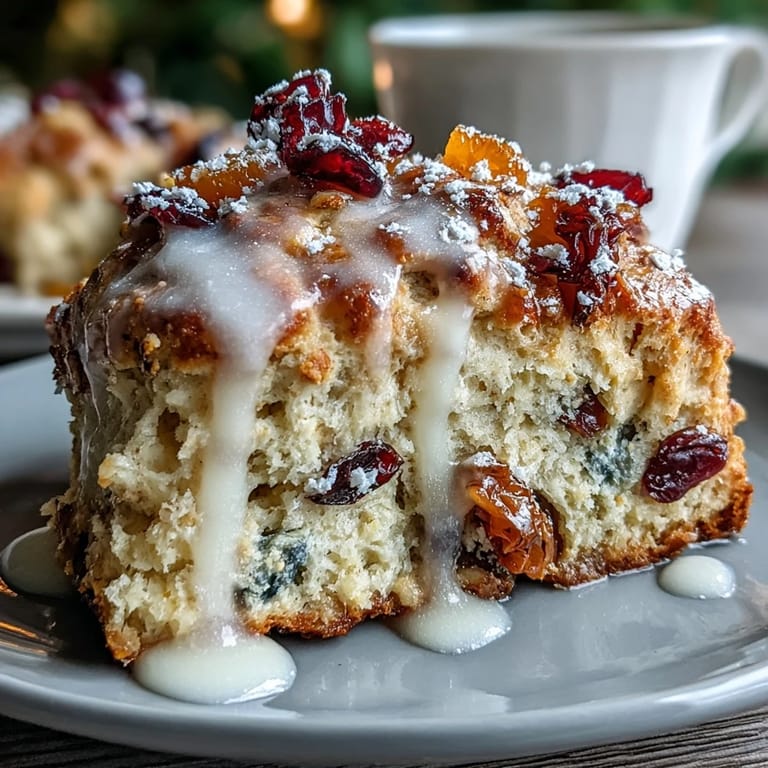
 My kitchen smelled like a candied dream last February when I first tried making these scones for an impromptu brunch. A friend had brought over a jar of homemade candied orange peel, and I couldn't resist the challenge of turning it into something warm and buttery. The moment those golden wedges came out of the oven, I knew I'd discovered something special—something that felt festive without trying too hard. What started as an experiment became the scone I'd make again and again.
I'll never forget my neighbor's face when she tasted these straight from the cooling rack, still warm enough to melt a little butter. She closed her eyes like she was solving a puzzle, then asked if I'd learned to make them at culinary school—as if I hadn't just thrown butter and fruit together on a whim. That moment taught me that sometimes the most memorable dishes come from happy accidents and a willingness to experiment.
What's for Dinner Tonight? 🤔
Stop stressing. Get 10 fast recipes that actually work on busy nights.
Free. No spam. Just easy meals.
Ingredients
- All-purpose flour (2 cups): This is your foundation, and it needs to be cold when you start mixing so the butter stays in distinct little pockets that create those tender layers.
- Granulated sugar (1/4 cup): Just enough sweetness to balance the tartness of the cranberries without making these feel like dessert.
- Baking powder (1 tablespoon): The magic ingredient that gives scones their characteristic lift and crumbly-yet-moist texture.
- Fine sea salt (1/2 teaspoon): This isn't negotiable—it wakes up all the flavors and prevents the sweetness from becoming cloying.
- Dried cranberries (1/2 cup): Look for ones that aren't overly sweetened; they should be tart enough to make your mouth water a little.
- Candied orange peel (1/3 cup), finely chopped: This is where the personality lives, so don't skip it or substitute it carelessly—the candied quality gives brightness that fresh zest alone cannot.
- Orange zest (from 1 orange): Adds a whisper of freshness that ties the whole thing together without overpowering.
- Cold unsalted butter (1/2 cup), cubed: Keep this in the freezer until the last second; cold butter is what separates tender scones from dense hockey pucks.
- Heavy cream (2/3 cup, plus extra for brushing): This creates richness and helps bind everything without toughening the dough like whole milk might.
- Egg (1 large): Acts as a binder and gives the tops that beautiful golden shine.
- Pure vanilla extract (1 teaspoon): A subtle backbone that lets the citrus and cranberry shine.
- Powdered sugar (1/2 cup, optional for glaze): If you want to gild the lily, this creates a simple, elegant finish.
- Fresh orange juice (1–2 tablespoons, optional for glaze): Keeps the glaze from being one-dimensional and ties it all back to the candied peel.
Instructions
- Get your oven and workspace ready:
- Preheat the oven to 400°F (200°C) and line a baking sheet with parchment paper. This simple step prevents sticking and ensures even browning on the bottom of your scones.
- Combine your dry base:
- In a large bowl, whisk together flour, sugar, baking powder, and salt until everything is evenly distributed. You're creating the foundation that will hold everything together.
- Work in the cold butter:
- Add your cold butter cubes to the flour mixture, then use a pastry cutter or your fingertips to rub everything together until it resembles coarse breadcrumbs. The small pockets of butter are what create those tender, flaky layers, so don't overwork this—stop while some small butter pieces are still visible.
- Add the fruit and zest:
- Stir in the cranberries, candied orange peel, and orange zest, making sure they're evenly distributed throughout the mixture. This step takes just a minute but ensures every bite has flavor.
- Bring the dough together:
- Whisk together the cream, egg, and vanilla in a separate bowl, then pour this mixture over your dry ingredients. Mix gently with a fork or wooden spoon until the dough just comes together—you should still see some streaks of flour, and that's exactly what you want. Overworking at this stage will make your scones tough and dense, so show restraint.
- Shape and cut:
- Turn the dough onto a lightly floured surface and pat it into a disc about 1 inch thick. Using a sharp knife, cut it into 8 wedges like you're slicing a pie.
- Prepare for baking:
- Arrange the wedges on your prepared baking sheet with a little space between each one, then brush the tops generously with extra cream. This creates that signature golden-brown, slightly glossy exterior.
- Bake to golden perfection:
- Bake for 16–18 minutes, until the tops are deep golden brown and a toothpick inserted into the center comes out clean. The kitchen will smell incredible, and that's your sign they're almost ready.
- Cool and finish:
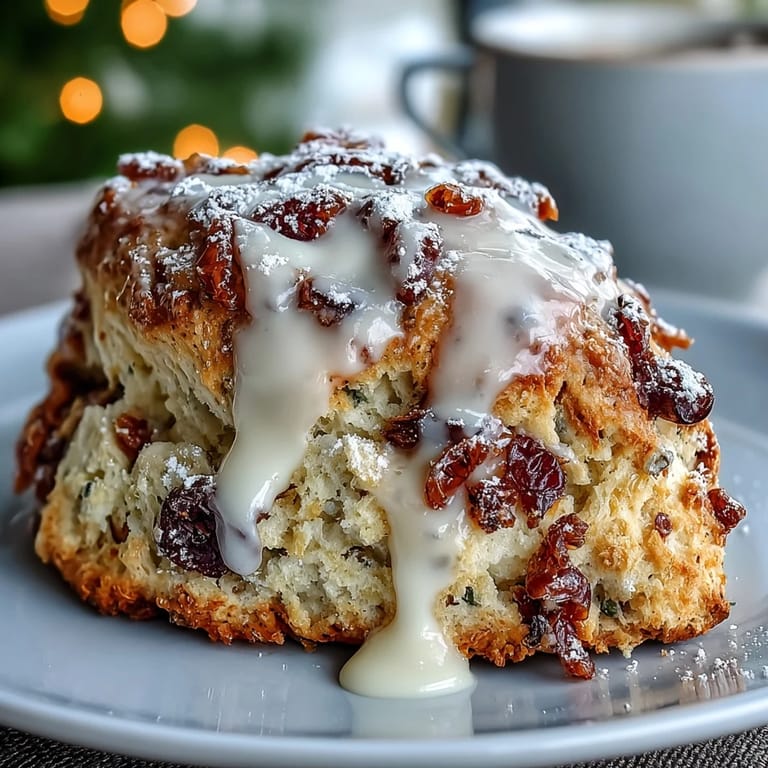
- Let the scones cool on a wire rack for a few minutes. If you want to add the glaze, whisk together powdered sugar and orange juice until smooth and drizzle it over the cooled scones.
 Save to Pinterest
 There's something almost magical about the quiet moment when you pull a tray of fresh scones from the oven and the steam rises up, carrying that citrus-vanilla perfume through the entire house. My daughter once asked if this is what fancy hotels smell like, and I realized these aren't just breakfast—they're a small luxury we can all make at home.
Why Candied Orange Peel Matters
When I first started making these scones, I tried substituting candied orange peel with fresh zest, thinking it would be fresher and brighter. It wasn't the same at all—the candied version has a jammy sweetness and slight chewiness that fresh zest can't replicate, and it distributes flavor more evenly throughout the dough. The candying process concentrates the oils and creates a texture that stays tender rather than becoming sharp or woody. Since then, I've learned that some ingredients simply can't be replaced without losing the soul of the recipe.
The Science of Tender Scones
Making scones is really about respecting the role of fat and understanding how minimal mixing creates texture. The cold butter creates steam pockets in the oven, which gives scones their signature crumbly-yet-moist crumb structure. I once made a batch where I let the butter soften just a degree too much, and the result was more like a biscuit than a scone—dense, uniform, and missing that delicate flakiness. Now I keep everything in the cold zone and mix with purpose rather than habit.
Variations and Personal Touches
These scones are forgiving enough to adapt based on what you have on hand and what you're craving. I've made them with dried cherries when cranberries weren't in season, and once I added a hint of cardamom to echo the spice you'd find in Scandinavian baking. You could even dip the cooled tops in melted white chocolate for a more decadent version, though I find the orange glaze is elegant enough on its own. The beauty of this recipe is that it invites tinkering without demanding it.
- Try substituting dried cherries or golden raisins if you want something less tart than cranberries.
- White chocolate is an indulgent option that pairs beautifully with the citrus notes.
- These freeze remarkably well and taste just as good when gently reheated in a 300°F oven for about 5 minutes.
 Save to Pinterest
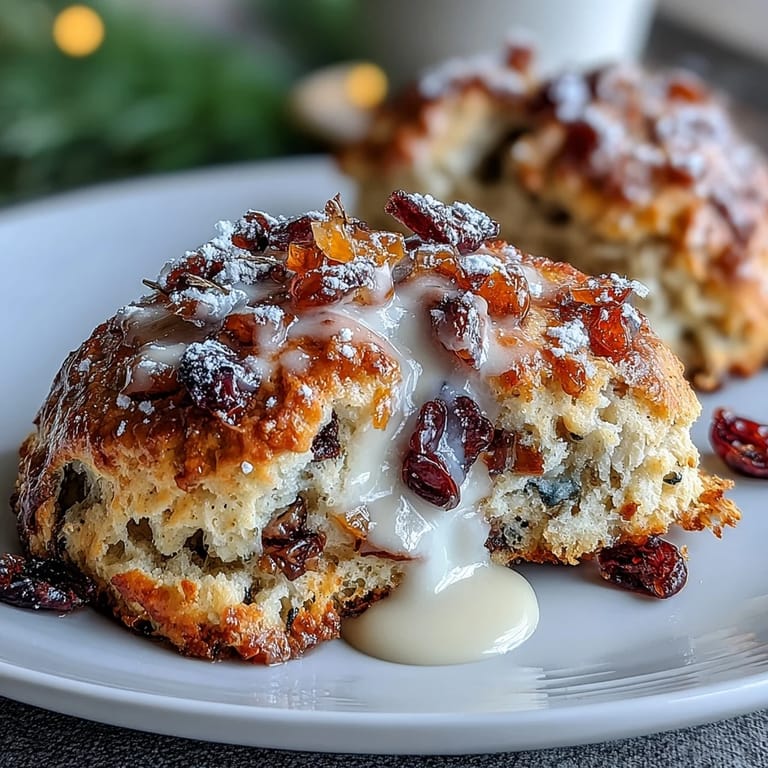
 These scones have become my go-to when I want to impress without stress, and they remind me that sometimes the best moments in the kitchen happen when you trust the process and let the ingredients do their work. Serve them warm with a little butter and jam, or just as they are with a cup of tea.
Recipe Q&A
- → Can dried cherries be used instead of cranberries?
Yes, dried cherries or golden raisins can replace cranberries for a different but equally delicious flavor variation.
- → What is the best way to incorporate butter for flaky scones?
Use cold unsalted butter cut into cubes and rub it into the dry ingredients until the mixture resembles coarse crumbs to ensure a flaky texture.
- → How can I make the scones glossier and sweeter after baking?
Whisk powdered sugar with fresh orange juice and drizzle the glaze over cooled scones for a sweet, glossy finish.
- → Are these scones suitable for freezing?
Yes, they freeze well. Reheat briefly in the oven to enjoy them fresh and warm.
- → What allergens are present in these scones?
They contain wheat (gluten), dairy, and egg. Candied orange peel may contain trace nuts, so always check packaging.