 Save to Pinterest
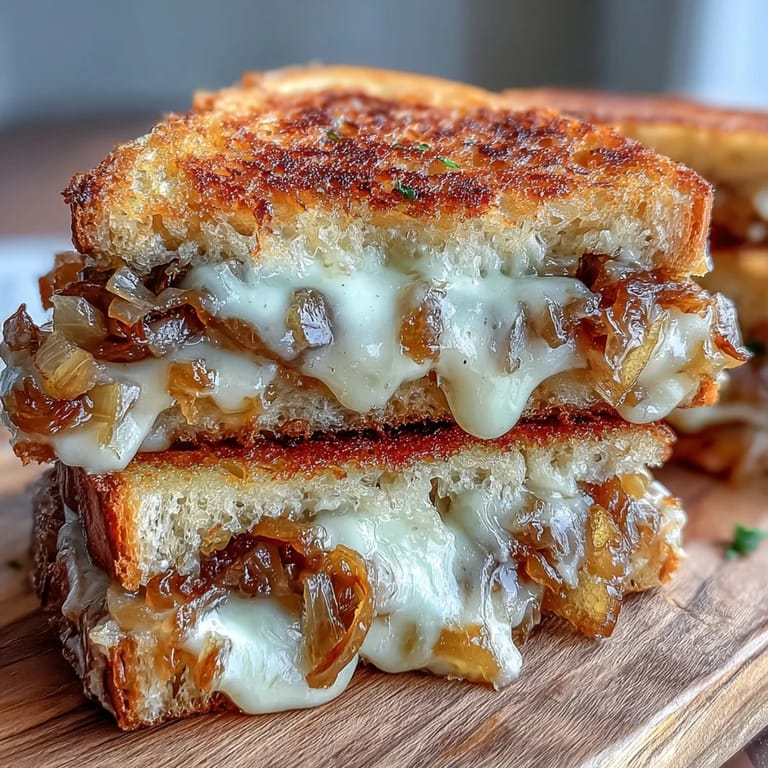
 There's something about the smell of onions slowly turning golden in butter that makes you forget you're supposed to be doing something else entirely. I discovered this sandwich by accident, really—I'd made French onion soup the night before and had a container of those glossy, caramelized onions sitting in my fridge, and the next afternoon I found myself staring at some excellent sourdough bread wondering what to do with it. What followed was pure kitchen logic: if caramelized onions belong in a fancy soup, why not between two slices of grilled bread with melted cheese? The result was so good I've been making it ever since.
I made this for my sister during a rainy spring afternoon when she stopped by unannounced, and I watched her face completely change when she took that first bite. She literally closed her eyes like she was tasting something she'd been missing. We sat at the kitchen counter eating these sandwiches with the rain pattering against the windows, barely talking, just nodding at each other in understanding. It became the kind of meal she texts me about months later, asking if I remember making it.
What's for Dinner Tonight? 🤔
Stop stressing. Get 10 fast recipes that actually work on busy nights.
Free. No spam. Just easy meals.
Ingredients
- Unsalted butter (2 tablespoons for onions, 2 tablespoons softened for grilling): Don't skip the butter—it's what gives those onions their glossy, caramelized coat and what makes the bread turn golden and crispy on the outside.
- Large yellow onions (2, thinly sliced): Yellow onions have the right balance of natural sugar and mild flavor for caramelization; red onions turn too soft and sweet.
- Sugar (1 teaspoon) and salt (1/2 teaspoon): These aren't just seasoning—they draw out the onions' moisture and help them caramelize evenly rather than just soften.
- Fresh thyme (1 teaspoon, optional): If you use it, add it near the end so the flavor stays bright and doesn't get buried.
- Dry white wine or sherry (2 tablespoons, optional): This step feels fancy but it really does matter—it deglazes the pan and adds a subtle depth that makes people ask what your secret ingredient is.
- Sourdough bread (4 slices): The tang and structure of sourdough stands up to the richness of cheese and onions; regular white bread would get overwhelmed.
- Dijon mustard (1 tablespoon): A thin spread cuts through the richness and adds a sophisticated note that ties everything together.
- Gruyère cheese (1 cup, grated): Gruyère melts into this silky, almost nutty texture that regular cheddar just can't match.
- Swiss cheese (1/2 cup, grated): Swiss adds a gentle, creamy element and helps prevent the sandwich from becoming too heavy.
- Freshly ground black pepper (to taste): Grind it fresh right before you assemble; pre-ground pepper loses its bite.
Instructions
- Start the onions low and let time do the work:
- Melt the butter over medium heat and add your sliced onions with the sugar and salt. The key here is patience—you're not trying to soften them quickly, you're building layers of flavor. Stir them every few minutes so they caramelize evenly instead of burning on the bottom; this takes about 20 to 25 minutes and your kitchen will smell absolutely incredible.
- Deglaze and finish the onions:
- When the onions are a deep golden brown, add the thyme and that splash of wine or sherry if you're using it. Scrape the bottom of the pan with your spatula to loosen all those browned, flavorful bits, then let it bubble away until the liquid mostly evaporates. Set them aside on a plate.
- Build your sandwich base:
- Spread a thin layer of Dijon mustard on one side of each bread slice. Top two of the slices with half your mixed cheeses, then distribute the warm caramelized onions on top, then sprinkle with black pepper and the remaining cheese. The cheese on the bottom will start melting from the warm onions, and that's exactly what you want.
- Create the lid:
- Place the remaining bread slices on top, mustard side facing in, pressing down gently. You want everything snug but not crushed.
- Butter the outside and prepare to grill:
- Spread softened butter generously on the outside of both sandwich tops and bottoms—this is what creates that golden, crispy crust. Heat your skillet or griddle over medium-low heat; if you go too hot, the outside browns before the cheese has time to melt.
- Grill until golden and melty:
- Place the sandwiches in the skillet and cook for 3 to 4 minutes on the first side, watching them turn golden. Gently press down with a spatula halfway through to encourage even browning and cheese melting. Flip carefully and cook the other side for another 3 to 4 minutes until it matches the first side.
- Rest and serve:
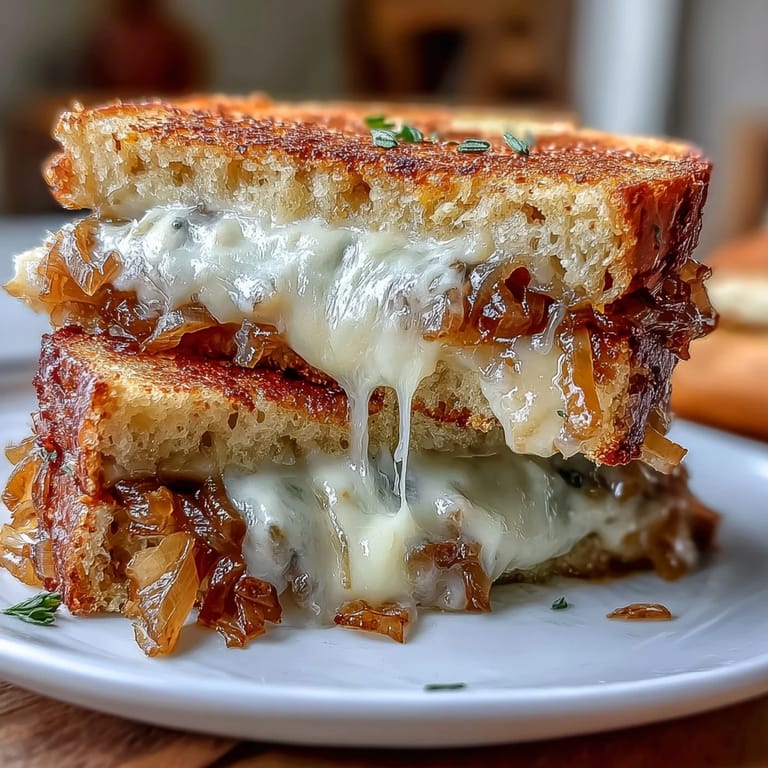
- Let the sandwiches sit for about a minute out of the heat—this lets the cheese set slightly so it doesn't pour out when you cut into it. Slice diagonally if you want to feel like you're in a French bistro, then serve immediately.
 Save to Pinterest
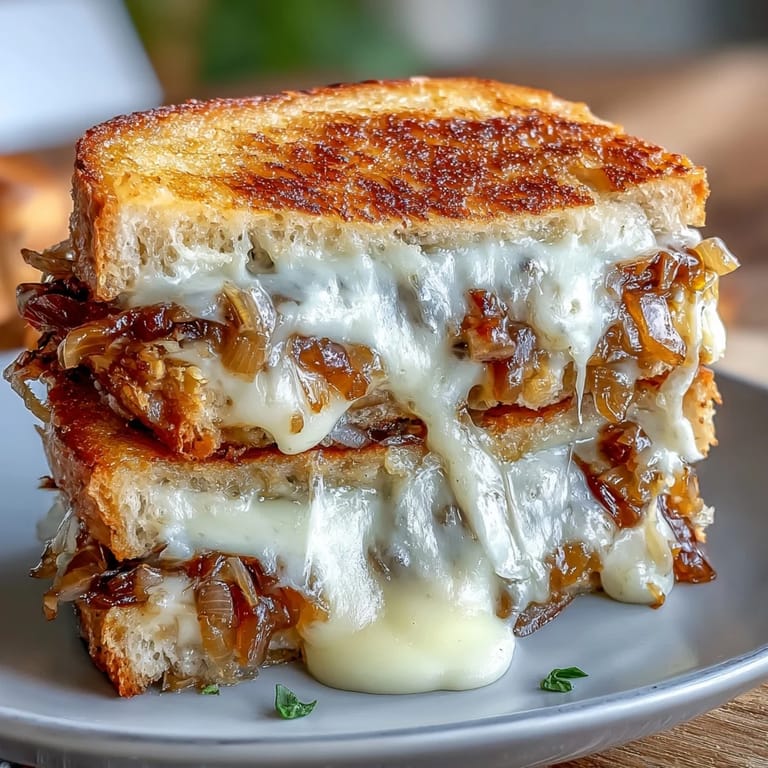
 What started as me trying to use up leftover soup onions became this thing I make when I want to feel like I'm taking care of myself. There's something about biting through that crispy, buttered bread crust and hitting that molten cheese and those soft, savory onions that feels like a small act of rebellion against ordinary afternoons. It's fancy enough to impress but honest enough to be purely, selfishly for you.
The Magic of Caramelized Onions
Caramelization isn't actually cooking the onions until they're brown—it's a chemical transformation where the natural sugars break down and create hundreds of new flavor compounds, which is why the result tastes nothing like raw onions and everything like depth and richness. The first time I understood this was when I got impatient and turned up the heat, thinking I could shortcut the process; I ended up with burnt-tasting onions that ruined the whole sandwich. Now I treat that 20 to 25 minutes as meditation time, stirring occasionally and letting the kitchen fill with that golden, buttery smell.
Why Sourdough Matters Here
Regular sandwich bread would turn into mush under these toppings, but sourdough has this structure and tang that actually stands up to richness. The natural fermentation gives it a subtle sourness that plays beautifully against the sweet, savory onions and the creamy cheese. I tested this once with brioche thinking it would be more luxurious, and while it was buttery, it completely disappeared into the background—sourdough is the bread that lets you taste everything, not just itself.
Cheese Selection and Melting
The combination of Gruyère and Swiss is specific for a reason—Gruyère brings the nutty, sophisticated flavor while Swiss contributes a creamy smoothness and helps with the melt. Together they create a texture that's both velvety and substantial, unlike single-cheese sandwiches that can feel either stringy or greasy. If you can't find Gruyère, Emmental works beautifully, though avoid pre-sliced cheese because it often has anti-caking agents that interfere with melting.
- Grate your cheese fresh if possible; it melts more evenly than pre-packaged shredded varieties.
- Don't use aged cheddar here—it breaks the sauce instead of creating that silky texture.
- If you're being fancy, a tiny pinch of nutmeg grated into the cheese mixture echoes the French onion soup inspiration.
 Save to Pinterest
 This sandwich taught me that sometimes the best kitchen discoveries come from leftovers and curiosity rather than following a recipe to the letter. Make it when you want something that tastes like you spent way more time and effort than you actually did.
Recipe Q&A
- → How do I caramelize onions for this sandwich?
Slice the onions thinly and cook them slowly in butter over medium heat with a pinch of sugar and salt until golden and soft, around 20-25 minutes. Adding thyme and a splash of white wine enhances flavor.
- → Can I use other cheeses instead of Gruyère?
Yes, Emmental or sharp white cheddar can be great alternatives if Gruyère is unavailable or to vary the flavor.
- → What type of bread works best?
Sourdough bread is ideal for its sturdy texture and tangy flavor, but other hearty breads like rustic white or rye can also hold the filling well.
- → How do I achieve a crispy exterior on the sandwich?
Spread softened butter on the outside of the sandwich before grilling. Cook over medium-low heat and press gently to ensure even browning and melting.
- → What are good serving suggestions?
Serve with a fresh side salad or a bowl of warm tomato soup for a balanced meal. A dry white wine like Sauvignon Blanc pairs nicely as well.