
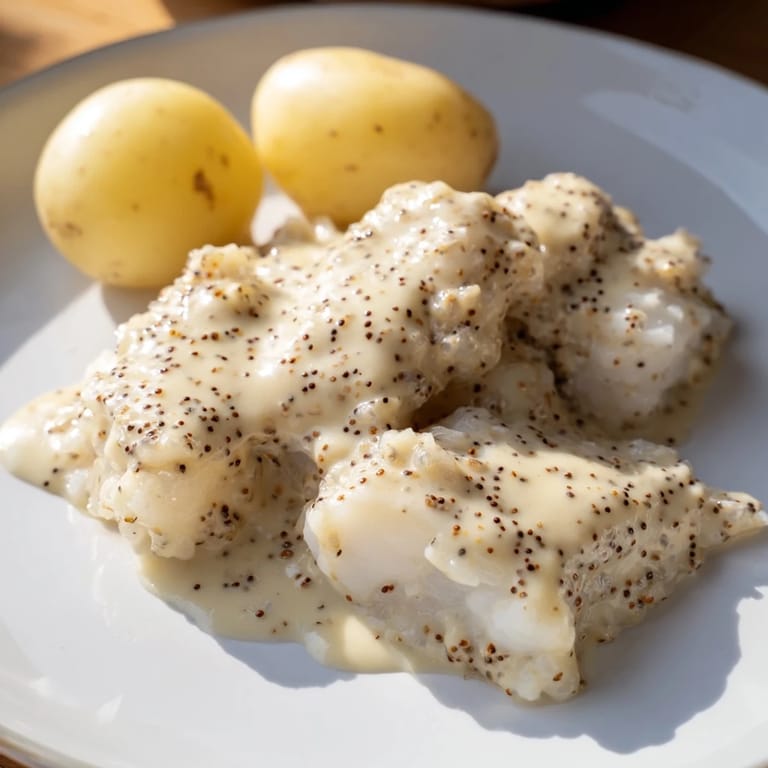
 Save to Pinterest
 My grandmother would start talking about lutefisk in October, weeks before Christmas, always with this knowing smile like she was sharing a secret. The first time I actually watched her prepare it, I was struck by how patient the process demanded—not just the five days of soaking and rinsing, but the way she'd hover over that baking dish like she was coaxing something precious back to life. That gentle transformation from dried, rigid fish to something silky and delicate felt like witnessing a small kitchen miracle.
Years ago, I made this for a dinner party where no one had ever tried lutefisk before, and I was nervous they'd hate it. But something shifted when they tasted it with fresh parsley and hot potatoes—suddenly everyone was quiet, just eating, nodding, asking for more sauce. That's when I understood it wasn't about novelty or tradition; it was about the care baked into the dish and how it invited you to slow down and actually taste something.
What's for Dinner Tonight? 🤔
Stop stressing. Get 10 fast recipes that actually work on busy nights.
Free. No spam. Just easy meals.
Ingredients
- Dried cod (lutefisk): A kilogram sounds like a lot until you remember it swells and becomes incredibly tender; buy from a Nordic grocer if possible, and don't substitute with fresh cod.
- Coarse salt: This isn't decorative—it draws out excess moisture and firms up the texture after soaking.
- Unsalted butter: Lets you control the final salt balance, especially important since mustard already carries saltiness.
- Dijon and whole-grain mustard: The combination gives you sharp tang and a pleasant texture contrast; mixing the two is smarter than using just one.
- Whole milk: Full-fat makes the sauce silky; skim will taste thin and flat.
- Boiled potatoes: Waxy varieties hold together better than floury ones and soak up sauce beautifully.
Instructions
- Start the Soaking Journey:
- Rinse the dried cod under cold water until it stops smelling like the ocean and more like actual fish. Submerge it completely in a large container, cover it with cold water, and place it in the coldest part of your refrigerator—this is non-negotiable because warmth will spoil it.
- Change the Water Daily:
- Each morning or evening, drain and replace the water; you'll watch the fish gradually soften and plump up over five to six days. This isn't lazy timekeeping—each water change removes bitterness and excess salt.
- Salt and Rest:
- After soaking, drain the fish completely, sprinkle it generously with coarse salt, and let it sit for thirty minutes. This might seem counterintuitive, but the salt helps set the proteins and firms up the texture just before cooking.
- Rinse and Dry:
- Rinse off the salt thoroughly under cold water and pat the fish dry with paper towels—any excess moisture will steam instead of bake. Don't skip this; it makes a real difference in how gently it cooks.
- Bake Low and Slow:
- Heat your oven to 200°C (390°F), place the fish in a baking dish, cover it with foil, and slide it in for 25–30 minutes until the flesh turns opaque and flakes easily with a fork. The foil protects it from drying out and keeps everything moist.
- Make the Mustard Sauce:
- Melt butter over medium heat, whisk in flour for about a minute (don't let it brown), then gradually pour in milk while whisking constantly to prevent lumps. You're creating a roux base that will thicken and become silky.
- Simmer and Season:
- Let the sauce bubble gently for three to four minutes until it coats the back of a spoon, then stir in both mustards, a touch of sugar to balance the heat, and salt and white pepper to your taste. Taste as you go—the sauce should taste boldly of mustard but not harsh.
- Bring It Together:
- Plate the hot fish with boiled potatoes and crispbread, then spoon the warm mustard sauce generously over everything. Finish with a small handful of chopped parsley if you have it—it brightens the whole plate.
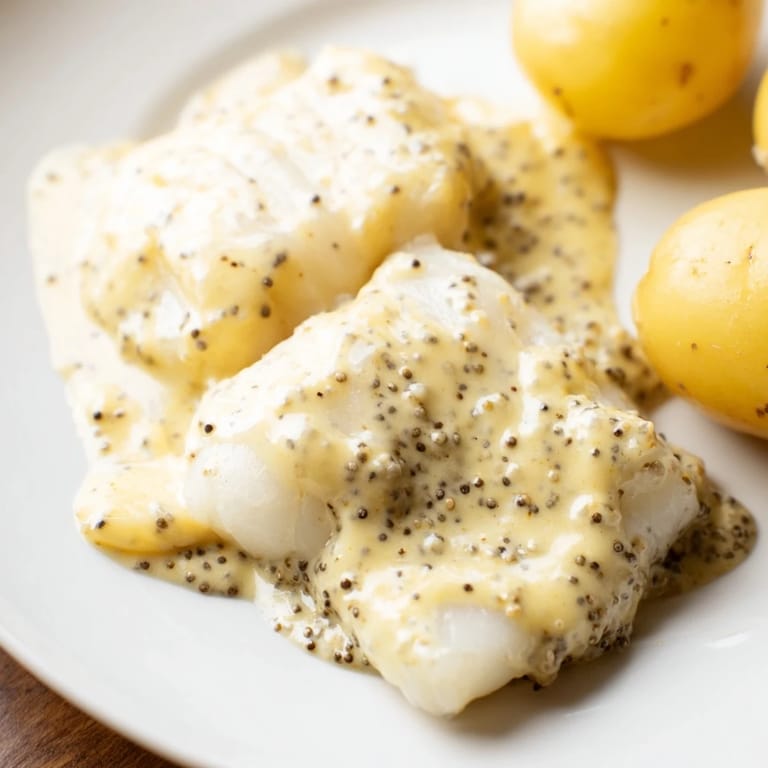 Save to Pinterest
 There's a moment about halfway through a meal of lutefisk when everyone stops making small talk and just eats, and I think that's when you know you've made something worth making. It becomes less about impressing people with an exotic dish and more about sharing something that tastes like belonging.
The Soaking: Your Foundation
I learned the hard way that lutefisk soaking isn't a forgotten step you rush through—it's where most of the magic happens. The water gradually rehydrates the dried fish and draws out harsh, off-flavors that would otherwise linger on your palate. Changing the water daily isn't fussy; it's the difference between a delicate, delicious dish and one that tastes like the sea in a way that nobody enjoys. I once tried to get away with soaking only four days, and the fish remained slightly tough and fishy no matter how I baked it. Now I actually set phone reminders because the daily ritual matters.
Why This Sauce Works
The mustard sauce isn't just a topping—it's the soul of the dish, transforming lutefisk from something austere and historical into something warm and absolutely worth repeating. The butter-flour base creates richness, the milk adds gentle sweetness, and the two mustards (one sharp, one textured) give you brightness and personality. I've experimented with variations, and honestly, this balance is the one that keeps people reaching for seconds. The sugar is subtle but crucial; just enough to soften the mustard's edge without making the sauce taste sweet.
Serving and Pairing
Lutefisk is best eaten hot, straight from the plate, with buttery potatoes and plenty of sauce to soak into the crispbread. There's something almost ceremonial about how you eat this—unhurried, attentive, savoring.
- Serve the fish immediately after baking so the texture stays tender and the sauce stays warm enough to coat everything beautifully.
- Add a small bowl of melted butter on the side for those who want extra richness.
- A cold glass of aquavit, a crisp lager, or even sparkling water works perfectly to cut through the richness and refresh your palate between bites.
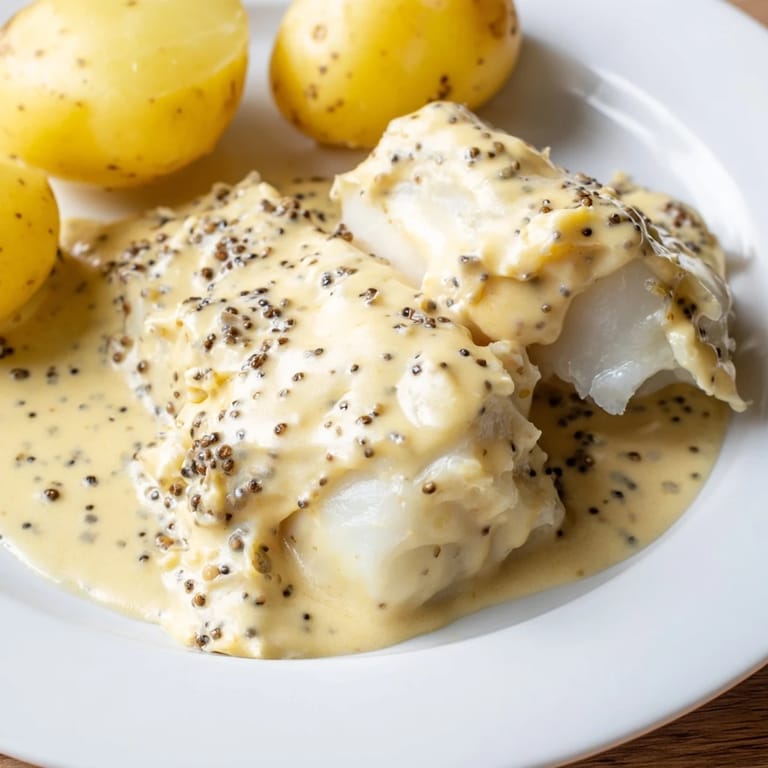 Save to Pinterest
 Lutefisk asks for patience and attention, but it rewards you with something quietly spectacular—a dish that tastes like history and feels like home. Once you've made it properly, you'll understand why it's been served at Norwegian tables for generations.
Recipe Q&A
- → How long does the dried cod soak take?
The dried cod requires 5 to 6 days soaking in plenty of cold water, which should be changed daily to rehydrate the fish properly.
- → What is the best way to achieve a flaky texture?
Baking the soaked cod in a covered dish at 200°C (390°F) for about 25–30 minutes ensures the fish becomes opaque and flakes easily with a fork.
- → Can gluten-free flour be used in the mustard sauce?
Yes, substituting all-purpose flour with a gluten-free alternative works well to maintain the sauce’s creamy consistency.
- → What sides traditionally accompany this dish?
Boiled potatoes and crispbread or flatbread are traditional accompaniments, often garnished with fresh parsley for added freshness.
- → Are there any common allergens to be mindful of?
This dish contains fish, milk, mustard, and gluten (unless gluten-free flour is used). It's important to check all ingredients if allergies are a concern.
- → How is the mustard sauce prepared?
The sauce starts with melted butter and flour cooked briefly, then milk is whisked in until slightly thickened. Dijon and whole-grain mustards, sugar, salt, and white pepper are added to finish.