 Save to Pinterest
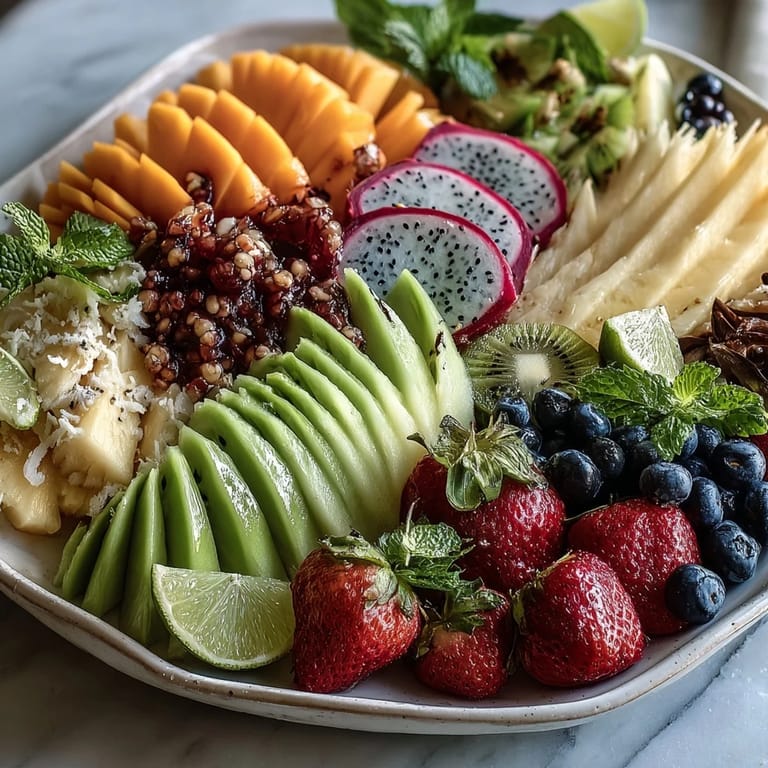
 My neighbor knocked on the kitchen door mid-afternoon with a puzzled expression, asking if I could help her transform a farmers market haul into something impressive for an impromptu dinner party. Two hours later, watching her face light up as guests crowded around a tiered platter bursting with jewel-toned fruit felt like the real reward. This tropical display became my go-to move whenever I need something that looks restaurant-worthy but requires zero cooking skills. It's become less about following a recipe and more about understanding how color, texture, and arrangement can turn simple fruit into an edible work of art. Now friends request it constantly, and I've learned that sometimes the most memorable dishes are the ones that celebrate ingredients without fussing with them.
I made this for a poolside brunch during an unexpectedly hot June weekend, and watching the fruit gradually glisten with condensation under the sun while ice clinked in glasses around it felt like pure summer. Someone's five-year-old asked if it was art before asking if it was food, which somehow felt like the highest compliment. That moment taught me that presentation matters not because it's pretentious, but because it invites people to slow down and appreciate what's in front of them.
What's for Dinner Tonight? 🤔
Stop stressing. Get 10 fast recipes that actually work on busy nights.
Free. No spam. Just easy meals.
Ingredients
- Ripe mangoes (2): Choose ones that yield slightly to gentle pressure and smell sweet at the stem—this is where the flavor lives, and underripe mangoes will taste disappointingly starchy.
- Large pineapple (1): A ripe pineapple should feel heavy for its size and have a sweet aroma at the crown; removing the core makes every bite more enjoyable than leaving it in.
- Kiwis (2): The bright green flesh provides both tartness and visual contrast, so don't skip them even if you think they're ordinary.
- Papaya (1): This creamy fruit bridges sweet and tropical flavors; choose one that's yielding but not mushy.
- Dragon fruit (1): The shocking pink exterior and speckled white or magenta interior are half the appeal—this is pure visual magic on a platter.
- Seedless red grapes (1 cup): These stay firm and provide little bursts of sweetness between the softer fruits.
- Fresh strawberries (1 cup): Hulled and halved, they bleed slightly and create beautiful color gradients on the display.
- Blueberries (1 cup): Tiny flavor pockets that catch light and add sophistication with minimal effort.
- Fresh mint leaves (1/4 cup): Don't crush them before arranging; let them stay whole for the strongest aroma and visual freshness.
- Lime (1): Wedges scattered throughout add brightness and invite guests to squeeze juice over their selections.
- Vanilla Greek yogurt (1 cup, optional): Tangy and creamy, this becomes a luxurious dipping sauce that transforms the experience from simple fruit to intentional dessert.
- Honey or agave syrup (1 tablespoon, optional): A touch of sweetness in the yogurt sauce balances tartness without overwhelming the fruit's natural flavors.
- Lime zest (from 1 lime, optional): This tiny addition adds complexity and ties the dipping sauce back to the display itself.
Instructions
- Gather and prep everything before you arrange:
- Wash your hands, lay out a clean cutting board, and set your large platter nearby so you're not scrambling mid-arrangement. This 10-minute window of preparation makes the actual assembly feel calm and intentional rather than rushed.
- Slice and cut each fruit with intention:
- For mangoes, slice cheeks away from the pit and either cube or fan-slice them depending on your platter space. Pineapple spears arranged in the center create a natural focal point, while chunks work if you're mixing them into gaps.
- Start with your anchor fruits in the center or base:
- Mango and pineapple should occupy the visual heart of your arrangement—think of them as the main characters with supporting cast fanning outward. Leave some space between them rather than crowding; negative space makes the colors pop rather than muddying together.
- Layer in color and texture deliberately:
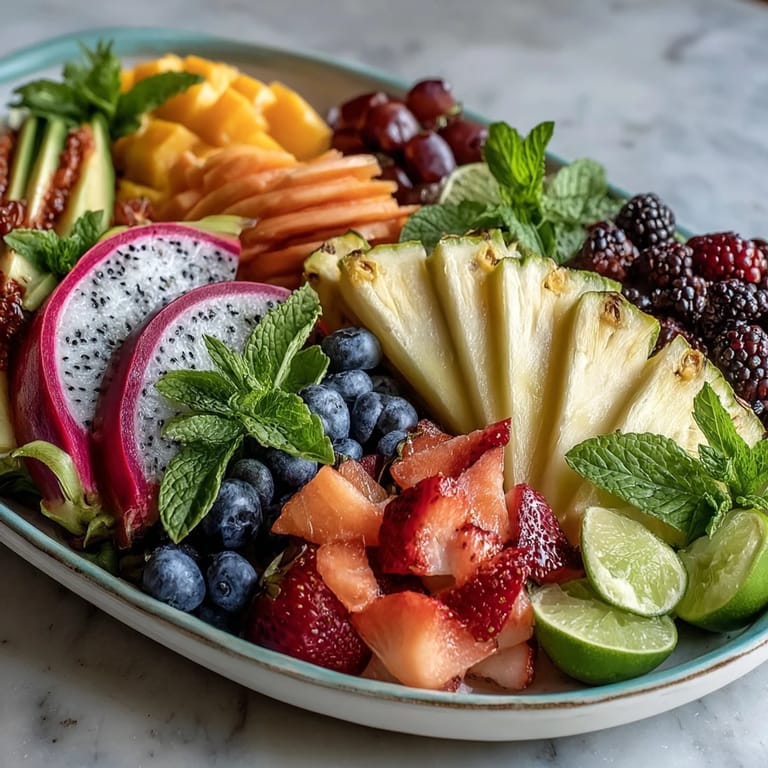
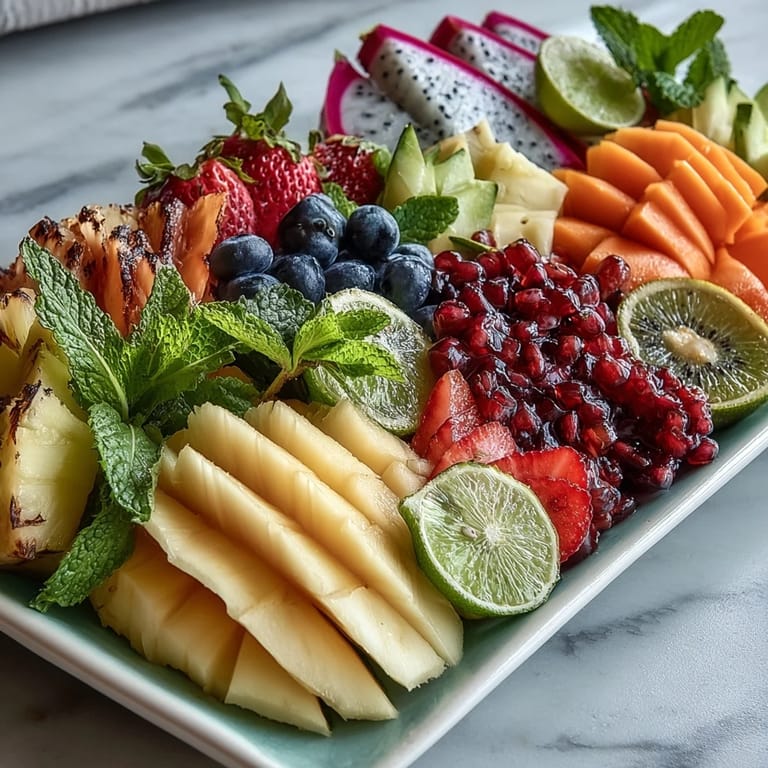
- Place the papaya where its peachy tones complement the yellows and oranges, then nestle dragon fruit's shocking pink against darker fruits. Grapes, strawberries, and blueberries fill gaps like jewels, and their small size lets you achieve balance even if your large slices aren't perfectly symmetrical.
- Crown the arrangement with mint and lime:
- Scatter whole mint leaves across the top to add height and freshness, then tuck lime wedges into pockets where guests can reach them. This final step takes 30 seconds but elevates the entire presentation from nice to intentional.
- Make the yogurt sauce if using:
- Whisk vanilla yogurt with honey and lime zest until smooth, tasting as you go—you want sweet enough to balance tartness but not so much that it masks the lime brightness. Transfer to a small bowl and place it on the platter's edge or on a separate small plate nearby.
- Chill everything until service time:
- A cold platter keeps fruit fresher longer and makes the eating experience more refreshing, especially on warm days.
 Save to Pinterest
 There's something about watching someone take their first bite straight from a beautiful arrangement that makes you realize food exists partly for nourishment and partly for the way it brings people together. This display has become my secret weapon for hosting because it handles the hard part—looking impressive—so I can focus on being present with guests.
The Art of Color Blocking
Your eyes naturally follow color patterns, so think about placing complementary tones near each other rather than randomly scattering everything. The deep blues of blueberries create stunning contrast against the coral of papaya, while the electric pink of dragon fruit commands attention wherever you place it. I learned this by accident when I arranged fruit by size first and noticed the platter felt chaotic; switching to a color-first approach transformed it completely. If you're unsure how to start, imagine you're painting with fruit—warm tones on one side, cool tones on the other, with greens acting as transition points.
Seasonal Swaps and Creative Additions
Summer calls for berries and stone fruits, while winter tropical imports become more interesting. You can add passion fruit halves (guests scoop out the pulp with tiny spoons), star fruit for its geometric beauty, or even fresh lychees if you can find them. I've experimented with adding toasted coconut flakes and edible flowers, discovering that restraint usually wins—a few orchids or pansies scattered across the top elevate it without turning it into a garnish overload. The beauty of this format is that there's no wrong fruit, only fruits that work better in certain seasons or with certain companion fruits.
Serving Suggestions and Timing
This platter is happiest served chilled and brought to the table whole, allowing guests to select their combinations rather than having pre-plated servings. Pairing it with something cold—sparkling wine, tropical punch, or even coconut water—creates a cohesive experience that feels intentional. I've learned that serving it alongside a small bowl of the lime yogurt sauce transforms it from appetizer into a more substantial dessert, and offering both regular and vegan yogurt options ensures everyone feels included. Keep these final thoughts in mind as you set everything up:
- Arrange fruit no more than 4 hours before guests arrive to maintain visual crispness and prevent oxidation.
- Keep your yogurt sauce in a separate bowl with a small spoon so guests can help themselves rather than dripping onto the platter.
- A tiered cake stand creates drama and saves counter space while making the display feel restaurant-quality.
 Save to Pinterest
 This recipe taught me that sometimes the most impressive things you can create in a kitchen require zero cooking and maximum intention. Every time someone asks how you made something look so beautiful, you get to smile and say: you just paid attention.