 Save to Pinterest
 My friend texted me three days before her housewarming asking if I could bring something that didn't require heating up in her still-chaotic kitchen. I showed up with a board I'd thrown together that afternoon, and watching people gravitate toward it all evening—picking, chatting, refilling the dips—I realized this wasn't just appetizer logic. It was the perfect excuse to make food feel effortless and generous at the same time.
There's something magic about watching people gather around a board instead of sitting at a table. Last spring when my neighbors dropped by unexpectedly, I threw this together in twenty minutes, and somehow that unpolished, come-as-you-are vibe made everyone stay longer and talk more openly than any plated dinner ever did.
What's for Dinner Tonight? 🤔
Stop stressing. Get 10 fast recipes that actually work on busy nights.
Free. No spam. Just easy meals.
Ingredients
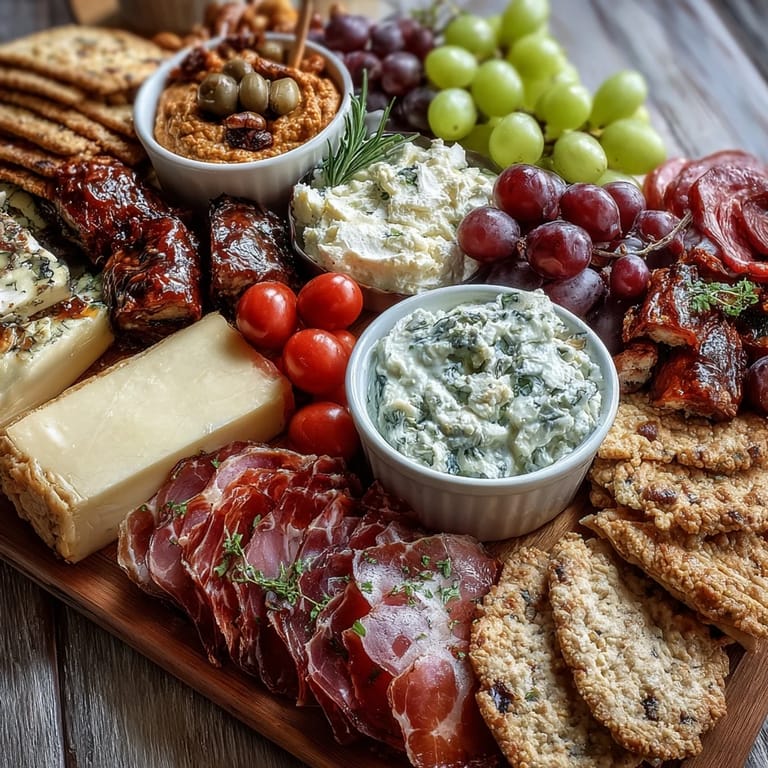
- Prosciutto, salami, and chorizo: Layer thin-sliced meats loosely so they don't clump together and become hard to pick up.
- Brie, aged cheddar, and goat cheese: The trio of textures and flavors keeps people reaching back for more, and slicing or crumbling them beforehand saves your guests the awkward moment of trying to break cheese apart with their hands.
- Baguette slices and assorted crackers: Toast the baguette lightly if you have five minutes; it adds a subtle richness that plain bread doesn't deliver.
- Breadsticks: These are your structural heroes, giving people something crispy to scoop dip with.
- Seedless grapes, cherry tomatoes, cucumber slices, and baby carrots: Fresh produce adds color and brightness, cutting through the richness of cheese and cured meats.
- Mixed olives, marcona almonds, and dried apricots: These bring contrast and unexpected flavor combinations that make the board memorable.
- Fig jam and honey: Small bowls of these turn the board into something sophisticated without any real cooking involved.
- Plain Greek yogurt: The base of your first dip; it's tangier than sour cream and holds herbs beautifully.
- Fresh dill and chives: These herbs brighten everything; don't skip them or use dried versions.
- Lemon juice: This acid keeps both dips tasting fresh and prevents them from tasting heavy.
- Chickpeas and roasted red pepper: These form your hummus backbone; canned chickpeas work perfectly here since you're not showcasing individual texture.
- Tahini: This sesame paste adds depth and creaminess, but make sure it's well-stirred before measuring or it'll throw off your consistency.
- Olive oil: Use something you'd actually eat by itself; it makes a noticeable difference in the dips.
Instructions
- Make the herbed dip first:
- Combine Greek yogurt, dill, chives, lemon juice, minced garlic, salt, and pepper in a bowl and refrigerate immediately. This gives the flavors time to meld while you work on everything else, and it'll taste noticeably better than if you serve it fresh.
- Blend the hummus until smooth:
- Pulse chickpeas, roasted red pepper, tahini, garlic, olive oil, and lemon juice in a food processor, adding a splash of water if it seems too thick. The texture should be creamy enough to scoop easily but still hold its shape on a cracker.
- Map out your board:
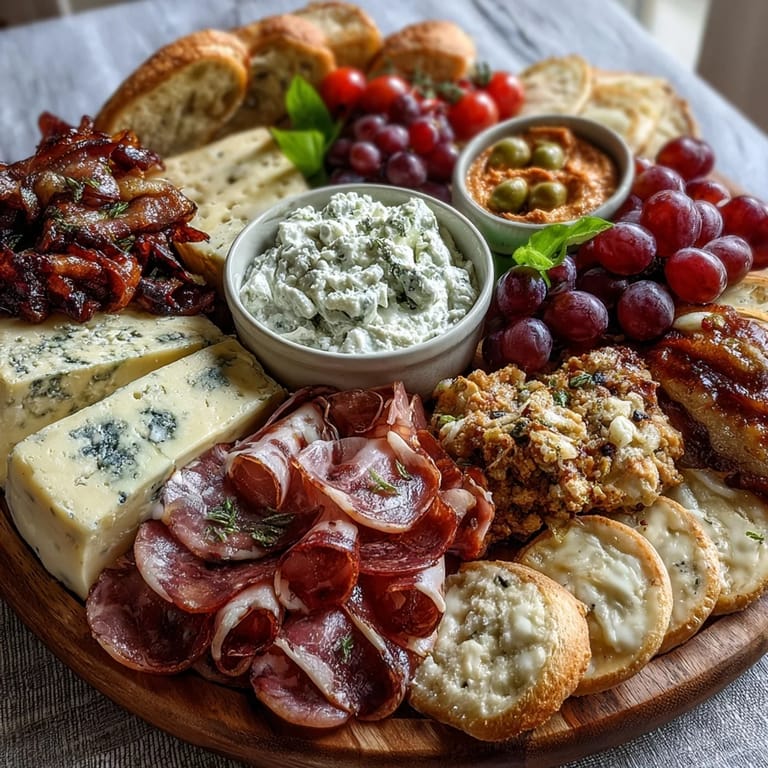
- Start by placing meats and cheeses in loose clusters with space between them so colors stand out and people can actually grab pieces without feeling like they're dismantling your arrangement.
- Create bread zones:
- Group baguette slices, crackers, and breadsticks in separate spots so people instinctively know where the vehicles for dips and spreads are located.
- Fill the gaps with produce and accents:
- Scatter grapes, tomatoes, cucumber, and carrots in the remaining spaces, then tuck olives, almonds, and dried apricots into little pockets. This is where the board becomes visually interesting rather than just functional.
- Finish with the finishing touches:
- Pour fig jam and honey into small bowls and nestle them onto the board, then add your two dips in contrasting spots. If you want to go one step further, scatter a few fresh herb leaves across the board for color and fragrance.
 Save to Pinterest
 My sister brought this board to a baby shower last year, and I watched a woman who claimed she never ate hummus go back three times because the roasted red pepper version tasted nothing like the health-food stereotype she'd been avoiding. That's when I realized a beautiful board does something simple food alone never does: it gives people permission to try things they didn't know they wanted.
The Magic of Cured Meats and Cheese Pairing
There's a reason charcuterie boards have stayed popular—the combination of salty, savory cured meats with rich, varied cheeses creates balance without any technique. The aged cheddar stands up to the prosciutto, the brie melts against the chorizo, and the goat cheese's tanginess cuts through the salt. Don't overthink the specific types; buy whatever looks good at your market and tastes good to you when you sample it.
Why Homemade Dips Matter More Than You'd Think
Store-bought dips taste fine, but homemade ones transform a board from nice to memorable because they taste like someone actually cared. The herbed Greek yogurt dip takes seven minutes and tastes like you've been a careful cook. The hummus takes another five and tastes restaurant-quality, which is remarkable because all you're doing is blending five ingredients together. Both dips let you control the salt level and adjust flavors to your taste, so they taste fresher and more nuanced than anything pre-made ever could.
Board Assembly Strategy and Small Moments
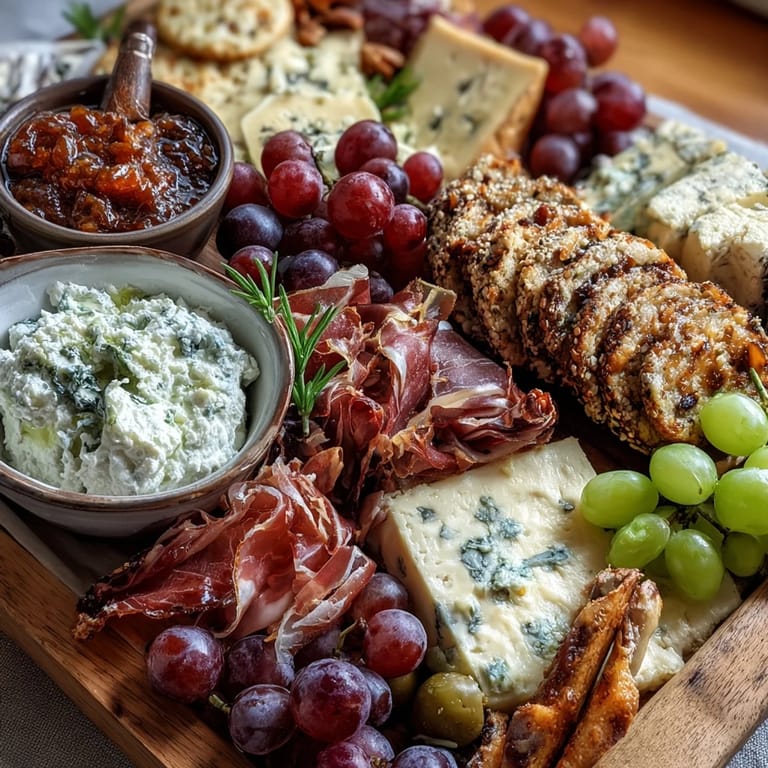
The real secret to a stunning board isn't having rare ingredients; it's understanding how colors and textures work together. Put dark olives next to purple grapes, pale almonds next to golden apricots, and suddenly your board looks like it took hours instead of minutes. I learned this accidentally when I ran out of one ingredient and had to improvise with something the opposite color, and it looked ten times better than my planned arrangement. The other thing I've learned is that people eat with their eyes first, so if something looks inviting and a little bit fancy, they'll trust it tastes good before they even try it.
- Leave small gaps and clusters rather than filling every inch; a crowded board looks chaotic instead of generous.
- Put the dips toward different ends of the board so people don't all crowd around one spot.
- Replenish crackers and bread as the night goes on, even if other things are still plenty; people subconsciously associate fresh-looking boards with quality.
 Save to Pinterest
 A good board is an invitation, really—to slow down, to try something new, and to take up space at someone's table without apology. That's the only real skill you need here.
Recipe Q&A
- → What meats are included on the board?
Prosciutto, salami, and sliced chorizo provide a savory variety of cured meats that balance the flavors on the board.
- → How can I customize the cheese selection?
You can swap the brie, aged cheddar, and goat cheese for other favorites or add vegetarian-friendly options like marinated vegetables.
- → What fresh produce pairs well with the meats and cheeses?
Seedless grapes, cherry tomatoes, cucumber slices, and baby carrots offer refreshing contrast and color to the platter.
- → Are there any suggested accompaniments to enhance the board?
Adding marcona almonds, mixed olives, dried apricots, fig jam, and honey helps introduce sweet, salty, and crunchy elements.
- → How do I prepare the homemade dips?
The herbed Greek yogurt dip combines fresh dill, chives, lemon, and garlic with plain yogurt. The roasted red pepper hummus blends chickpeas, roasted red pepper, tahini, garlic, olive oil, and lemon juice for a smooth finish.
- → Can this board be adapted for dietary restrictions?
Yes, you can substitute gluten-free breads and crackers to accommodate gluten sensitivity and include vegetarian items as needed.