 Save to Pinterest
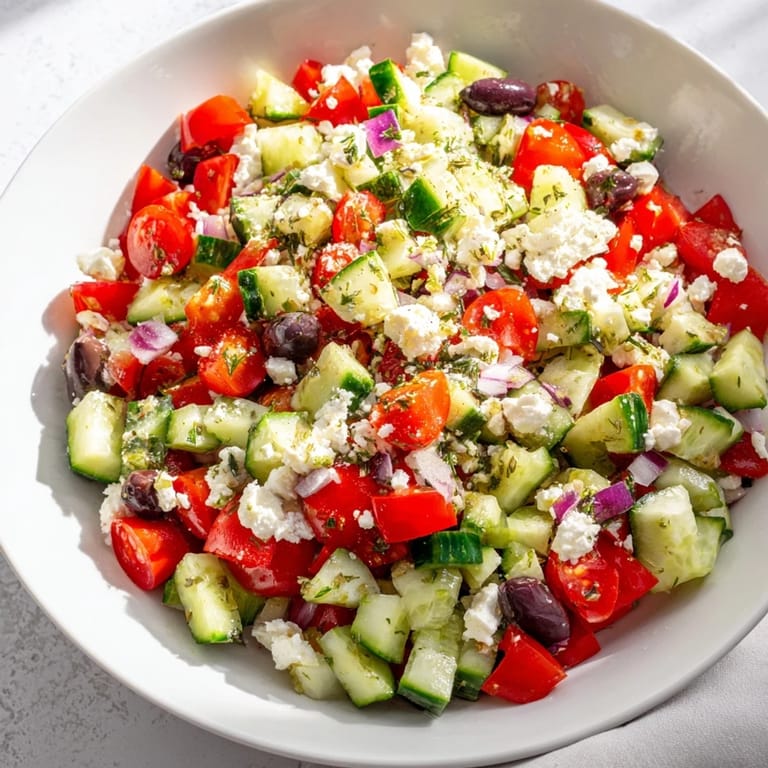
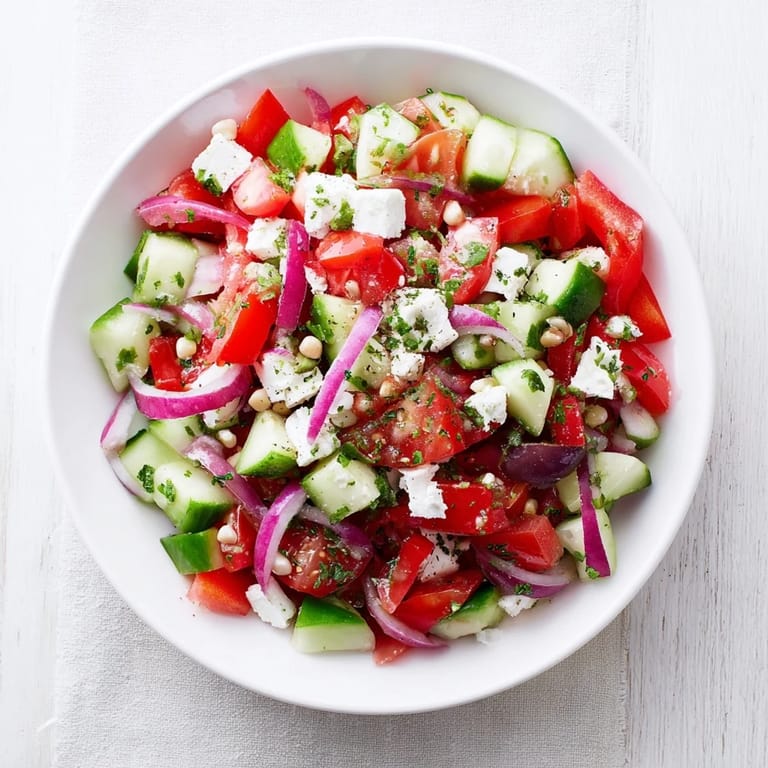
 I threw this salad together on a Tuesday afternoon when the farmer's market haul was threatening to wilt on my counter. The cucumbers were sweating, the tomatoes overly ripe, and I had that familiar panic of too much produce and too little plan. What started as kitchen triage turned into something I now crave at least twice a week. The crunch of cold vegetables against creamy chickpeas, the sharp bite of olives cutting through—it woke up my palate in a way I didn't expect from something so simple.
My neighbor Sofia knocked on my door one Saturday carrying a bowl of something similar, still cold from her fridge. She'd made too much for a picnic that got rained out. We ate it standing in my kitchen with forks straight from the bowl, and she told me her grandmother never measured the lemon juice, just squeezed until it smelled right. I've been doing the same ever since, and somehow it works every time.
What's for Dinner Tonight? 🤔
Stop stressing. Get 10 fast recipes that actually work on busy nights.
Free. No spam. Just easy meals.
Ingredients
- Cucumber: Use the firmest one you can find, the kind that snaps when you bend it, and don't bother peeling unless the skin is thick and waxy.
- Cherry tomatoes: Halve them so the dressing can seep into the seeds, and if they're bland, a pinch of sugar in the dressing fixes everything.
- Red onion: Slice it thin as paper and if it's too sharp, soak the slices in cold water for five minutes before tossing them in.
- Red bell pepper: The sweetness balances the brine, and I've learned to cut it last so my cutting board doesn't turn everything pink.
- Chickpeas: Rinse them well or the salad tastes like can, and if you have time, pat them dry so the dressing clings instead of sliding off.
- Kalamata olives: The wrinkled, oil-cured ones have more flavor than the smooth, and pitting them yourself means you control the size of each piece.
- Feta cheese: Crumble it by hand for irregular chunks that surprise you, and buy it in a block, never pre-crumbled, because the texture is worth it.
- Fresh parsley: Chop it rough and toss it in at the end so it doesn't bruise into the dressing and lose its brightness.
- Olive oil: Use the good stuff you'd dip bread into, because there's nowhere for it to hide here.
- Lemon juice: Fresh only, and I roll the lemon hard on the counter before cutting to get every drop without a juicer.
- Garlic: Mince it fine or it'll overpower everything, and if you're sensitive, rub the bowl with a cut clove instead of adding it to the dressing.
- Dried oregano: Crush it between your fingers as it goes in to wake up the oils that have been sleeping in the jar.
Instructions
- Build the base:
- Toss the cucumber, tomatoes, onion, bell pepper, chickpeas, olives, and parsley into your largest bowl, the one you use for mixing cookie dough. Let your hands do the mixing if you want, it's faster and gentler than any spoon.
- Make the dressing:
- Whisk the olive oil, lemon juice, garlic, oregano, salt, and pepper in a small bowl until it thickens slightly and turns pale yellow. Taste it on a piece of tomato, not a spoon, because that's how you'll actually eat it.
- Dress and toss:
- Pour the dressing over the vegetables and fold everything together with a light hand, just until everything glistens. Overdoing it bruises the tomatoes and turns the cucumbers weepy.
- Finish and serve:
- Scatter the feta over the top if you're using it, and serve right away or let it sit in the fridge for twenty minutes while the flavors get to know each other.
 Save to Pinterest
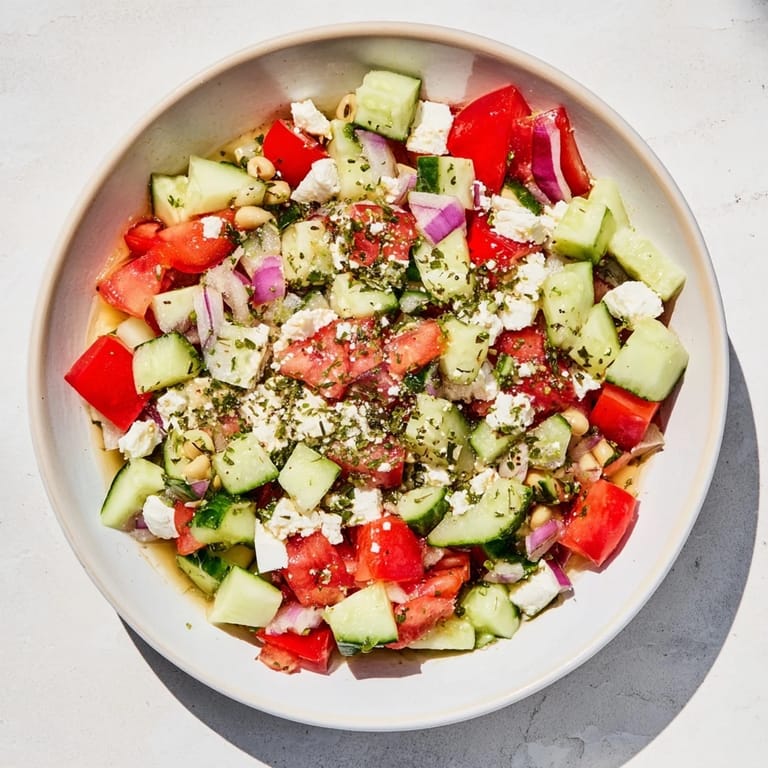
 I brought this to a backyard gathering last summer, the kind where everyone shows up with something and nobody remembers who made what. By the time I looked for my bowl, it was empty except for a few stray chickpeas and a smear of olive oil. Someone's kid asked if there was more, and I felt the specific pride that comes from feeding people something they didn't expect to love.
What to Do with Leftovers
The next day, this salad loses some crunch but gains depth as the dressing soaks in. I've eaten it cold from the fridge for breakfast, stuffed it into pita bread for lunch, and spooned it over grilled chicken for dinner. If it's too wet, drain off the excess liquid and add a handful of fresh arugula or spinach to soak it up. It won't be the same as day one, but it's still worth eating.
How to Make It Your Own
This salad is a template, not a rule. I've swapped chickpeas for white beans, added handfuls of torn mint or basil, and once, in desperation, used lime instead of lemon. A friend stirs in cooked quinoa to make it more filling, and my sister adds avocado right before serving even though I tell her it doesn't need it. She's wrong, but it still tastes good.
Serving Suggestions
This works as a side next to grilled fish or roasted lamb, but I've also eaten it as a full meal with nothing but good bread and butter. It's the kind of thing that makes sense at a picnic, a potluck, or a weeknight table when you can't be bothered to turn on the stove.
- Serve it in individual bowls with warm flatbread on the side for scooping.
- Pair it with hummus and baba ganoush for a full Mediterranean spread.
- Top it with a fried or poached egg and call it brunch.
 Save to Pinterest
 Some recipes ask a lot of you, but this one just asks you to chop and toss. It's become my answer to the question of what to make when I want something that feels like care without the effort.
Recipe Q&A
- → What makes this salad Mediterranean?
The combination of fresh vegetables, chickpeas, olives, lemon juice, olive oil, and herbs reflects classic Mediterranean flavors.
- → Can I make this salad vegan?
Yes, simply omit the feta cheese or substitute it with a vegan alternative to keep it plant-based.
- → How should I store leftovers?
Keep leftovers refrigerated in an airtight container for up to 2 days to preserve freshness and flavor.
- → What variations can enhance its flavor?
Adding fresh mint or basil, or topping with grilled chicken or tuna, can complement and enrich the flavors.
- → Is this salad suitable for gluten-free diets?
Yes, all ingredients are naturally gluten-free, making it a safe choice for gluten-sensitive individuals.